Power You’re Not Using-FULL SERMON | Joyce Meyer
In this full sermon, Power You’re Not Using Joyce Meyer addresses a problem she believes is common among Christians: they believe in Jesus and expect to go to heaven, yet live defeated, discouraged and powerless lives here on earth. Meyer explains how God’s power is released, why weakness is not a barrier but a qualification, and why the biblical idea of power is as much about Christlike character as it is about miracles.
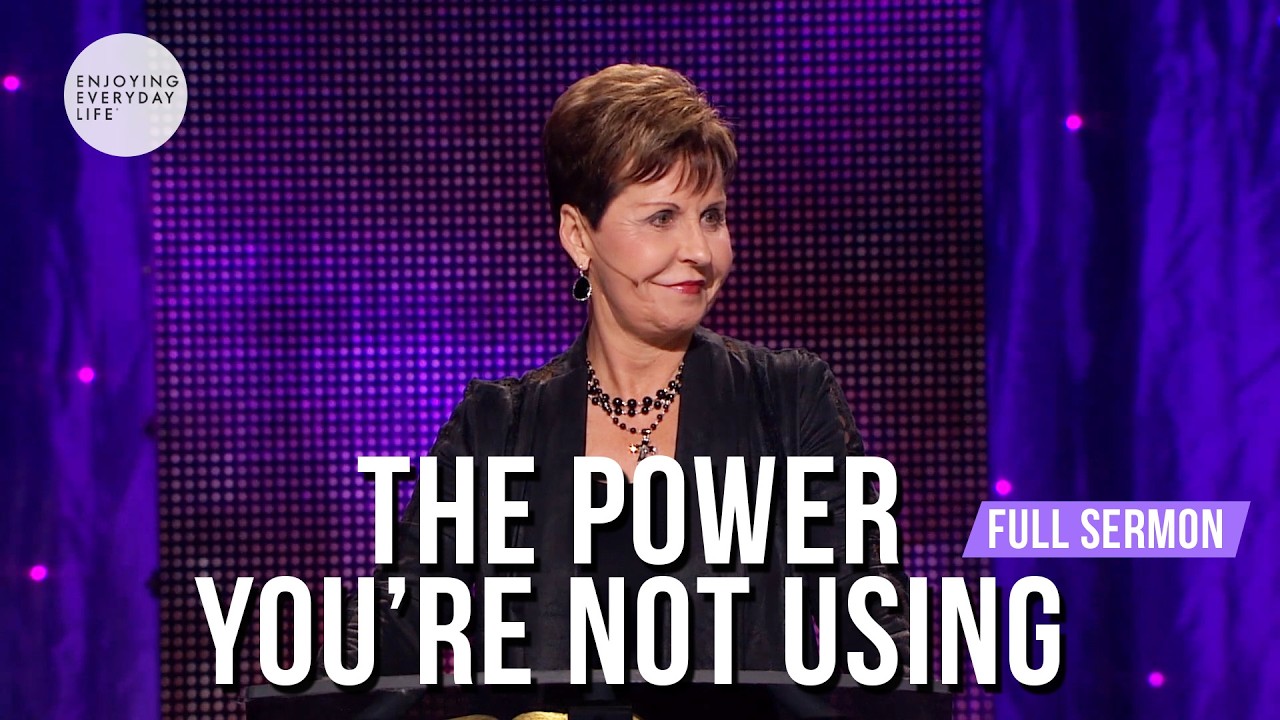
Video Summary
Meyer opens with Peter’s confident claim that he would never deny Jesus, a claim that proved false within hours. She uses it to warn that everyone faces temptation daily and that the goal is not to make the devil leave us alone, but to become so consistently victorious that he has no reason to keep trying. Prayer, she says, must come early, not in the middle of the temptation.
She then turns to Paul’s honest description in Romans 7 of wanting to do right but lacking the power to carry it out. With characteristic humor, she describes waking up with a “holy plan” to be sweet all day, only to see it unravel once her feet hit the floor and other people enter the picture. Her point is that God often uses difficult people to change us, and that apart from Christ we can do nothing.
The core of the message lays out how God’s power is released. First, believers must admit their weakness and need for God. Second, they must believe that His power is actually available to them. Meyer defines the Greek word dunamis as strength, ability and miracle-working power, but highlights that it also means moral power and excellence of soul. She finishes by emphasizing the authority believers have over the enemy, the difference between feeling fear and obeying it, and the assurance that believers are going through their trials, not stuck in them.
Key Takeaways
- Overconfidence in our own strength sets us up to fall; humility and prayer protect us.
- Pray about known weaknesses early and often, not only when temptation is already present.
- God’s strength is made perfect in weakness, so believers need not obsess over their flaws.
- Hard seasons are seasons; they do not last forever and can draw us closer to God.
- God’s power is available to every believer, but it must be believed to be experienced.
- Biblical power includes moral excellence: the ability to act like Jesus in difficult situations.
- The enemy has power, but believers have power and authority in Christ.
Why Willpower Is Not Enough
Meyer points to Paul’s admission that he could will what is right but could not perform it. Many believers recognize that frustration. They sincerely want to be patient, kind and self-controlled, yet keep falling short. Meyer recalls her early years as a Christian in the 1970s, when she felt deeply spiritual while listening to teaching tapes alone, only to lose her peace as soon as her family came home. She admits that she wanted God to change the people around her so she could be happy, but she came to believe that God wanted to use those people to change her.
Her conclusion is that good intentions need divine help. Jesus said plainly that apart from Him believers can do nothing (John 15:5). Meyer also urges listeners to pray proactively about their weak areas. Using the example of appetite, she says it is far better to pray in the morning about self-control than to wait until one is standing in front of a buffet. As Jesus told the disciples, the spirit is willing, but the flesh is weak.
Strength Made Perfect in Weakness
Discussing Paul’s thorn in the flesh in 2 Corinthians 12, Meyer says the exact nature of the thorn does not matter. What matters is God’s answer: His grace is sufficient, and His strength is made perfect in weakness (2 Corinthians 12:9). She warns that constantly focusing on one’s own faults is a form of self-centeredness, just as constantly focusing on one’s strengths would be. The healthier response is to admit weakness, ask for God’s strength and refuse to spend today worrying about yesterday’s failures.
She also highlights 2 Corinthians 1:8-9, where Paul describes being so crushed that he despaired of life. Paul concluded that the hardship taught him not to trust in himself but in God who raises the dead. Meyer stresses that difficulties are seasons, and that spring always follows winter. Rather than simply resisting hardship, believers can soften its impact by telling God they trust Him and believe He will bring good out of it.
Believing That God’s Power Is Available
According to Meyer, the first qualification for God’s power is recognizing one’s need for Him. The second is believing that His power is truly available. She describes many sincere Christians who nonetheless live depressed, discouraged and self-absorbed lives, often because they assume their past mistakes disqualify them. Meyer insists that it is never too late for a fresh start with God and that believers can enjoy the life Jesus died to give them.
She points to Acts 1:8, where Jesus promises that believers will receive power when the Holy Spirit comes upon them (Acts 1:8). Meyer notes that Jesus said they would be witnesses, not merely that they would do witnessing. She recalls going door to door with her church’s evangelism team while her own life was a mess; she could talk about Jesus but lacked the power to act like Him. She also cites Paul’s prayer in Ephesians 1 that believers would know God personally, understand who they are in Christ and grasp the surpassing greatness of His power toward those who believe.
Power as Moral Excellence
One of the most distinctive points in the message is Meyer’s definition of power. She acknowledges that dunamis includes the power to perform miracles and encourages believers to expect God to work miraculously. But she believes the part that matters most to God is moral power and excellence of soul: the ability to bear the fruit of the Spirit in hard seasons and to avoid acting in ungodly ways when ungodly things happen.
She shares a lesson she believes the Holy Spirit taught her years ago. Resisting the devil, she realized, does not mean resisting every problem; it means refusing to act like the devil while going through the problem. In practice, that looks like forgiving those who have hurt us, praying for them, smiling on bad days, loving difficult people, staying peaceful in storms and waiting patiently. Meyer argues that this kind of character is what changes the opinions of people who think poorly of Christians.
Authority, Fear and Going Through
Meyer draws on Luke 10:19, where Jesus says He has given His followers authority over all the power of the enemy. She observes that the devil has power, but the passage does not say he has authority; the only authority he gains is what believers give him through ignorance or passivity. Citing 2 Timothy 1:7, she summarizes the pattern this way: use power against the enemy, love people and control yourself, rather than loving yourself and trying to control people.
On fear, she says believers will feel it, but they do not have to obey it. Often the only way forward is to “do it afraid.” She also encourages consistent time in God’s Word and in church, noting that a single day in the world can drain a person. Finally, she assures listeners that believers have a “going through” anointing: they may pass through fire and flood, but they will not be consumed. With humor, she mentions preaching despite fractured toes, adding that hardships come and go and that “this too shall pass.”
For more teaching from Joyce Meyer, read Stop Limiting What God Can Do and Battlefield Of The Mind.
Frequently Asked Questions
What is the power Joyce Meyer says believers are not using?
She refers to the power of the Holy Spirit promised in Acts 1:8. It includes strength and miracle-working ability, and also moral power to live with Christlike character in every situation.
What are the steps to releasing God’s power according to the sermon?
Meyer says believers must first recognize their own weakness and need for God, and then believe that His power is truly available to them, without letting past failures disqualify them.
What does Joyce Meyer mean by resisting the devil?
She explains that resisting the devil does not mean resisting every problem. It means refusing to behave in ungodly ways while facing that problem, and relying on God’s power to respond like Jesus.
Final Thoughts
Power You’re Not Using is both encouraging and challenging. Joyce Meyer reminds believers that weakness is not the end of the story, because God’s strength shines through it. She calls Christians to pray early, believe boldly and understand that real spiritual power shows up most clearly in character: forgiving, loving, staying calm and pressing forward. For anyone who feels stuck in defeat, the message offers a hopeful reminder that in Christ they are going through, and they will come out on the other side.
