What Are You Learning in the Season You’re Resenting? | Christine Caine Sermon | Full Sermon
Almost everyone goes through a season they would rather skip: a time of waiting, unfair treatment, or slow progress that seems to lead nowhere. In this message, Christine Caine on the season you’re resenting challenges believers to ask a different question. Instead of only asking when the season will end, she asks what God is teaching in the middle of it. Using the long road between David’s anointing and his coronation, she shows how every stage of a frustrating process can be part of God’s preparation.
Video Summary
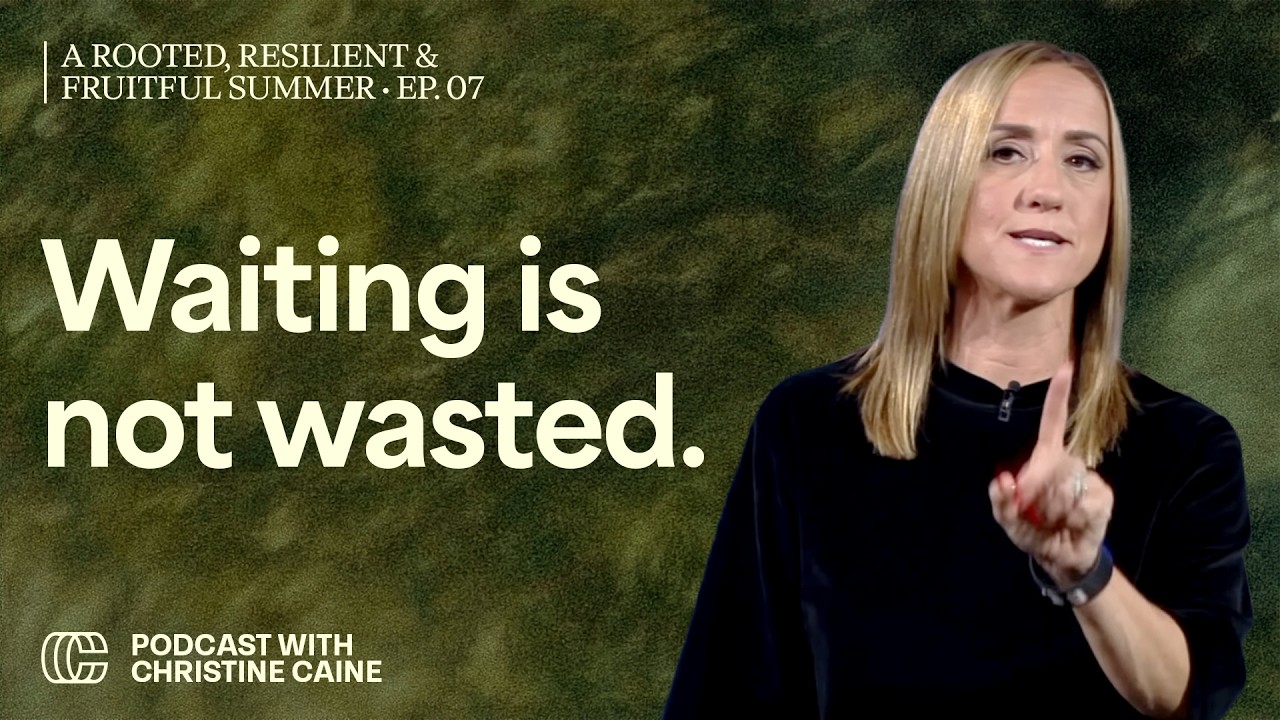
Opening the final phase of a summer series on learning to flourish, Caine explains that flourishing does not begin with striving but with receiving, and that receiving requires open hands rather than clenched fists. She invites listeners to consider what they are waiting for, whether healing, a relational breakthrough, direction for the future, or a word from God, and insists that waiting on God is not passive resignation but an active, faith-filled posture.
She then emphasizes that there is no overnight success and that fulfilling God’s promises requires both faith and patience. She speaks honestly about unfairness, noting how often David asked, “What have I done now?” She encourages believers to keep showing up even when life is unjust, and to make what God did for them bigger than what others did to them. The second half of the message walks through David’s journey from 1 Samuel 16 to 2 Samuel 5, showing what he learned at each stage, from returning to the sheep to serving in Saul’s court, leading the army, surviving persecution, and refusing to harm Saul.
Key Takeaways
- Flourishing begins with receiving from God, not with relentless striving.
- Waiting on God is an active posture of faith, not passive resignation.
- Faith alone is not enough; Scripture links faith with patience in inheriting God’s promises.
- Some things in the preparation process will not be fair, and learning to trust God anyway is essential.
- Keep showing up, because faithfulness over time positions believers for God’s opportunities.
- Anointing does not mean instant appointing; God develops people through every stage.
Flourishing Starts With Open Hands
Caine begins by redefining what it means to flourish. Many people assume that a fruitful life comes from making things happen through sheer effort. Instead, she says, flourishing starts with receiving what God gives, and that requires a posture of surrender. A clenched fist cannot receive anything; open hands can.
She describes waiting on God as one of the most active things a believer can do. It is not giving up or shrugging in resignation, but choosing to trust and remain engaged with God while His timing unfolds. Whatever someone is waiting for, she believes this posture is the key to coming through the season well.
Faith Needs Patience
Caine is candid that patience is not her strongest quality, but she insists it cannot be skipped. She refers to the teaching in Hebrews that believers inherit God’s promises through faith and patience, as found in Hebrews 6:12. Some Christians focus heavily on declaring and confessing their faith, she notes, but without patience they may still miss God’s purpose. She also points to James’ encouragement to let patience have its perfect work, so that believers may be complete and lacking nothing.
She often meets young adults who are frustrated that their lives do not yet look like hers. Her response is that she has been on this journey for decades, and that God makes everything beautiful in its time. There is no shortcut that skips the time God uses to build a person.
When Things Are Not Fair
One of the most honest sections of the message deals with unfairness. Caine points out that David asked some version of “What have I done now?” to his brother Eliab, to Jonathan, to Saul, and even to the Philistine king Achish. Again and again, David faced treatment he did not deserve.
Caine admits she has a strong sense of justice and finds it especially hard when unfairness is directed at her. Yet she believes that how a person navigates unfair seasons often determines whether they reach the finish line. She encourages listeners to say, “God, this does not feel fair, but I am still going to trust You.” She also offers a powerful way to process hurt: what others did may not have been right, but what God did for us in Christ was not something we deserved either. So she chooses to make what God did for her bigger than what people did to her.
She adds a lighter but meaningful observation: if you just keep showing up, eventually God “runs out of options.” She recalls being the only volunteer at a church cleanup day, which led directly to her being asked to help start a youth center. The enemy, she says, wants believers to stop showing up, often by convincing them they have been mistreated.
What David Learned in Every Stage
Caine notes that anointing does not mean instant appointing. David was anointed in 1 Samuel 16:13, but he did not become king over all Israel until 2 Samuel 5, many years later. Remarkably, even after the Spirit came upon him and departed from Saul, David refused to remove Saul himself. He waited for God to do it.
She then traces what David learned at each step. After being anointed, he went back to the sheep, where he learned faithfulness and gained battle experience against the lion and the bear before facing Goliath. Serving as a musician in Saul’s court, he learned the protocol of the palace. Bringing lunch to his brothers placed him on the battlefield. His friendship with Jonathan taught him what it means to be a king’s son. Leading Saul’s army taught him leadership. Popular acclaim taught him how to handle favor, and Saul’s jealousy taught him not to become a victim. At Gath he learned survival, and in the cave of Adullam he learned to lead distressed and discontented people until they became a mighty army. Sparing Saul’s life taught him loyalty and honor.
Caine’s conclusion is that people often resent the stage they are in, yet God is using it to prepare them for what He has prepared for them. Even when it seems God has forgotten, He is at work.
For more from Caine on waiting and growth, readers can visit What to Do When You’ve Prayed and Nothing Has Changed and Trusting God When the Outcome Still Hurts.
Frequently Asked Questions
What does Christine Caine mean by “anointing does not mean instant appointing”?
She means that being called or gifted by God does not immediately place someone in their full role. Like David, believers often go through years of preparation between receiving God’s call and stepping into it.
How does Caine suggest dealing with unfair treatment?
She encourages believers to keep trusting God even when they do not understand, to keep showing up, and to make the undeserved grace of Christ bigger in their minds than the wrongs others have done to them.
Why does Caine say waiting is active rather than passive?
She teaches that waiting on God involves ongoing faith, surrender, and engagement. It is a deliberate decision to trust God’s timing rather than simply giving up.
Final Thoughts
This sermon offers a fresh perspective for anyone who feels stuck in a difficult season. Christine Caine encourages believers to stop resenting the process and start asking what God is teaching them through it. Just as David’s long, often unfair journey prepared him to be king, the seasons we would rather avoid may be exactly where God is shaping us for what lies ahead.
