Trusting God When the Outcome Still Hurts | Christine Caine | Lysa TerKeurst
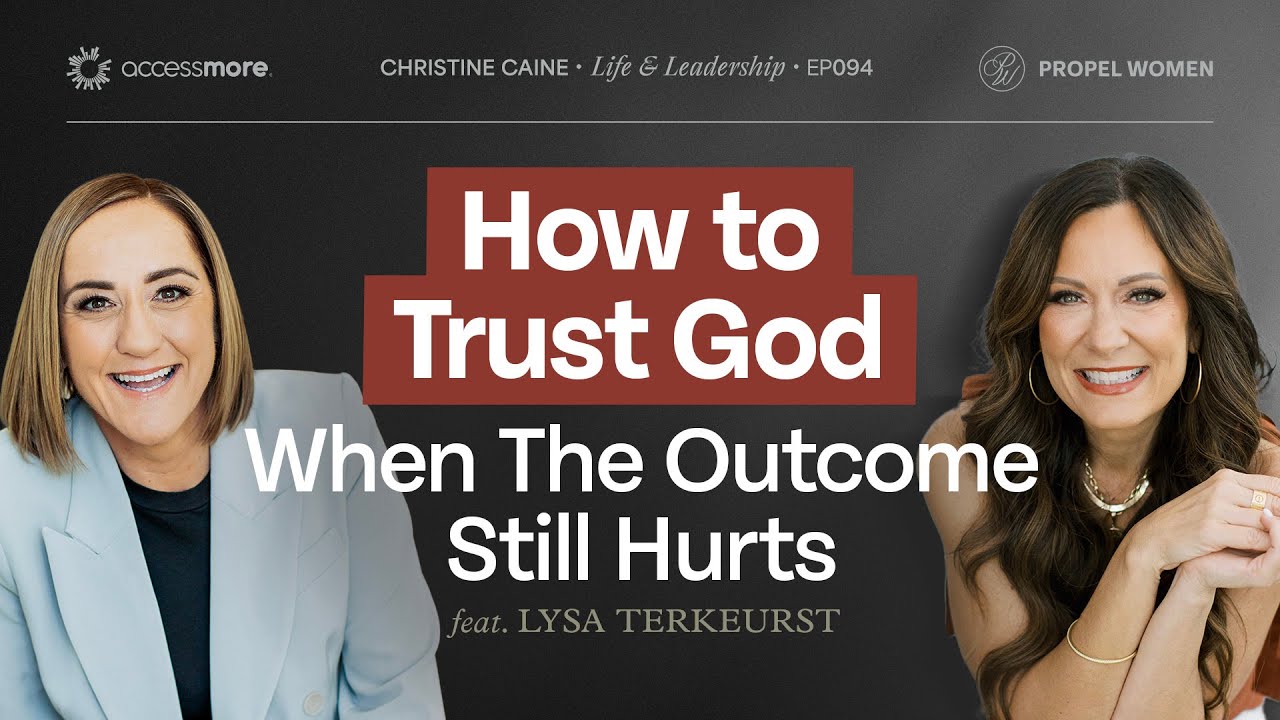
What do you do when you have prayed, believed and obeyed, yet the outcome still hurts? On this episode of the Life and Leadership Podcast, Christine Caine welcomes her longtime friend Lysa TerKeurst, president of Proverbs 31 Ministries and bestselling author of I Want to Trust You, but I Don’t. Their conversation, Trusting God When the Outcome Still Hurts, explores how believers can keep trusting God’s character when life does not tie up neatly.
Video Summary
Caine opens by celebrating her friendship with TerKeurst, which dates back more than a decade to their days speaking together at Women of Faith events. They share lighthearted memories, including TerKeurst’s new marriage and her husband’s love of surfing, before moving into the heart of the conversation.
TerKeurst explains a lesson she has drawn from the Garden of Eden. God placed both the tree of life and the tree of the knowledge of good and evil in the garden. Adam and Eve could eat freely from the tree of life but were forbidden from the other. TerKeurst sees this as a daily choice: pursuing knowledge apart from God to control every outcome fuels anxiety, while staying close to the tree of life, God’s presence and wisdom, brings peace.
Caine presses on a hard question many people ask: if there are no guarantees, why bother trusting God? TerKeurst offers several insights drawn from her own painful journey, including her former marriage, and the two discuss how trust underlies both faith and forgiveness. They close by affirming that God is good and does good, even when His ways remain a mystery.
Key Takeaways
- Pursuing knowledge apart from God can drive anxiety and overthinking.
- Overprocessing is not the same as praying.
- Sin carries its own built-in consequences; we do not have to enforce them.
- God will not be mocked, even if His justice seems delayed.
- Faith is ultimately built on trust rather than complete understanding.
- Forgiveness requires trusting God with what we cannot control.
Two Trees, One Daily Choice
TerKeurst notes that the tree of life stood in the center of Eden, and Adam and Eve were free to eat from it. Only the tree of the knowledge of good and evil was off limits. For her, the choice between those trees is not just ancient history but a daily decision. When she tries to figure everything out, determine who is right, and predict every outcome, she drifts toward the tree of knowledge and her anxiety rises.
Instead, she wants to stay near the tree of life, spending time in God’s Word and genuine prayer. She admits that many times she has said she prayed about something when in reality she simply thought about it, overprocessed it and spiraled. Real prayer brings her back into relationship with God, who gives the wisdom she needs.
Why Trust When There Are No Guarantees?
Caine raises the question of people who have tried to follow God, only to experience deep pain, and now ask why they should bother. TerKeurst responds with two comforting truths. First, sin has its own consequences built into it. When someone sins against us, we do not have to be the one who teaches them a lesson. She recalls asking her former husband what his choices had been like, and he described them as far darker than he had expected.
Second, God will not be mocked. Quoting the principle of Galatians 6:7, she notes that God may extend mercy and patience for a season, but He remains just. Knowing this frees believers from carrying the burden of ensuring justice themselves.
Trust, Faith and Forgiveness
Caine observes that faith is predicated on trust rather than full understanding, which is why Scripture says, “Trust in the Lord with all your heart, and lean not on your own understanding” (Proverbs 3:5-6). She connects TerKeurst’s earlier work on forgiveness with her current focus on trust, noting that it takes trust in God to truly forgive. TerKeurst also shares that she is studying the line between being responsible and becoming controlling out of fear.
They conclude that believers must keep returning to God’s character: He is good, and He does good, even when His ways are mysterious. For more from Caine, see Believe God to Do the Impossible and Making Prayer Your First Response.
Frequently Asked Questions
Who is Lysa TerKeurst?
Lysa TerKeurst is president of Proverbs 31 Ministries and the author of multiple bestselling books, including I Want to Trust You, but I Don’t.
What does the tree of knowledge represent in this conversation?
TerKeurst uses it to describe seeking knowledge and control apart from God, which leads to anxiety, in contrast to the tree of life, which represents God’s presence and wisdom.
How can believers trust God when outcomes hurt?
Caine and TerKeurst encourage returning to God’s character, praying genuinely rather than overthinking, and trusting Him with justice and the things we cannot understand.
Final Thoughts
Trusting God When the Outcome Still Hurts is a compassionate, honest conversation for anyone wrestling with disappointment. Christine Caine and Lysa TerKeurst do not offer easy answers, but they point to a God who is good, just and present. Choosing the tree of life each day, and trusting Him with what we cannot control, opens the way to peace even in pain.