The Process is the Preparation: Trusting How God Grows You | Christine Caine | Full Sermon
We live in an instant culture: snap, upload, go viral. But in this sermon, Christine Caine reminds believers that God does not work by discovery; He works by development. Using the image of old-fashioned film developed in a darkroom and the story of David’s long road from anointing to the throne, she explains why the process is the preparation for everything God has called His people to do. “You are not behind,” she says. “You are being built.”
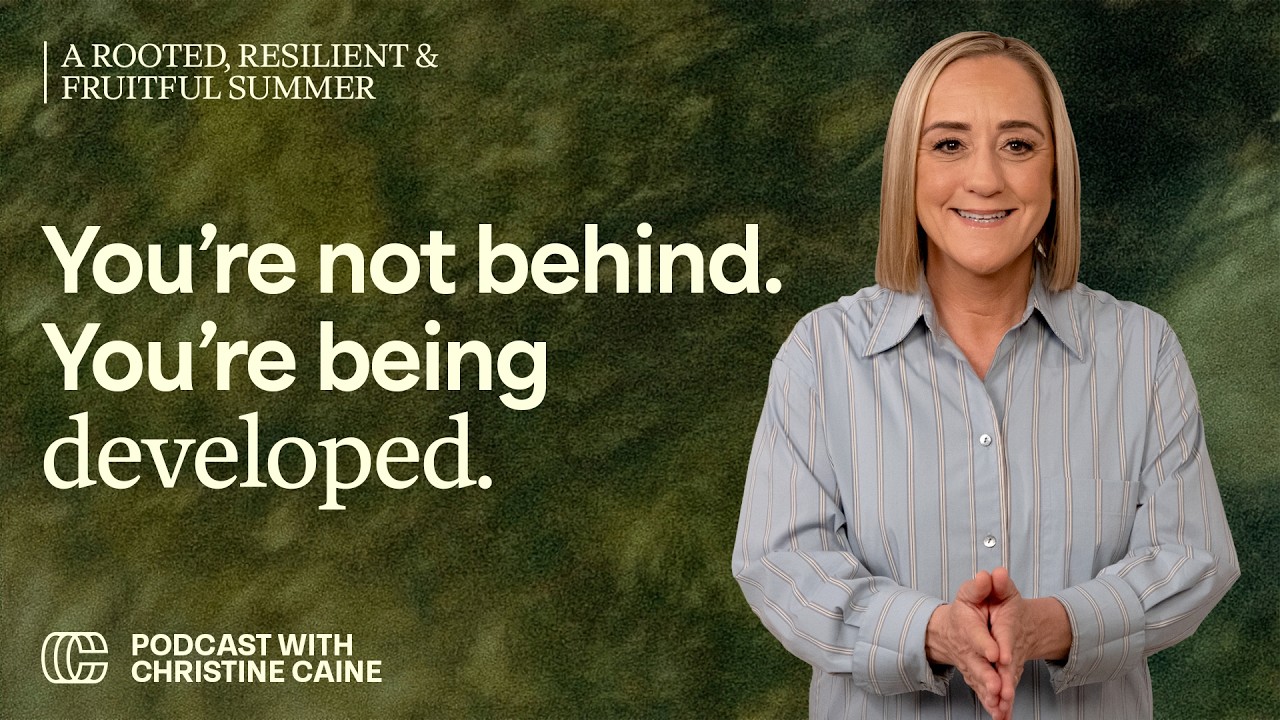
Video Summary
Caine opens with a humorous look at how quickly modern life moves: online reservations, instant messaging and the anxiety of watching a text-message typing indicator disappear. She then pulls out a Polaroid camera and a roll of 35mm film to illustrate a different era. Film had to be sent away and processed through a series of chemical baths in a darkroom. The crucial rule was that no one could open the darkroom door until the image was fully formed, because exposure to light would ruin the film.
That, she says, is how God develops His people. Salvation is followed by a series of processes in which His image is formed within believers before He releases them fully into their purpose. Many people grow frustrated and “open the darkroom door” early, walking away from a church, a ministry, a marriage or a job because the process feels too hard. When that happens, she warns, the light on them becomes greater than the light in them, and the exposure damages rather than develops them.
Key Takeaways
- God works through development, not instant discovery.
- Leaving the process too early can expose a person before God’s character is formed in them.
- David was anointed as a teenager but did not become king over all Israel until about twenty years later.
- God chooses and assigns; believers do not need to market themselves.
- Faithfulness in private prepares a person for opportunities in public.
- Comparison through social media fuels anxiety; sometimes the healthiest choice is to unfollow.
- God looks at the heart, not first impressions.
Anointed at Seventeen, Appointed Twenty Years Later
Caine turns to 1 Samuel 16. God tells Samuel to stop grieving over Saul and to anoint one of Jesse’s sons. Samuel assumes the tall, impressive Eliab must be the one, but God responds, “Man looks at the outward appearance, but the Lord looks at the heart.” Seven sons pass by before Samuel asks whether there are any others. The youngest, David, is out keeping the sheep. When he arrives, God says, “Arise, anoint him; for this is the one,” and the Spirit of the Lord comes upon David from that day forward.
Caine then jumps ahead to 2 Samuel 5, where all the tribes of Israel finally anoint David as king. Doing the math, she notes that David was anointed as a young man but did not reign over the whole nation until around age thirty-seven, roughly two decades and twenty chapters later. She jokes that she is glad David did not post a selfie tagged “future king of Israel” the day he was anointed. The years in between were not wasted; they were the process of sanctification, being conformed to God’s image.
God Chooses, and You Don’t Need to Be Discovered
A major emphasis of the sermon is that God chooses His servants. Caine challenges a culture that encourages people to define their calling by personality tests and preferences, then refuse any service that does not fit. Such tools can be helpful guides, she says, but they should never become gods. She believes much anxiety about purpose comes from people trying to do what God never called them to do, often fueled by constantly comparing themselves with others online. Her advice is blunt: if someone’s feed makes you feel small or competitive, unfollow. Follow people who are imitating Christ, as Paul urged in 1 Corinthians 11:1.
She points out that David was not even invited to the sacrifice where he would be anointed. Yet he was where God wanted him: protecting sheep, fighting lions and bears, and worshiping. What he did in private later appeared in public, when he defeated Goliath and when Saul needed a skilled musician. “If God has assigned you, God will find you,” Caine says. “If you are marked by God, you don’t have to be marketed by man.” She shares her own story of serving faithfully in a small youth center until her pastor unexpectedly asked her to lead a statewide youth movement. People called it an overnight success; she calls it “a really long night.”
First Impressions and Looking for the New
Caine observes that both the prophet and the father in Jesse’s household overlooked David. Samuel was looking for another Saul, someone who resembled the old pattern, but God had said He was providing “a new king.” She contrasts looking for “the next” thing, often the same thing in a younger package, with discerning the new thing God is doing (Isaiah 43:19). She also notes how often first impressions on social media prove wrong, reminding believers that the real battle in this generation is for their eyes, which is why Scripture calls us to fix our eyes on Jesus. For more of Caine’s teaching, see Why You Can Trust Where God is Leading You and How Faith, Endurance, and Pressure are all Connected.
Frequently Asked Questions
What does Christine Caine mean by “the process is the preparation”?
She teaches that God forms His character in believers through seasons of hidden development, and those seasons prepare them for the purpose He has called them to fulfill.
What is the darkroom metaphor?
Just as film had to stay in a darkroom until the image was fully developed, believers must stay in God’s process; leaving too early can cause damage rather than growth.
How long did David wait between his anointing and becoming king?
Caine notes that David was anointed as a young man and became king over all Israel around age thirty-seven, about twenty years later.
Final Thoughts
“The Process is the Preparation” is an encouragement for anyone who feels overlooked or stuck. Christine Caine reminds believers that hidden seasons are not wasted seasons. God sees, God chooses and God develops, and when His image has been formed within, He knows exactly when and how to bring His people out of the darkroom and into the light.
