The Key To Kingdom Citizenship Authority Part 1 | Dr. Myles Munroe | MunroeGlobal.com
Dr. Myles Munroe was known for teaching that Jesus did not come to start a religion but to announce a kingdom. In this opening session of a year-long theme, he introduces kingdom citizenship authority Myles Munroe style: kingdom refers to a country, citizenship to a status, and authority to rights. His central claim is that believers lose power when they see themselves merely as members of a religion instead of legal citizens of the kingdom of God.
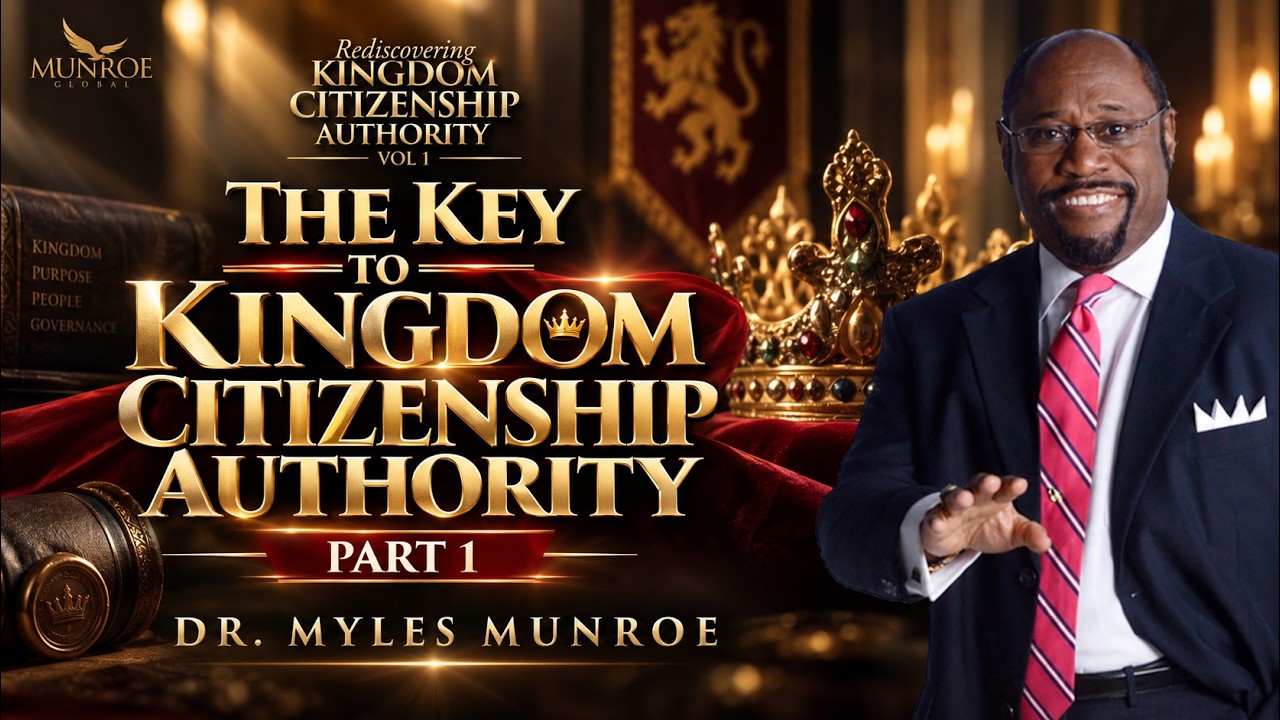
Video Summary
Munroe begins by asking his audience to take notes on a new theme: rediscovering kingdom citizenship authority. He admits that the phrase may not sound very spiritual, but he promises to show why it is essential. His focus in this first session is the principle of law-abiding citizens and the question of where citizens get their power.
He explains that citizenship is a two-way relationship. A government provides privileges and protections, but citizens also carry responsibilities to the constitution, and a citizen can forfeit authority by refusing to line up with the principles of the nation. He then explains why citizenship is so valued: everyone wants it, every nation has it, every government guards it, and every person needs it.
Using everyday examples from the Bahamas and other countries, Munroe argues that citizenship is ultimately about legal power. He illustrates how ignorance of one’s rights leads to powerlessness, and then applies this to the believer’s relationship with God through the story of Abraham interceding for Sodom. He describes the Bible as a legal covenant, contrasts membership in religious organizations with citizenship in a kingdom, and closes with Ephesians 2:19, which calls believers fellow citizens with the saints and members of God’s household.
Key Takeaways
- Kingdom, citizenship and authority belong together: a country, a status and the rights that come with that status.
- Citizenship carries both privileges and responsibilities.
- According to Munroe, ignorance of one’s status is the main reason people live powerless lives.
- Abraham’s intercession for Sodom shows a person who understood God’s own promises and appealed to them.
- Munroe describes the Bible as a covenant document, the constitution of heaven on earth.
- Believers are both members of God’s family and citizens of God’s kingdom.
Why Citizenship Is So Valuable
Munroe lists several reasons citizenship matters. People risk their lives crossing seas, deserts and borders to obtain it. Nations set strict rules before granting it. Without it, a person has no legal standing to function in a country. For this reason, he calls citizenship the most valuable privilege a state can extend.
He explains that citizenship provides legitimate access to all the rights and privileges of the state. The moment a foreigner becomes a citizen, he or she can claim everything the constitution promises. Citizenship also gives individual authority, not just collective rights. As examples, he notes that a citizen can require proper legal process before someone enters his home and can expect public services to respond when called. Finally, citizenship represents a contract between the government, the people and the nation.
Munroe also offers his own view of civic life, saying that in his opinion people are often unaware of how much authority they hold as citizens. He points out that the word politician is related to a Greek term for citizen, reminding his audience that leaders are citizens entrusted with responsibility for a time. His point is not partisan; it is to illustrate that a person who does not know his or her rights will not exercise them.
Abraham and the Power of Knowing Your Status
To move from civic examples to spiritual truth, Munroe turns to Genesis 18. When God revealed His plan to judge Sodom and Gomorrah, Abraham responded boldly, asking whether the Judge of all the earth would destroy the righteous with the wicked (Genesis 18:23-25).
Munroe describes Abraham as appealing to God’s own character and word, almost like citing a constitution. Abraham began with fifty righteous people and kept lowering the number, and God agreed each time (Genesis 18:26-32). For Munroe, the lesson is that Abraham knew his standing before God and therefore could speak with confidence. Many believers, he says, tolerate things in their lives that the enemy has no right to do simply because they do not understand their status.
Munroe’s broader teaching on identity is also explored in How To Know The Truth About You.
The Bible as a Covenant Document
Munroe emphasizes that the word testament refers to a covenant or will with legal significance. He therefore describes the Bible not as a merely religious book but as the constitution of heaven revealed on earth, a library of sixty-six books setting out the rights and responsibilities of kingdom citizens.
He contrasts two ways of approaching God. A person without legal standing must look for favors and hope to be liked. A person with legal standing can come with confidence, state his or her position and stand on what has been promised. Munroe uses strong language here, saying that citizens do not beg, they make demands. His intent is to encourage believers to stand on the promises of God’s Word rather than relating to God with insecurity.
He points to promises such as being the head and not the tail, above and not beneath (Deuteronomy 28:13), as descriptions of the life God intends for His people.
Citizenship Versus Membership
A key distinction in this session is between membership and citizenship. Munroe notes that only nations grant citizenship. Religious denominations, he says, offer membership, not citizenship. In his view, much of the church has focused on rituals and doctrines of particular groups while losing sight of the kingdom message Jesus preached.
He then reads Ephesians 2:19: believers are no longer strangers and foreigners but fellow citizens with the saints and members of the household of God (Ephesians 2:19). Munroe highlights that Paul uses both words. Citizenship speaks of legal status in a kingdom, while membership speaks of belonging to a family. Many believers embrace being children of God, he says, but do not understand their legal inheritance as citizens.
He illustrates this with a will. A wealthy parent can leave an inheritance to some children and not to another; all remain members of the family, but only the named heirs have legal claim to the estate. In the same way, Munroe wants believers to understand not only that they belong to God’s family but also that they have been given legal standing in His kingdom. He also mentions dual citizenship as a picture of how believers live in the world while belonging to heaven.
For more of Munroe’s teaching on leadership and influence, see How To Become An Influence.
Frequently Asked Questions
What does Myles Munroe mean by kingdom citizenship authority?
He uses the phrase to describe three connected ideas: the kingdom as a country, citizenship as a legal status within it, and authority as the rights that come with that status.
Why does Munroe contrast citizenship with membership?
He teaches that religious groups offer membership, while the kingdom of God grants citizenship, and that understanding citizenship helps believers know their rights and responsibilities.
Which Bible verse is central to this teaching?
Ephesians 2:19, which says believers are fellow citizens with the saints and members of the household of God, is a key text in this session.
Final Thoughts
The Key To Kingdom Citizenship Authority Part 1 lays the foundation for a larger series. Dr. Myles Munroe challenges listeners to stop thinking of their faith as a religion and to see it as citizenship in a real kingdom with a constitution, rights and responsibilities. Through civic illustrations, the story of Abraham and Paul’s words in Ephesians, he argues that the key to authority is knowing one’s status. His closing encouragement is that believers who rediscover who they are in God’s kingdom will no longer live under their circumstances but above them.
