Unshakeable Trust-FULL SERMON Joyce Meyer
In this full sermon, Unshakeable Trust Joyce Meyer presents believers with a simple but challenging choice: trust God in everything, or be miserable. Drawing on her own painful childhood, the example of Jesus under mistreatment and the testimony of a grieving pastor, Meyer explains what it looks like to trust God not only when life makes sense, but also when it does not.
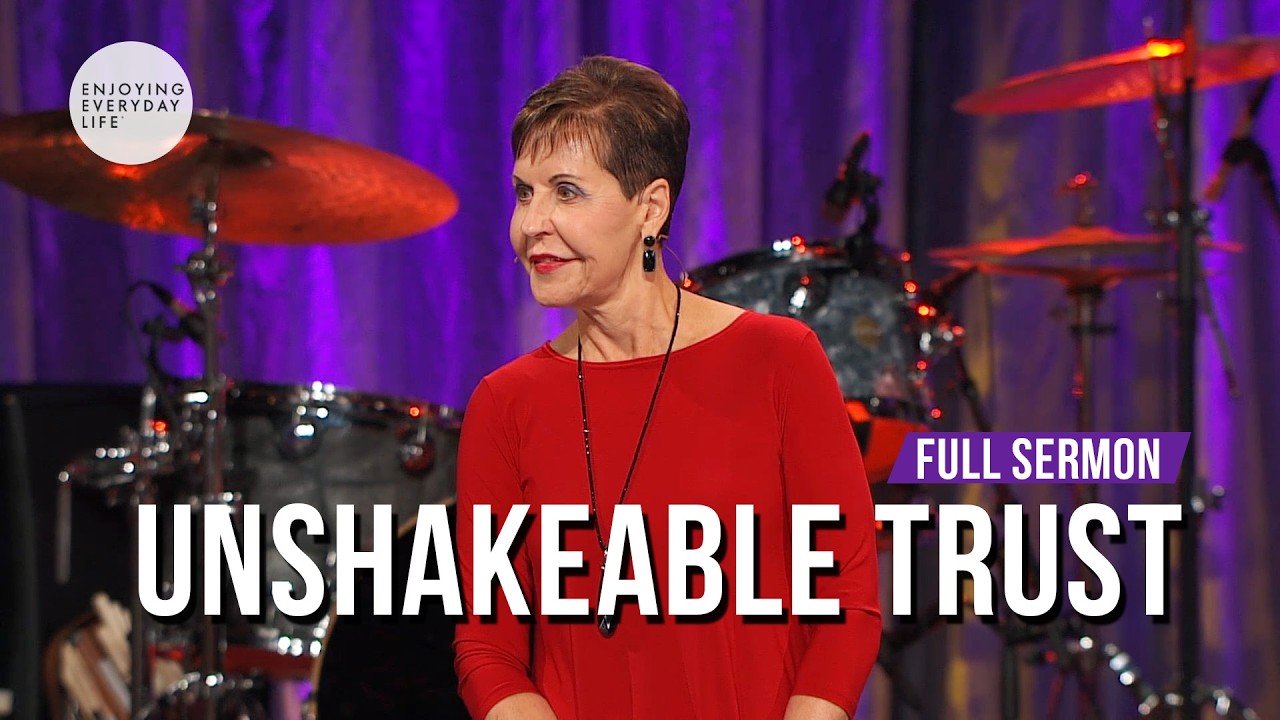
Video Summary
Meyer begins by asking how many listeners are going through something difficult. She points out that believers trust God both for the things they want and through the things they suffer, and that this trust is what allows them to enjoy life even before every prayer is answered. She cites Jesus’ promise to give His own peace and His instruction not to let our hearts be troubled.
The anchor passage is 1 Peter 2:23, a verse Meyer says hangs on her office wall. It describes how Jesus, when insulted and abused, did not retaliate but entrusted Himself to the One who judges righteously. From there she develops the idea of God as vindicator and rewarder, sharing how she moved from bitterness over childhood abuse to seeing God restore and honor her life.
The second half of the message shifts to trusting God in the dark. Meyer recounts how a pastor she knows responded to the death of his wife from cancer: he decided not to demand answers to “why,” and his first prayer was for help to represent God well to his church and to the world. Meyer uses this to call believers to care more about how they reflect Jesus than about getting what they want, to become comfortable with not knowing, and to practice gratitude as a spiritual weapon.
Key Takeaways
- Believers have two options: trust God or be miserable.
- Jesus modeled trust by refusing to retaliate and committing Himself to God, who judges fairly.
- God is a vindicator and a rewarder who can restore what others have taken.
- Trying to collect emotional debts from people who cannot pay poisons relationships.
- Real faith says “I trust You” even when prayers are not answered as hoped.
- How believers represent Jesus in suffering speaks louder than slogans.
- Letting go of the need to know “why” protects peace, and gratitude strengthens faith.
Jesus: The Model of Unshakeable Trust
Meyer notes that Jesus was mistreated more than anyone who has ever lived, yet He did not trouble Himself with revenge. Instead, as Peter writes, He committed Himself to Him who judges righteously (1 Peter 2:23). For Meyer, this reveals one of God’s most comforting traits: He is a God of justice who makes wrong things right.
She applies this to everyday experiences, such as working hard while someone else receives the promotion or raise. These moments, she says, are perfect opportunities to tell God, “I trust You to be my vindicator.” Rather than fixing their eyes on people as the source of what they need, believers can look to God, who alone gives true promotion. When someone mistreats them, Meyer encourages a deliberate response: refusing anger, because it only steals life, and trusting God to bring justice.
From Bitterness to Restoration
Meyer openly describes the first twenty-three years of her life: abuse by her father, a mother too fearful to intervene, and a first marriage marked by unfaithfulness. She says she came out of those years bitter, resentful and blaming, even though she was a Christian. Her point is that faith is not only about going to heaven someday; it is meant to shape every area of life now.
As she learned to trust God as her vindicator, she says, He opened doors no person could have opened. She recalls being the first and only woman on her church’s board in a denomination where that was unusual, and repeatedly finding herself in similar positions. She believes God showed her that because men had mistreated her, He would give her a place of honor among them. Meyer stresses that God shows no partiality, and what He has done for one He can do for another.
She holds on to Isaiah 61:7, which promises double honor in place of shame (Isaiah 61:7). In her view, God is not a punisher but a rewarder of those who diligently seek Him. Trusting Him, however, includes waiting on Him, which is rarely easy and seldom happens on our timetable.
The Chip-on-the-Shoulder Trap
Meyer describes a common reaction to hurt: the feeling that someone owes us. She admits that for years she tried to collect from men in general for what particular men had done to her, even expecting her loving husband Dave to repay what others had taken. A turning point came when she noticed the phrase in Jesus’ parable of the unforgiving servant that the debtor “could not pay.” No one could give back the childhood that had been stolen from her.
The answer, she says, is to let God do the repaying. She points to Psalm 147:3, which says the Lord heals the brokenhearted and binds up their wounds (Psalm 147:3). Broken hearts mend, disappointments can turn into new dreams, and the end of one chapter can open the door to another. As long as a person is still breathing, Meyer says, God has a plan for them.
Trusting God in the Dark
The emotional center of the sermon is the story of the host church’s pastor, whose young wife died of cancer despite fervent prayer. With his permission, Meyer shares two things he told her. First, he decided he would not demand to know why. Meyer clarifies that she does not think asking why is wrong, but answers may never come, and invented explanations can be misleading. She compares this with her own unanswered childhood prayers for rescue; she still does not fully understand, but she has chosen to focus on what she gained rather than what she lost.
Second, the pastor’s first prayer was not for relief from pain but for help to represent God well to his congregation and the watching world. Meyer calls this a crucial lesson: trusting God in the light is one thing, but trusting Him in the dark, without the answer one wanted, is the kind of faith the world needs to see. People notice character far more than bumper stickers. She also offers comfort regarding those who are not healed on earth, saying that believers who pass into heaven are made whole in an instant.
Gratitude and Rest in Not Knowing
Meyer warns that many believers carry a quiet grudge against God because life has felt unfair, and that this rift can steal their walk with Him. She urges listeners to become comfortable with not knowing, since an obsession with “why” drains peace. In her words, the world may think it foolish to trust God like this, but she would rather be a happy fool.
She closes by presenting gratitude as a form of spiritual warfare. Complaining invites chaos, while thankfulness changes the atmosphere and brings strength even while needs remain unmet. God may not come early, she says, but He will not be late. He sees, He hears and He knows exactly how much each person can bear.
For more from Joyce Meyer, see Don’t Give Up Yet and How To Destress.
Frequently Asked Questions
What is the main point of Unshakeable Trust?
Joyce Meyer teaches that believers essentially have two choices, trust God or be miserable, and she encourages wholehearted trust in every situation, including unanswered prayers and injustice.
Which Bible verse does Joyce Meyer build this sermon on?
The key verse is 1 Peter 2:23, which describes how Jesus did not retaliate when mistreated but entrusted Himself to God, who judges fairly. She also uses Isaiah 61:7 and Psalm 147:3.
Does Joyce Meyer say it is wrong to ask God why?
No. She says asking why is not necessarily wrong, but answers may not come, and peace is found by trusting God without needing to understand everything.
Final Thoughts
Unshakeable Trust is one of Joyce Meyer’s most personal messages. By sharing her own story of abuse and restoration, along with a pastor’s response to profound loss, she shows that trust in God is not naive optimism but a deliberate choice made in both light and darkness. Her call is to stop collecting debts from people, let God be vindicator and rewarder, represent Jesus well in suffering and keep a thankful heart while waiting for His perfect timing.
