THIS is Why You Struggle to Pray and How to Fix It | Priscilla Shirer
In this candid television conversation, Bible teacher Priscilla Shirer explains why so many believers find prayer difficult and what they can do about it. Why you struggle to pray Priscilla Shirer style comes down to a few practical truths: Scripture is a meeting with a Person, the Holy Spirit is every believer’s battle partner, and prayer becomes powerful when it is intentional, specific and woven through ordinary days.
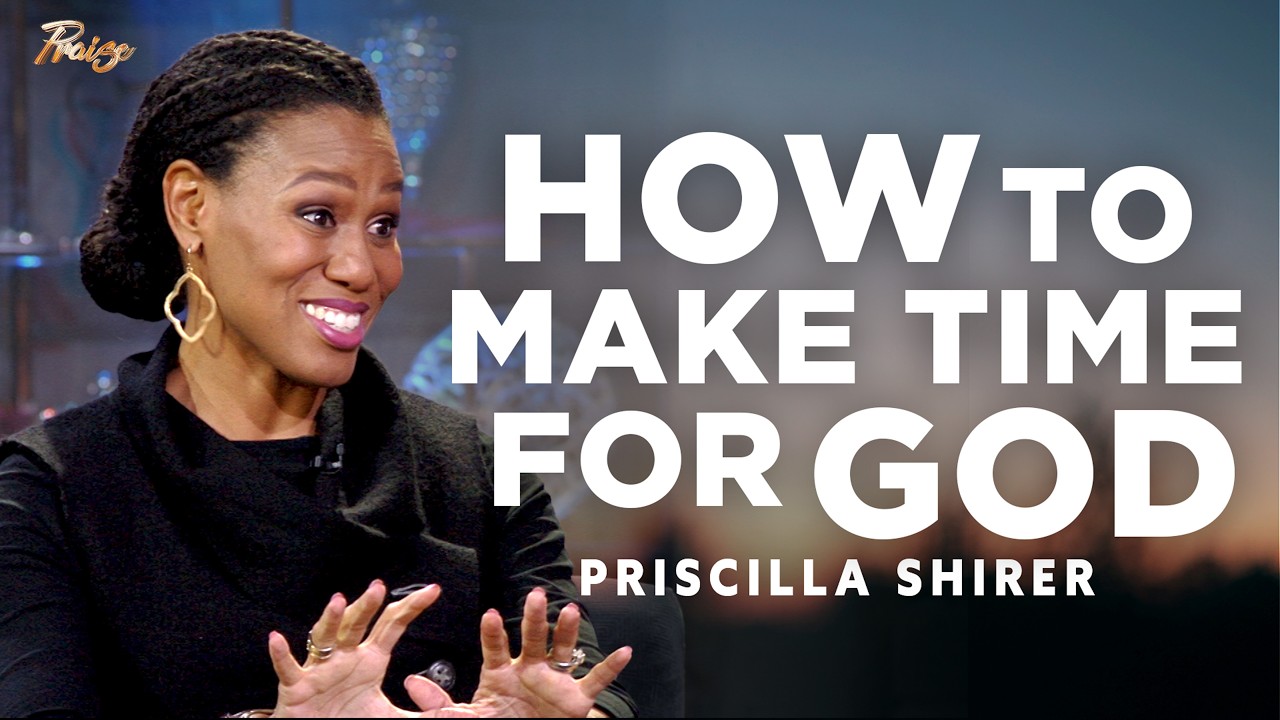
Video Summary
Shirer begins by admitting that even for her, prayer and time in God’s Word can easily slip from first place. Part of her own prayer is asking God to stir a genuine passion in her rather than trying to manufacture one. She describes the Bible not as a textbook to master but as a love letter through which believers meet its Author.
The conversation moves to hearing God’s voice. Shirer argues that people often look for skywriting or dramatic signs while ignoring the primary way God speaks: through Scripture. She notes that Old Testament saints needed pillars of fire and other signs partly because they did not have what every believer has today, the indwelling Holy Spirit. She and the host discuss the meaning of the word paraclete as a battle partner who guards a soldier’s back.
Shirer then shares what she learned while filming the movie War Room: she valued prayer but had neglected intentionality. She explains how to pray strategically, writing down Scripture-based prayers and keeping a record of answers. Finally, she offers practical ideas for practicing God’s presence throughout busy days, inspired by Brother Lawrence, and explains how knowing God’s character through His Word helps believers recognize His voice.
Key Takeaways
- Ask God to stir a passion for prayer and Scripture instead of trying to manufacture one.
- The Bible is a meeting with a Person, not just information to learn.
- The primary way God speaks is through His Word; ignoring it while seeking signs is backward.
- The Holy Spirit, the Paraclete, is every believer’s battle partner, not just for clergy.
- Strategic prayer targets specific areas with specific promises from Scripture.
- Writing prayers down keeps believers focused and builds a record of God’s faithfulness.
- Practicing God’s presence all day relieves guilt over imperfect quiet times.
Scripture as a Meeting With a Person
Shirer recalls growing up with a father who preached faithfully every Sunday and a mother who taught Bible stories with flannel-board figures. Yet she says the Scriptures truly came alive when she realized they were meant to be an encounter in everyday life, not just at church. Quiet time, in her view, is not a duty to check off a list but an opportunity to sense God’s peace, comfort and nearness.
That perspective addresses one root of prayerlessness. If prayer and Bible reading feel like obligations, they are easy to postpone. If they are conversations with someone who loves us, they become far more compelling. Shirer’s point echoes the writer of Hebrews, who says the word of God is living and powerful (Hebrews 4:12).
Why Believers Miss God’s Voice
According to Shirer, many Christians listen to everyone and everything else while hoping to find God’s voice somewhere, all the while neglecting the Bible. She puts it bluntly: someone who wants to hear from God but never reads the Bible does not really want to hear from Him, because Scripture is His primary means of communication.
She acknowledges the appeal of the dramatic signs in the Old Testament, from the pillar of cloud and fire to dreams and even a speaking donkey. But she observes that the psalmist begged God not to take His Spirit away, which shows that Old Testament believers longed for what Christians now have permanently. God can still use extraordinary signs, she says, but believers should not overlook the gift of the Spirit living within them.
Shirer also confronts a lie she believes the enemy promotes: that only seminary graduates, ministers or especially spiritual people have a direct line to God. She insists that hearing God is for ordinary people folding laundry and figuring out what to cook for dinner. The Spirit is the believer’s Paraclete, a term she connects to ancient soldiers who fought back to back, each guarding the other.
Praying With Strategy and Specificity
Shirer says filming War Room over several months made her realize that although she valued prayer, she had not been intentional about it. Strategic prayer, as she describes it, involves noticing where the enemy seems to be at work, anticipating where he might exploit a weakness or stir up division, and then praying with targeted promises from Scripture instead of repeating comfortable phrases.
She recommends writing prayers down. Doing so keeps believers focused, reminds them what they are standing on day after day, and creates a dated record when God answers. That record, she notes, can become a faith legacy for children and grandchildren. The host adds that Ephesians 6 places prayer right after the sword of the Spirit, describing prayer as an essential part of spiritual warfare (Ephesians 6:17-18).
Both women agree that honest lament has a place; David poured out his pain in the Psalms. But at some point believers must rise up and declare what God says about their marriage, health, family and relationships. The host shares how praying Scriptures about unity and reconciliation changed difficult family situations. Shirer adds that if she were the enemy, she would try to make believers undervalue their most powerful weapon. She points to the promise that if God’s people humble themselves and pray, He will heal their land (2 Chronicles 7:14).
Practicing God’s Presence in Ordinary Days
Shirer is quick to say that her life is not spent on a mountaintop. Like many others, once her feet hit the floor, the day is full. She tries to pray and read Scripture first thing in the morning because otherwise it rarely happens. But she has also found freedom in Brother Lawrence’s classic idea of practicing the presence of God throughout the day.
During years with young children, she wrote the same verse on several index cards and placed them by the bathroom sink, the kitchen, the laundry area and even the sandbox. For two weeks she would encounter the same verse everywhere, and by the end it was written on her heart. Her sister does something similar with a card clipped to the car dashboard. Shirer also suggests that when problems come up during the day, believers can bring them to God and ask which Scripture applies, just as naturally as they might call a friend.
Recognizing His Voice by Knowing His Character
To illustrate discernment, Shirer explains that her father and brother share a name and sound alike, and her brother has sometimes used that to fool people, but never her. She also says that if someone claimed her husband of many years said something totally out of character, she would know it was untrue. In the same way, reading Scripture reveals God’s personality and character, which helps believers recognize when fear, pride, insecurity or the enemy is speaking instead. In her words, the more one knows God, the more clearly one can hear Him, much as Jesus said His sheep know His voice (John 10:27).
For more from Priscilla Shirer, read How to Recognize the Holy Spirit’s Presence in Your Life and Discerning the Voice of God.
Frequently Asked Questions
Why do people struggle to pray, according to Priscilla Shirer?
She suggests prayer slips when it feels like a duty rather than a relationship, when believers neglect Scripture, and when they underestimate how powerful prayer really is. She asks God to stir genuine passion for it.
What is strategic prayer?
Strategic prayer means identifying specific areas where the enemy may be at work, finding Scripture promises that apply, writing those prayers down and continuing to pray until God answers.
How can busy people practice God’s presence?
Shirer recommends placing a single verse in several everyday locations, such as mirrors, kitchens or car dashboards, and turning to God throughout the day with questions and concerns.
Final Thoughts
Priscilla Shirer’s conversation offers a refreshing and practical answer to prayerlessness. Prayer grows when believers see the Bible as a meeting with God, trust the Holy Spirit as their ever-present battle partner, pray with intention and specificity, and invite God into the ordinary moments of their day. For anyone who has felt guilty about an inconsistent prayer life, her message is both encouraging and freeing.
