Battlefield Of The Mind | Joyce Meyer
Joyce Meyer has spoken for decades about the connection between our thoughts and the quality of our lives. In this special broadcast, she returns to the theme that has defined much of her ministry: the battlefield of the mind. Drawing on Proverbs 23:7, the conquest of the Promised Land and her own personal story, she explains how believers can recognize the truth about who they are in Christ, stop speaking against themselves and take back ground the enemy has tried to occupy.
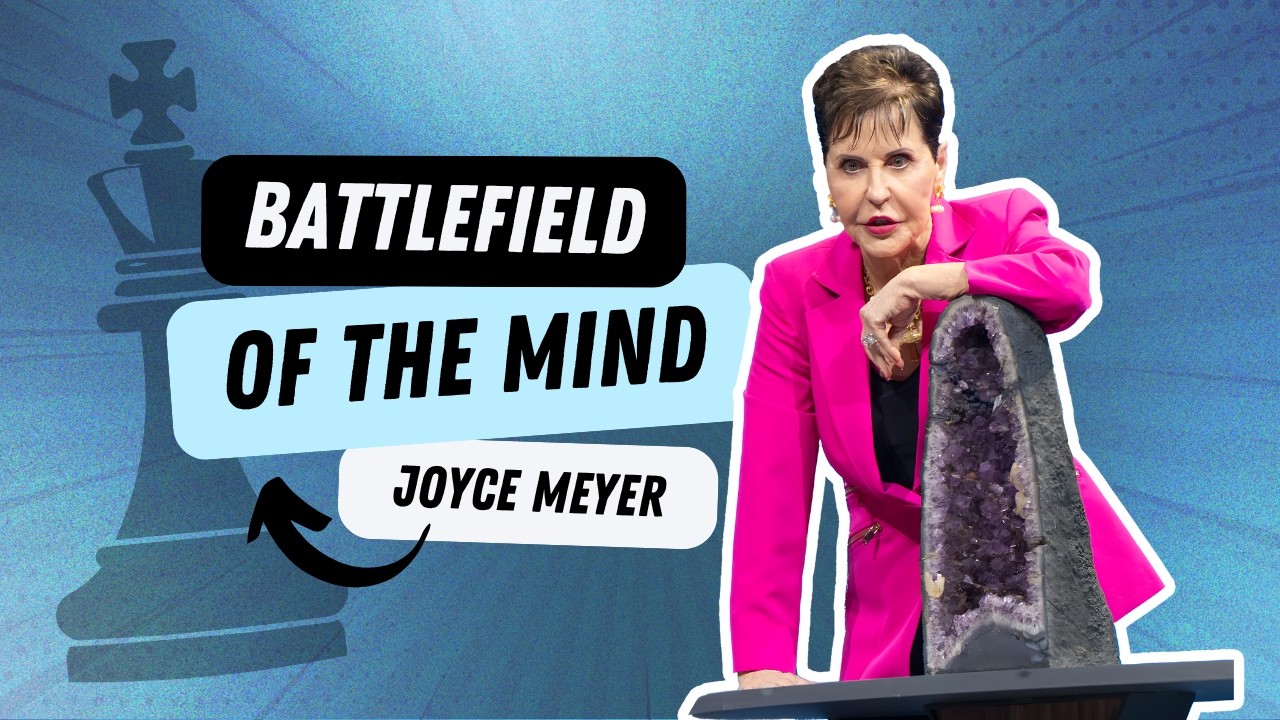
Video Summary
Meyer opens with Proverbs 23:7: “As he thinks in his heart, so is he.” She asks viewers a pointed question: what do you want to become? Her goal is to help people become confident and victorious first in their thinking, then watch that change influence every area of life. Nobody has to surrender to misery one more day, she says.
From there she teaches on acknowledging the good God has placed in believers, recounts a dramatic personal moment early in her marriage, explains why possessing God’s promises requires a fight, and describes the difference between how believers look on the outside and who they are on the inside through Christ.
Key Takeaways
- What we think shapes who we become.
- Acknowledging the good God has placed in us makes our faith effective (Philemon 6).
- Believers are precious, favored, redeemed, reconciled and loved unconditionally.
- Speaking negatively about yourself can open the door to the enemy’s lies.
- Possessing God’s promises requires standing firm and refusing to quit when things are hard.
- Believers have the mind of Christ, and God is steadily working to reveal that inner reality.
Acknowledge Every Good Thing in You
Meyer points to Philemon 6, which speaks of faith becoming effective “by the acknowledgment of every good thing which is in you in Christ Jesus.” She admits she overlooked this verse for years. While believers should not think more highly of themselves than they ought, they should agree with what God says about them.
She lists several of those truths. Believers are precious. They have favor with God, and God can give them favor with people. They are redeemed, bought back by the blood of Christ. They are reconciled, so their account with God is settled; there is no need to spend every day trying to repay Him for yesterday’s mistakes. And they are loved unconditionally. God does not love His children more on good days and less on bad days, because love is not merely something He does; it is who He is. Finally, believers are “more than conquerors” (Romans 8:37) and can do all things through Christ who strengthens them.
The Power of What You Say About Yourself
Meyer shares a story from about forty-five years ago. After an argument with her husband, Dave, she sat feeding her baby and began speaking against herself: “It’s always me. I’m no good. I can’t do anything right.” In that moment, she says, she sensed an evil presence in the room. She began declaring, “I am the righteousness of God in Christ,” repeating it until she sensed that presence leave. She acknowledges she rarely tells the story, but she shares it to make a point: there is no telling what people invite into their lives when they speak negatively about themselves.
Her counsel is direct: never say you are ugly, stupid or worthless. Instead, agree with Scripture that you are precious, forgiven, justified and capable of great things through Christ. She also encourages believers to work with God rather than passively waiting for change.
Possessing the Land Means Facing the Battle
Meyer turns to Joshua leading Israel across the Jordan. God had given them the Promised Land, yet each city, beginning with Jericho, was occupied by enemies who had to be driven out. In the same way, she says, God has promises for His people, but possessing them may require standing firm and refusing to give up when things feel difficult.
She specifically challenges the habit of saying “it’s just so hard,” for example when it comes to forgiving people who have caused hurt. Repeating that phrase, she says, only makes things harder. God never asks His people to do something they cannot do with His help. The struggles of the mind, including worry, doubt, confusion, anger and condemnation, are real, but God has provided a way to win.
The Mind of Christ Within You
Meyer reads 1 Corinthians 2:16: “We have the mind of Christ.” She explains that salvation does not instantly change outward circumstances. A person who needs to lose weight or pay off debt will still face those realities. But inwardly, believers receive everything they need, as though God “downloaded” a new program. God lives within them, making them His home.
She compares this to gold and diamonds hidden in the earth: valuable things often require digging. God is continually chipping away what does not belong so that who believers truly are in Christ can be seen. Her cheerful motto sums it up: “I’m not where I need to be, but thank God I’m not where I used to be.” She adds that believers overcome evil with good (Romans 12:21). For more from Meyer, read Your Life Is Only as Good as Your Thoughts and Truth About Identity, Part 1.
Frequently Asked Questions
What is the “battlefield of the mind”?
Joyce Meyer uses the phrase to describe the spiritual struggle that happens in our thoughts, including worry, doubt, condemnation and negative self-talk, which shapes how we live.
What verse is central to this teaching?
She anchors the message in Proverbs 23:7, “As he thinks in his heart, so is he,” along with Philemon 6 and 1 Corinthians 2:16.
Why does Meyer warn against negative self-talk?
She believes speaking against yourself agrees with the enemy’s lies and can open the door to further oppression, while declaring God’s truth helps believers stand firm.
Final Thoughts
“Battlefield Of The Mind” is a practical and hopeful call to renew our thinking. Joyce Meyer reminds believers that their identity in Christ is greater than their failures, that their words matter and that God’s promises are worth fighting for. The battle may be real, but so is the victory available through the mind of Christ.
