How To Believe For The Impossible-FULL SERMON | Joyce Meyer
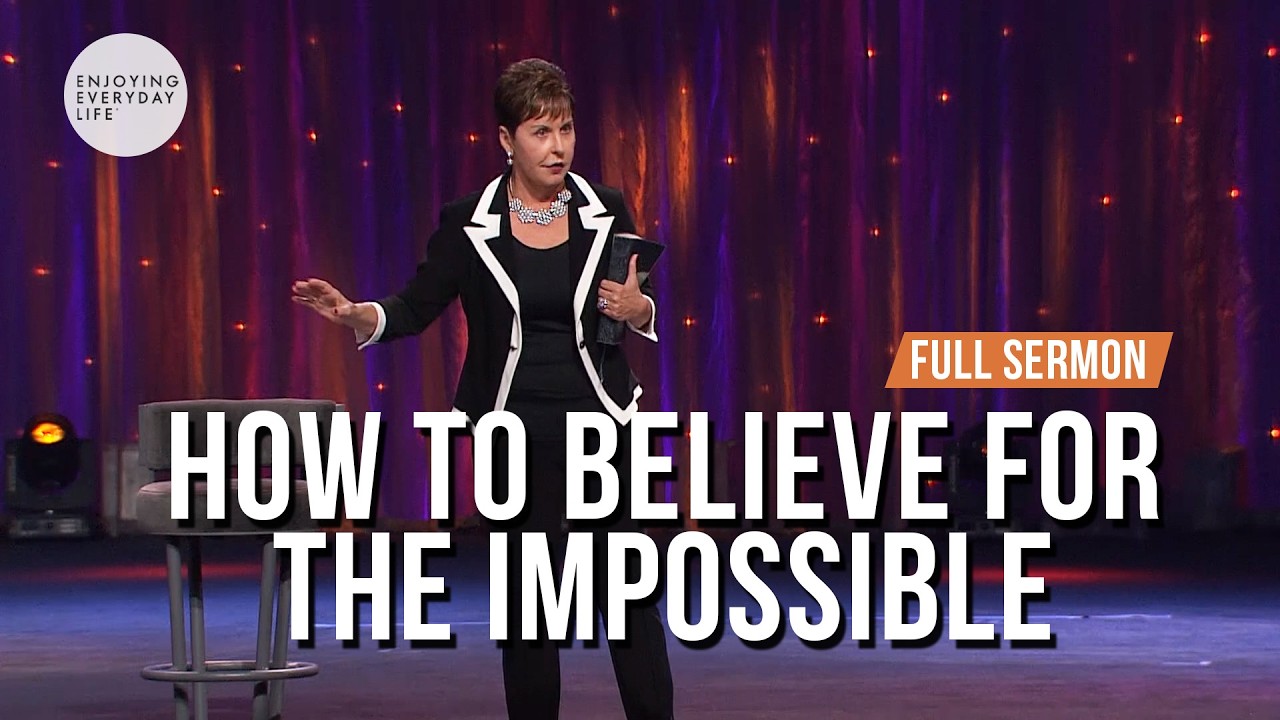
What would happen if believers stopped expecting the worst and started daring to hope? In this full sermon from an Enjoying Everyday Life conference, Joyce Meyer teaches how to believe for the impossible. She explains the difference between instant change and true transformation, why no one is beyond God’s reach, how hope and faith work together, and why failures like Peter’s do not have to be the end of the story.
Video Summary
Meyer begins by distinguishing transformation from being “translated.” Enoch was taken to heaven in a moment, but transformation in Scripture means being changed entirely from the inside out over time. Salvation is a free gift that no one can earn, she emphasizes, yet many believers stop there instead of cooperating with the Holy Spirit, who works to cleanse and renew the mind, will and emotions so that what God has placed inside can be seen on the outside.
From there she encourages listeners not to give up on themselves or others, introduces her theme, “Dare to Believe,” and illustrates it with the stories of Peter and the woman with the issue of blood.
Key Takeaways
- Transformation is a process of being changed from the inside out, not an instant event.
- Salvation cannot be earned, but believers must work with the Holy Spirit as He renews them.
- The only thing that never changes is God; people and circumstances can change.
- Hope is positive expectation, and faith cannot thrive without it.
- God is often working most when it seems He is doing nothing.
- Peter’s restoration shows that failure does not disqualify anyone from God’s purpose.
Transformation, Not Translation
Meyer cites Paul’s instruction to “work out your own salvation with fear and trembling” (Philippians 2:12–13). This does not mean working for salvation, she clarifies; everyone comes to God the same way, through Christ alone. But after the new birth, the Holy Spirit lives within believers and works with them to purify their souls. The goal is that what God has done inside becomes a testimony that draws others to Him.
Don’t Give Up on Anyone
Many people believe they themselves can change, Meyer says, but doubt that others ever will. Her response is simple: the only thing that never changes is God. She shares that her father, who abused her, did not come to faith until he was eighty-three, when she had the privilege of leading him to Christ. There were many times she thought he would never change, but she kept praying when he came to mind and tried to show him Christ’s love. Even when a relationship is unhealthy and distance is necessary, she encourages believers not to stop praying. Her message: don’t give up on your children, your marriage or yourself.
Why Not Believe?
Meyer recalls a tearful woman at a book signing who asked whether Jesus could heal anyone, no matter what they had been through. She seemed almost afraid to believe. Meyer’s answer was yes, and she asked her audience: why not believe? Faith costs nothing, and believing that things can change makes life better even while waiting. She challenges people with long-term financial struggles to dare to believe they can one day be debt-free, while noting with humor that it may also require hard work and wise choices.
She explains that vague wishing is not real hope. Hope is a confident, positive expectation, and she does not believe a person can have faith without it. Saying “I’m trusting God” while complaining constantly sends mixed signals. She admits that she, too, goes through hard things, sometimes even while preaching, and must apply these same truths.
God Is Working When You Can’t See It
Meyer reminds listeners that God never changes, yet He is always changing people and situations. Often, she says, when it seems He is doing nothing, He is actually working. She compares it to a freshly baked pie: children get excited when it appears on the table, but the work began long before. She encourages believers to declare out loud, especially when doubt comes, “God is working in my life right now,” and points to Ephesians 3:20, which says God can do exceedingly abundantly above all we ask or think.
Peter Dared to Believe in a Second Chance
Peter denied Jesus three times on the night He most needed His friends. Yet, Meyer says, Peter dared to believe that God is the God of second chances and that he could still be used. She admires people who have made serious mistakes, sometimes more than once, and refuse to give up. God’s arms remain open, she assures listeners, and a person’s “mess can become their message.” She invites the audience to declare, “It’s not too late for me.”
The Woman Who Pressed Through
Meyer also points to the woman in Mark 5:25–34, who had suffered for years, spent everything on physicians and only grew worse. When she heard about Jesus, she pressed through the crowd, telling herself that if she could only touch His garment, she would be made well. Meyer notes that God heals not only physically but emotionally, mentally, spiritually and relationally. She closes this portion by praying for people suffering from migraines, a condition she says she once endured for years. For more from Meyer, read Turning Your Pain into Power and Interrupted by God.
Frequently Asked Questions
What is the difference between transformation and translation?
Meyer explains that translation, like Enoch’s, is an instant change of place, while transformation is a gradual change from the inside out as believers cooperate with the Holy Spirit.
Why does Joyce Meyer say hope is necessary for faith?
She defines hope as positive expectation and teaches that genuine faith cannot flourish where a person constantly expects the worst.
What does Peter’s story teach about failure?
Meyer teaches that Peter’s restoration after denying Jesus shows that God offers second chances and can still use people who have failed.
Final Thoughts
“How To Believe For The Impossible” is an invitation to stop settling for low expectations. Joyce Meyer reminds believers that God is still transforming people, still working behind the scenes and still restoring those who fall. Her challenge is simple and bold: dare to believe.
