Fear Says It’s Over, God Says Move | Steven Furtick
In his message Fear Says It’s Over, God Says Move, Pastor Steven Furtick of Elevation Church turns to the dramatic scene at the Red Sea in Exodus 14 to show how believers should respond when life seems to reach a dead end. With Pharaoh’s army closing in and the sea blocking the way forward, the Israelites cried out that it was over. Furtick argues that the moment that looked like the end was actually a hinge moment, and that God’s instruction was not to freeze or flee, but to move.
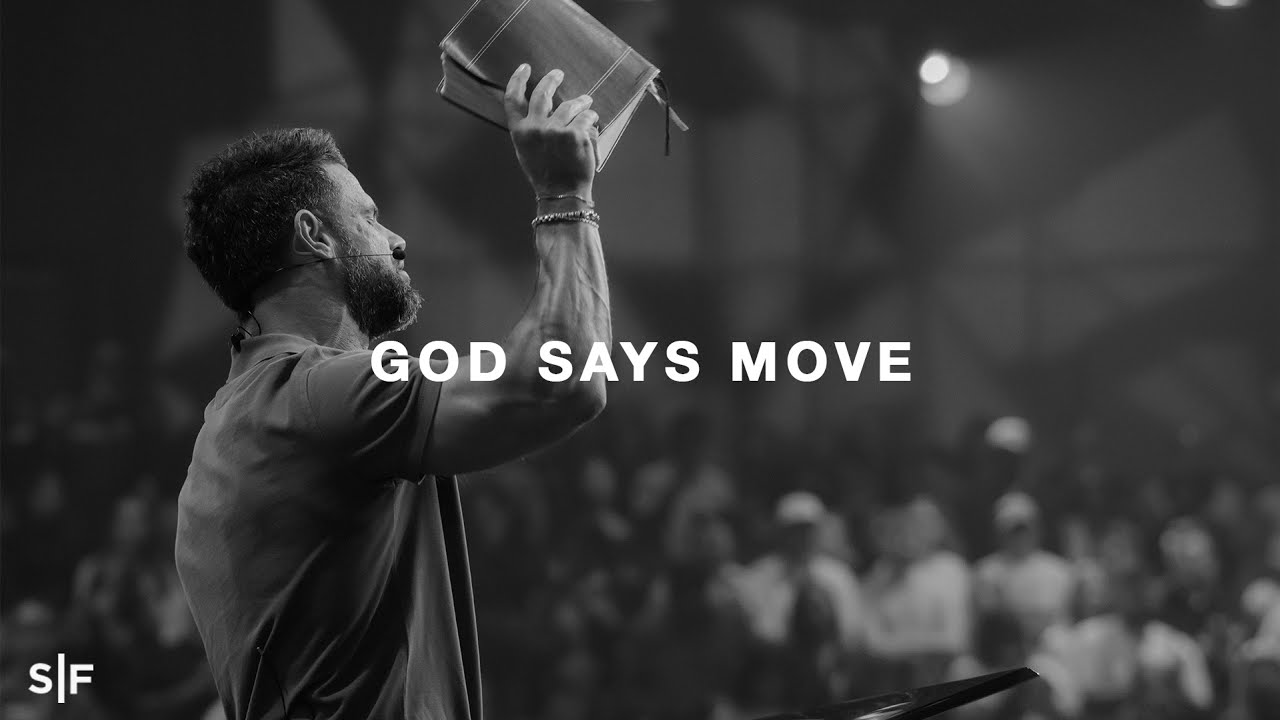
Video Summary
Furtick opens with a sobering observation: a fresh start, in the strictest sense, is impossible. People often pray for a reset button, as if life were a video game that could be replayed from the last checkpoint. Yet the experiences of the past do not simply evaporate when someone steps into the future. What God offers instead, Furtick says, is something more practical and more powerful: not a fresh start, but a forward step.
From the Exodus narrative he identifies three responses to an impossible obstacle. The first belongs to the people of Israel, whose reaction can be summarized in two words: “It’s over.” Only days into their freedom, they see Pharaoh’s chariots and immediately assume they will be dragged back into slavery. Their desperation quickly turns into fear, and their fear turns into anger directed at Moses. Furtick notes that they even begin rewriting history, claiming they had told Moses to leave them alone in Egypt, which was never true.
The second response belongs to Moses, who tries to calm the crowd with the words “stand still” and assures them that God will fight for them. It is the kind of thing a responsible leader might say. The third response, however, belongs to God, who tells Moses, in effect, to stop crying out and tell the people to move forward. Furtick puts it bluntly: in this moment, God is right and Moses is wrong. Standing still was not the answer; obedient movement was.
The sermon then widens into practical application about discernment, responsibility, relationships and the small daily decisions that shape a person’s future. Furtick closes with a declaration that has become a theme of the message: when a believer stands at what looks like the end, what God has placed in their hand is enough to change the end.
Key Takeaways
- A true fresh start is impossible, but a forward step is always available with God.
- Anger is often a mask for fear; asking “what am I afraid of?” can reveal the real issue.
- Big doors swing on little hinges: small decisions and small acts of obedience can open the way to major breakthroughs.
- Be wary of any “word from God” that pulls you toward escaping reality rather than embracing responsibility.
- If relationships keep ending, it may be time to look for a “leak” rather than waiting for a better person.
- What God has already placed in your hand is enough for the next step, and obedience can change how a story ends.
Three Responses to an Impossible Situation
Furtick frames the Red Sea account around three voices that every believer hears in a crisis. The first is the voice of despair: “It’s over.” According to Furtick, this response is natural, but it is also dangerous, because desperation tends to breed fear, and fear often shows up as anger. He encourages listeners, whenever they see anger in someone else or in themselves, to ask what that person is afraid of. In many cases, he says, anger is simply fear in disguise.
He also highlights how fear distorts memory. The Israelites claimed they had been better off in Egypt and that they had warned Moses from the start. Neither claim was accurate. Furtick suggests that people often treat the past as imaginatively as they treat the future, projecting things onto it that never happened, especially when they feel stuck.
The second voice is the calm, spiritual-sounding counsel to “stand still.” It sounds faithful, and there are certainly seasons when waiting on God is right. But in this specific moment, Furtick argues, the Lord’s response in Exodus 14:15 is the hinge of the whole story: “Why do you cry to Me? Tell the children of Israel to go forward.” The third voice, God’s voice, calls for movement.
Big Doors Swing on Little Hinges
One of the most memorable phrases in the sermon is a leadership principle Furtick says he repeats often to his team: big doors swing on little hinges. In the Exodus story, the hinge was astonishingly small. God told Moses to stretch out his staff over the sea. A simple stick held over a massive body of water seems almost absurd, yet it became the instrument of one of the most celebrated miracles in Scripture.
Furtick applies this principle in both directions. Great marriages can be eroded by small eye rolls. Serious addictions often begin with small curiosities. On the other hand, great joy can grow out of small praise, and a seemingly minor decision can become the turning point of an entire life. He describes these as “hinge moments,” the everyday points where a person chooses whether to go back, go forward or stand still. Choosing to forgive instead of nursing an offense, he says, may look small, but the smallest offenses can grow into the most unforgiving prisons.
His goal, he explains, is not merely that people respond well in a church service, but that their real-time reactions during the week reflect what God spoke to them on Sunday.
Freedom Is Not the Same as Relief
A significant portion of the message deals with how believers interpret what they think God is saying. Furtick shares a testimony from a staff member who felt overwhelmed by new responsibilities and was tempted to shrink back. Through a previous sermon, she sensed the Lord encouraging her to step up rather than step away. Furtick says he was grateful for her testimony precisely because so many people use sermons as an excuse to abandon commitments rather than embrace them.
He recounts, with some humor, a person who quit their job without another position, without insurance and with children to support, all because they interpreted a sermon about Israel leaving Egypt as a personal call to walk away. From this he draws a central warning: be careful of any interpretation of a word from God that pulls you toward an escape from reality rather than toward responsibility. Sometimes, according to Furtick, people confuse freedom with relief and mistake confirmation bias for divine guidance.
A helpful test, he suggests, is to ask whether one is trying to get out of something or going toward something. If a person cannot say what they are moving toward, the impulse may be a wish rather than a word from God. He also observes that the Red Sea miracle did not deliver Israel into comfort; it led them into the wilderness, where they still had to grow.
Are You Leaking Love?
Furtick extends this logic to relationships. He notes that many sermons encourage people to see departing friends as a sign that God is taking them to the next level. While that can sometimes be true, he asks a pointed question: if someone needs that message every few weeks because people keep leaving, could there be a leak in their life? If believers are always told that someone better is coming, they may overlook the people God has already placed in front of them. Even if God does send someone new, Furtick says, a person who has not grown in relational maturity will likely lose that relationship too.
This section connects with themes he has explored in other messages, such as Why You Have To Let It Go, where releasing bitterness becomes an essential step toward healing.
You Can Change the End
In the closing portion, Furtick openly acknowledges seasons in his own ministry when he believed his best days were behind him, when criticism felt impossible to recover from, and when he lost his joy. He admits that the counsel to simply stand still can be tempting in those moments. Then, in a deliberate twist on his usual encouragement that listeners “are going to make it,” he tells the congregation they might not make it if they refuse to respond. Outcomes, he says, depend on how people respond in the moment.
His final appeal is a call to move: take a step and trust God, take a step and pray, take a step and praise again, take a step and keep raising your family, take a step and pursue treatment while still trusting God. The message echoes the promise of Isaiah 43:18-19, where God tells His people not to dwell on former things because He is doing something new. For readers who want to continue on this theme, Furtick’s message God Sets The Destination, Not You offers a complementary perspective on trusting God’s direction.
Frequently Asked Questions
What is the main message of “Fear Says It’s Over, God Says Move”?
Steven Furtick teaches that when life seems to reach a dead end, believers should not give in to despair or freeze in place, but take a forward step of obedience using what God has already placed in their hands.
Which Bible passage does Steven Furtick preach from?
The sermon centers on Exodus 14, especially verse 15, where God tells Moses to stop crying out and instruct the Israelites to go forward toward the Red Sea.
What does Furtick mean by “big doors swing on little hinges”?
He means that small decisions, attitudes and acts of obedience can have enormous consequences, just as Moses’ small staff stretched over the sea opened the way for Israel’s deliverance.
Final Thoughts
This sermon offers a balanced and challenging word for anyone standing at what feels like the end of a road. Steven Furtick does not promise a magical reset or an easy escape. Instead, he points to the God who meets people in real time and asks them to take the next faithful step. Fear may announce that it is over, but according to Furtick, God’s voice says move, and that movement, however small, can change the end of the story.
