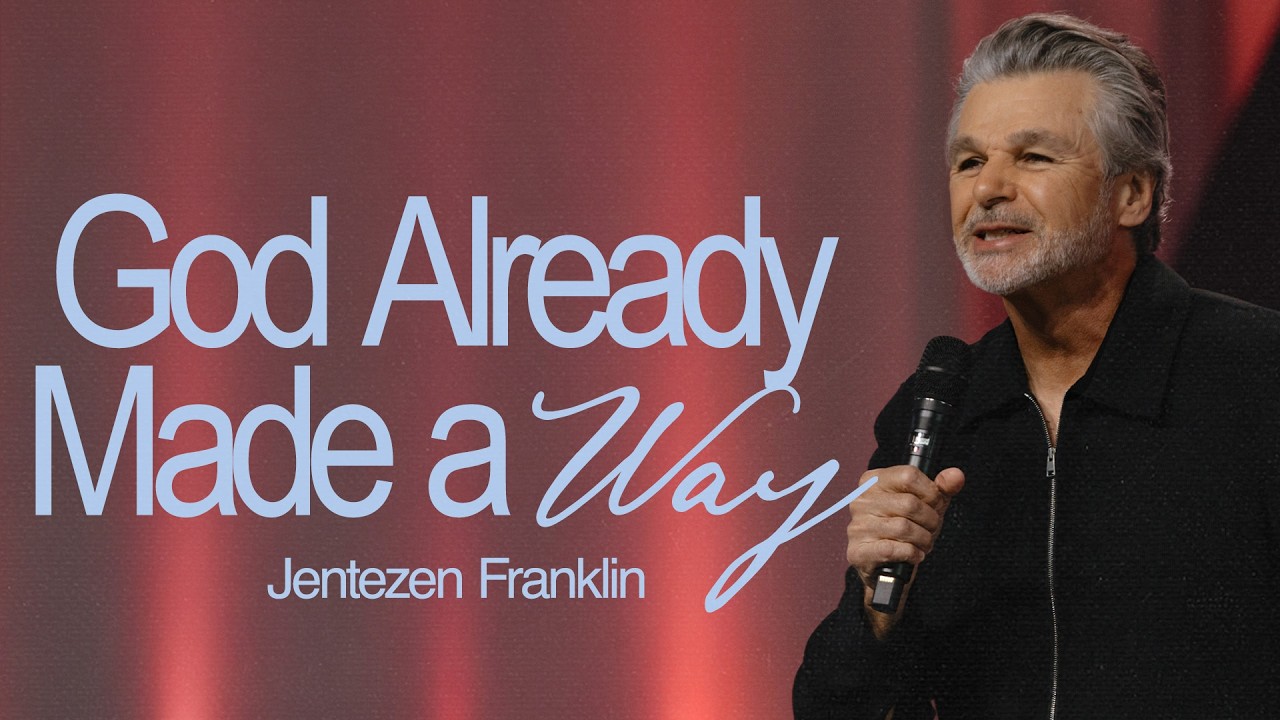
God Already Made A Way | Jentezen Franklin
In the message God Already Made A Way, Pastor Jentezen Franklin of Free Chapel uses the biblical image of a well to describe the depth of salvation and the life of the Holy Spirit. Speaking before a baptism service, Franklin urges believers not to settle for shallow faith but to keep redigging the wells of prayer, worship and revival so that living water can flow to their families for generations.
Video Summary
Franklin begins with the promise that “whoever calls on the name of the Lord shall be saved.” Salvation, he says, is not a minor thing, yet it is only the beginning. When someone truly encounters Christ, they discover a well so deep it never runs dry. God does not only save; He also fills believers with the Holy Spirit, and the depth of that life is limited only by how hungry and thirsty a person is for more of Him.
With characteristic humor, Franklin tells some listeners it is time to take off their “floaties” and leave the shallow end of the pool. He points to the well of Jacob, preserved from generation to generation, as a picture of spiritual heritage. He also draws on David’s longing for water from the well of Bethlehem to remind his church that every spiritual well was dug and defended at great cost. The message concludes with a call to value and maintain the spiritual inheritance that has been passed down, while trusting that Jesus remains the answer.
Key Takeaways
- Salvation is the doorway to an endless well, not the end of the spiritual journey.
- Hunger and thirst for God determine how deep a believer goes.
- Families depend on believers who keep the wells of revival and prayer open.
- Living water satisfies the soul in a way the world cannot.
- Spiritual wells must be cleaned, guarded and redug to keep flowing.
- Every spiritual heritage was paid for by people who sacrificed to preserve it.
Salvation Is the Beginning of a Deep Well
Franklin stresses that coming to Christ is the most important step a person can take, but he warns against treating it as the finish line. When a believer is truly saved, he says, they enter a well that is boundless and unending. The baptism in the Holy Spirit, in his description, is not ankle-deep, knee-deep or waist-deep, but water to swim in, echoing the river imagery of Ezekiel 47.
He challenges adults who have spent years in church without growing to “launch out into the deep,” a phrase taken from Jesus’ words to Peter in Luke 5. According to Franklin, some believers are stuck in a religious rut and need to redig the wells of revival, prayer, joy and the Holy Spirit. He emphasizes that this is not merely personal: if a parent goes spiritually dry, the whole family can go dry.
Generational Wells and Spiritual Heritage
To illustrate the importance of spiritual inheritance, Franklin turns to Jacob’s well. In Scripture, wells carried deep significance, and Jacob’s well was revered because of its heritage. Families kept it clean and open, and centuries later Jesus sat beside that very well and spoke with the Samaritan woman, as recorded in John 4. The water was still fresh enough that people came from all around to draw from it.
Franklin notes that some of those being baptized that day were first-generation Christians, while others were drinking from wells dug by grandparents, aunts and earlier generations. Either way, he says, they were beginning or continuing a family well that could bring living water to generations yet to come.
He also offers an observation from the Holy Land, where the ancient well associated with Jacob is now covered by a church building. Franklin sees a symbol in this: the danger of replacing living water with ritual. He is careful to say he is not criticizing anyone’s tradition, and he even affirms a renewed interest in historic practices. At Free Chapel, he explains, the church takes communion frequently, prays the Lord’s Prayer and continues the practices of the book of Acts, including prayer meetings, worship and praying in the Spirit.
Living Water That Satisfies
A central promise in the message comes from Jesus’ words at Jacob’s well: “Whoever drinks of the water that I shall give him will never thirst” (John 4:13-14). Franklin explains what this means in practical terms. The things he left behind when he came out of the world no longer have a hold on him. He is not counting the minutes until he can leave church to get drunk, get high or be unfaithful, because he is drinking from a source that does not leave him thirsty.
He describes some people as having “that thirsty look,” constantly searching for something to fill an inner emptiness. Living water, he says, satisfies the soul. He appreciates God’s blessings, but even without them, the gift of eternal life and the presence of Jesus are enough. Believers may go through hard things, he adds, but they will be all right. This theme of God’s sufficiency is also explored in his message Generational Garments.
Keeping the Well Clean and Open
Franklin reminds listeners that even a well connected to an underground river can become clogged. If debris is allowed to build up, the water cannot flow. In the same way, believers must keep their spiritual lives clean and open, refusing to let their faith become stale or stagnant.
He connects this to the early church in Acts, which broke bread daily and shared life together. Franklin explains that in his view this involved communion as well as fellowship, and that Christians did life with other Christians. If a believer has no real fellowship with other believers, he suggests, it may be a sign that they have drifted toward the world. He calls communion a powerful practice that reaches all the way back to the upper room, observed in remembrance of Jesus “until He comes.” He also briefly points ahead to the return of Christ, when believers will be caught up to meet the Lord.
The Cost Behind Every Well
The most moving portion of the message comes from 2 Samuel 23:15-17. Weary from battling the Philistines, who had taken over his hometown of Bethlehem, David longed aloud for a drink from the well by the gate. Three of his mighty men broke through enemy lines to bring him that water. But when David held the cup, he could not drink it. He poured it out before the Lord, saying it represented the blood of the men who risked their lives.
Franklin applies this story to the spiritual inheritance of every church. Free Chapel, he says, is not a “fly-by-night” ministry; its well was dug by pastors, evangelists and praying people long before many current members arrived. He insists that the church never set out to be a megachurch and does not see itself that way. Instead, it sees itself as a well, deep enough that the more people come, the more they can serve. If Isaac had not redug the wells of Abraham, as Genesis 26 describes, the next generation would have paid the price. Franklin’s closing word is simple: there is plenty of Jesus, and Jesus is the answer. For a related message on God’s faithfulness, see Giants Still Fall.
Frequently Asked Questions
What is the main message of “God Already Made A Way”?
Jentezen Franklin teaches that salvation opens a deep, endless well of God’s presence, and believers must keep redigging the wells of prayer, worship and revival for themselves and future generations.
Why does Franklin talk about Jacob’s well?
He uses Jacob’s well as a picture of spiritual heritage that was carefully maintained for generations, and where Jesus offered living water to the Samaritan woman.
What does David’s story in 2 Samuel 23 teach?
According to Franklin, it shows that every spiritual well was preserved at great cost, and believers should honor and protect the heritage they have received.
Final Thoughts
God Already Made A Way is a short but rich message about depth, heritage and responsibility. Jentezen Franklin invites believers to move beyond the shallow end of faith, to drink deeply from the living water Jesus offers and to keep their spiritual wells clean and open. In doing so, they not only find satisfaction for their own souls but also leave a flowing well for their children and grandchildren.
