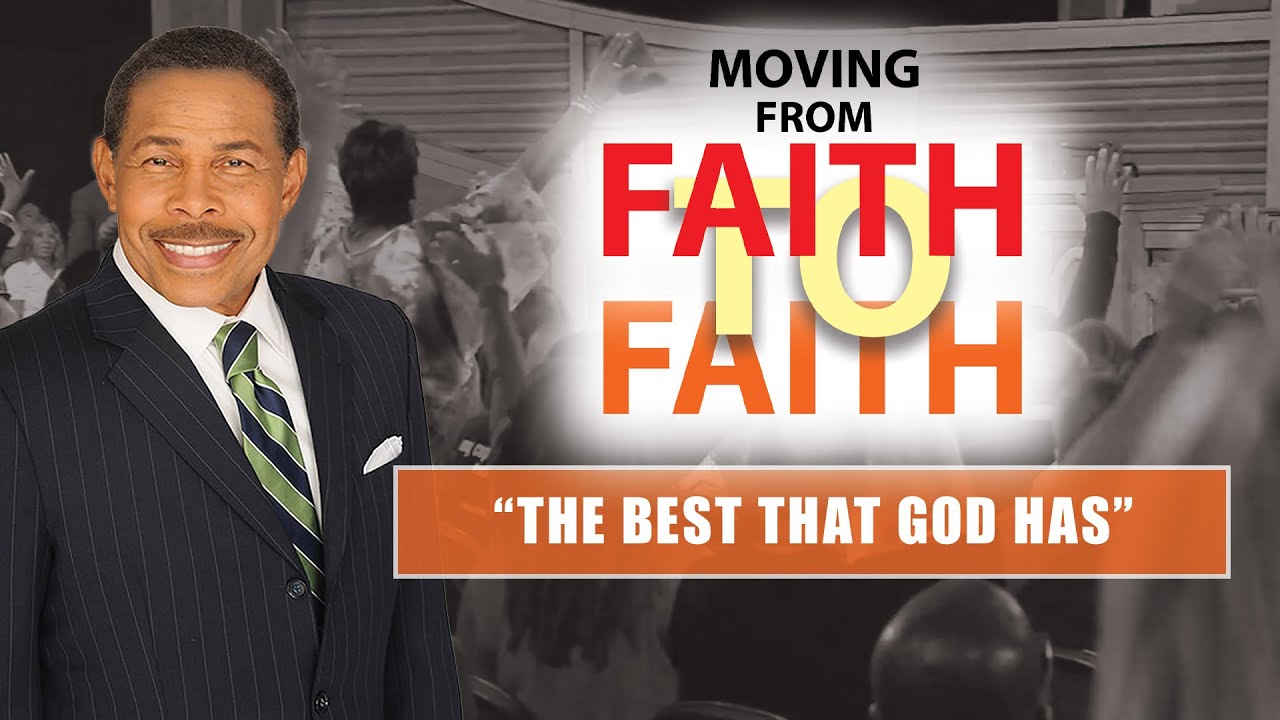
Dr. Bill Winston: The Best That GOD Has – Moving from Faith to Faith
In the broadcast The Best That God Has from his series Moving from Faith to Faith, Dr. Bill Winston teaches that the same anointing that rested on Jesus now rests on and in every believer. According to Winston, Christians often fail to experience God’s best not because the power is absent, but because they have not been taught to recognize it, trust it and renew their minds to match what God says about them.
Video Summary
Winston opens with a bold statement: the anointing that enabled Jesus to heal the sick, restore the maimed, raise the dead and feed five thousand is the same anointing available to believers today. He argues that believers must be taught about this anointing and develop confidence in it so they can step out in faith. That anointing, he says, will distinguish believers and raise them into positions of influence, much as it did for Joseph in Egypt and Daniel in Babylon.
Drawing from Matthew 13, John 14 and several Old Testament examples, Winston explains what the anointing does and why the soul, not just the spirit, matters in releasing it. He shares personal stories from his early ministry in Minnesota and an encounter on a busy downtown street, and closes by contrasting worldly wisdom with the hidden wisdom of God revealed in Christ.
Key Takeaways
- According to Winston, the anointing that was on Jesus is on and in every believer.
- Jesus promised that those who believe in Him would do the works He did, and greater works.
- The power belongs to God; believers must never take credit for what the anointing accomplishes.
- The anointing brings distinction, restoration and supernatural increase.
- A born-again spirit is righteous, but the soul must be renewed by the Word of God.
- Believers are called to walk in God’s wisdom rather than compete using the world’s wisdom.
The Anointing That Was on Jesus
Winston begins in Matthew 13:53-54, where the people of Jesus’ hometown were astonished and asked where He got His wisdom and mighty works. Winston explains that the source was the anointing that rested on Jesus. In John 14, Jesus said that the Father dwelling in Him was doing the works.
The key promise, he says, is John 14:12: “He who believes in Me, the works that I do he will do also; and greater works than these he will do, because I go to My Father.” Winston walks through the miracles of Jesus, from feeding the multitudes to raising Lazarus after four days, and says believers are meant to continue where Jesus left off. In his view, Jesus’ earthly assignment was limited in scope, and the church is now called to extend His works throughout the world.
A Healing in the Park
To illustrate, Winston recounts an early experience after he and his wife became Christians in Minnesota. Inspired by healing ministers of that era, he sensed God telling him to hold a healing meeting. He obtained permission to use a public park and invited people to come forward for prayer after he preached.
One woman’s friend explained that she could not feel her face. Winston asked whether she believed Jesus was a healer, laid hands on her and prayed. According to his account, she immediately began weeping and said she could feel her face again. When she credited Winston, he quickly corrected her, insisting that Jesus had healed her. He adds a humorous illustration about the donkey Jesus rode into Jerusalem, imagining it thinking the crowds were bowing to it. The point, he says, is clear: the power is God’s, but it responds to the believer’s faith.
What the Anointing Does
Winston turns to the story of Saul in 1 Samuel 9 and 10 to describe how the anointing can transform a person. He notes that when God anointed Saul, it gave him the status of a captain and ruler, brought restoration of what was lost and released what Winston calls supernatural increase, where something that might take others a year could be accomplished in a week.
He compares many Christians to someone with a billion dollars in a bank account who never knows it and dies without using it. Winston also shares a story from his time in downtown Chicago, when he felt prompted to approach a homeless man who was swinging at people on a crowded street at midday. He says that as he stepped off the curb, something “went off” inside him and he felt invincible. By the time he reached the man, the man’s aggression had subsided; Winston put an arm around him, learned that someone had stolen his cigarettes and eventually led him to confess Christ.
He further cites the ark resting in the house of Obed-Edom in 2 Samuel 6, where the Lord blessed the whole household, and Aaron’s rod in Numbers 17, which budded, blossomed and yielded almonds overnight in the presence of God. For Winston, these stories show that when God’s anointing rests on a life, it produces fruit that others cannot explain.
Renewing the Soul
One of the central points of the message is the difference between spirit and soul. Winston teaches that once someone is born again, their spirit is made righteous. However, the soul, which he describes as the mind, will, emotions, intellect and imagination, must still be renewed. He points to 3 John 2, “that you may prosper in all things and be in health, just as your soul prospers,” and Psalm 23:3, “He restores my soul.”
He notes that Isaiah 11 describes the Spirit of the Lord as the Spirit of wisdom, understanding, counsel, might, knowledge and the fear of the Lord, observing that several of these relate to the mind. God gave humanity free will and will not override it, Winston says, which is why believers must renew their minds with God’s Word.
He illustrates this with a personal account. When he sought to buy a shopping mall, some warned him that the sellers would refuse to sell to a Black man. Winston says he chose to see himself as a child of God rather than through others’ labels. He connects this to the Israelites who saw themselves as grasshoppers, an image he believes they carried from slavery in Egypt, and stresses that this is not only an issue for one race but for people of every background. Readers may enjoy his related teaching Commit to Your Belief.
God’s Wisdom Versus the World’s Wisdom
In the final section, Winston turns to 1 Corinthians 2, where Paul says his preaching was not with persuasive words of human wisdom but in demonstration of the Spirit and power. Paul speaks of the hidden wisdom of God, which the rulers of this age did not know, for if they had, “they would not have crucified the Lord of glory.”
Winston argues that the world operates on a kind of wisdom that believers should not simply imitate. Believers, he says, are not called merely to compete but to lead, and they need wisdom above human wisdom. He points to 1 Corinthians 1:30, which says Christ has become for us wisdom from God, righteousness, sanctification and redemption. For another message in this vein, see The Source of Your Expectations.
Frequently Asked Questions
What does Bill Winston mean by “the anointing”?
He refers to the power of the Holy Spirit that rested on Jesus and, according to Winston, now rests on and within believers to heal, restore and bring increase.
Which Bible verse is central to this message?
John 14:12, where Jesus says that those who believe in Him will do the works He did, and even greater works.
Why does Winston emphasize renewing the mind?
He teaches that while a believer’s spirit is made new at salvation, the soul must be renewed by God’s Word for the anointing to flow freely through their life.
Final Thoughts
The Best That God Has is a faith-filled call for believers to recognize the power God has placed within them. Dr. Bill Winston combines Scripture, personal testimony and practical challenge to encourage Christians to trust the anointing, give God the glory and renew their minds with His Word. According to Winston, the journey from faith to faith leads toward the best God has prepared for His people.