Alistair Begg: God Knows Me; God Is with Me
Who am I, and why do I matter? Alistair Begg begins this message by noting that people have asked such questions for centuries, often without finding answers. In Psalm 139, however, David answers them by looking not inward but upward. In this exposition of the psalm’s first twelve verses, Begg unfolds two simple, deeply personal truths: God knows me and God is with me. The result is a message that is both comforting and searching.
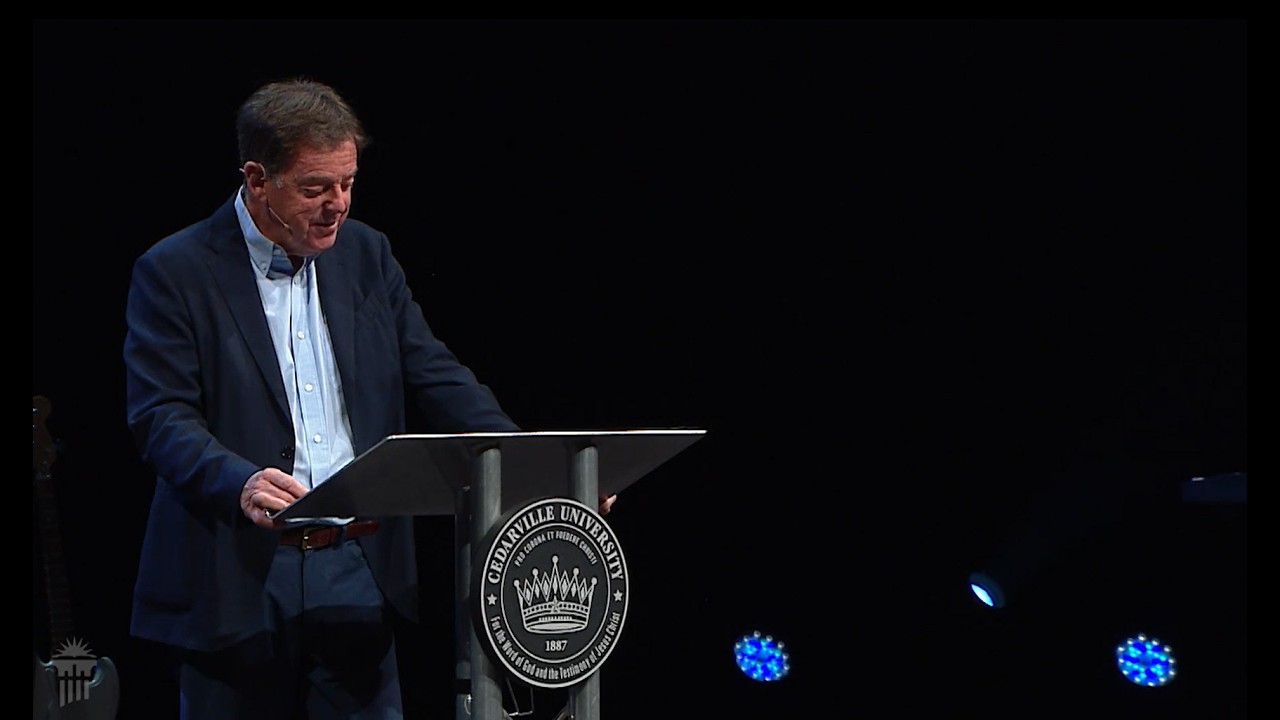
Video Summary
Begg reads Psalm 139:1–12 and prays a short prayer: “What we know not, teach us. What we have not, give us. What we are not, make us.” He then mentions a book written for students titled Who Am I and Why Do I Matter? and a famous painting by Paul Gauguin in Boston’s Museum of Fine Arts, on which the artist wrote three questions: Where do we come from? What are we? Where are we going? Begg observes that Gauguin had no answers, and wishes he had turned to the Psalms.
Begg describes Psalm 139 as “poetic theology or theological poetry.” It contains vast truths about God’s knowledge, presence and power, yet it brings them to ground level, where people actually live. He organizes his message under two headings: verses 1–6, “God, You know me,” and verses 7–12, “God, You’re with me.”
Key Takeaways
- The Psalms answer life’s deepest questions by pointing to the God who knows us.
- God’s knowledge is not only comprehensive but intensely personal.
- God knows our actions, thoughts, paths, words and needs better than we know ourselves.
- Self-deception is one of sin’s most subtle forms.
- Being “hemmed in” by God is protection, not restriction.
- No one can ultimately run from God, and that is a mercy.
God Knows Everything, and He Knows Me
Begg quotes a familiar prayer from the Book of Common Prayer addressed to God, “unto whom all hearts are open, all desires known, and from whom no secrets are hidden.” Modern technology collects vast amounts of data, he says, but it cannot compare with God’s knowledge of every person and every thing. He contrasts the living God with idols described in Psalm 115, which have mouths but cannot speak and eyes but cannot see, noting the absurdity of seeking ultimate answers from substitute gods.
What makes Psalm 139 so powerful, Begg explains, is the shift from “God knows everything” to “God knows me,” in my bedroom, in my car, in my fears and failures. Walking through verses 1–6, he summarizes:
- You know what I do. God knows when we sit down and rise up.
- You know what I think. He understands our thoughts from afar. Begg adds that self-deception is the worst kind, because we persuade ourselves of things that are not true.
- You know where I go. God is acquainted with all our ways. Begg humorously admits he sometimes eats a sandwich in a quiet cemetery, where he remembers that one day he too will be there.
- You know what I say. Before a word is on our tongue, God knows it altogether, a genuine “behold” moment.
- You know me better than I know myself. People can disguise their past and their motives before others, but not before God.
- You know what I need. God is not empty-handed; He supplies what His people need.
Begg encourages readers to understand being “hemmed in behind and before” not as restriction but as protection. God surrounds His people.
God Is With Me: There Is No Hiding Place
Verse 6, “Such knowledge is too wonderful for me,” serves as a bridge to the second section: “Where can I go from Your Spirit? Or where can I flee from Your presence?” Begg does not think David is seriously looking for an escape route. Still, he notes that Scripture is full of people who tried to hide. Adam and Eve hid in the garden, and God asked, “Where are you?” not because He did not know, but so they would face the question. Jonah tried to flee and ended up in deep water until the Lord rescued him.
Speaking personally, Begg says, “I’m an old man now. You can’t run and you can’t hide.” He describes this as an expression of God’s grace. Some who grew up in Christian homes may think they have successfully hidden something from everyone; they have not hidden it from God. He quotes a beloved hymn about God’s unseen hand guiding a person safely through the “slippery paths of youth,” and points to the prodigal son, who found not an angry father but a loving one running to embrace him.
Ultimately, Begg says, David is not searching for escape but comforting himself that escape is impossible. The only hiding place worth seeking is in God Himself. He cites Philippians 1:6: He who began a good work will complete it. Whether a person ascends to the heavens, goes down to the depths or flies on the wings of the morning, God is already there, and even darkness is not dark to Him. For more of Begg’s teaching on this theme, see God Knows All about Me and Hard-Pressed but Not Crushed.
Frequently Asked Questions
What is the main message of Psalm 139:1–12 according to Alistair Begg?
Begg summarizes it with two truths: God knows me completely (verses 1–6), and God is with me everywhere (verses 7–12).
What does “You hem me in behind and before” mean?
Begg explains that it should be read as protection rather than restriction: God surrounds His people on every side.
Can anyone hide from God?
No. Begg points to Adam and Eve and Jonah as examples, and says that the impossibility of hiding from God is ultimately an expression of His grace.
Final Thoughts
“God Knows Me; God Is with Me” turns one of Scripture’s most beloved psalms into personal comfort and challenge. Alistair Begg reminds listeners that the God who knows every thought and sees every path is not a distant observer but a near and protective Father. The questions Gauguin left unanswered find their answer here: we are known, we are held and we are never beyond God’s reach.
