Andrew Wommack: Trusting God in Difficult Times | Exodus 17
In this episode of his Through the Bible series, Andrew Wommack walks verse by verse through Exodus 17 and draws out practical lessons on trusting God in difficult times. Using Israel’s complaint at Rephidim, the water from the rock, and the battle against Amalek, he shows that nothing takes God by surprise and that believers prevail when they use the authority God has given them.
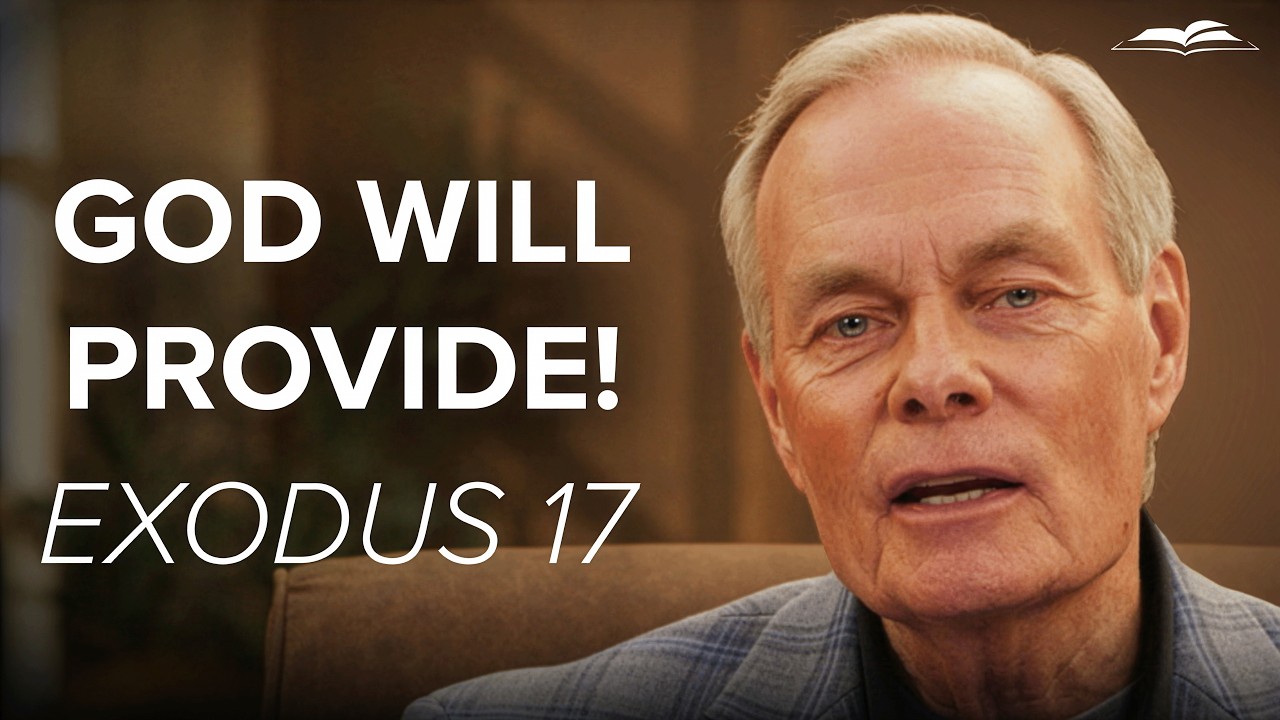
Video Summary
Wommack begins by reviewing the journey so far: the plagues, the Passover, the pillar of cloud and fire, the crossing of the Red Sea, and God’s provision of manna. Despite all these miracles, Israel complains again in Exodus 17 when they run out of water. Wommack notes that Moses wisely recognized the people were not really murmuring against him but against the Lord, and he applies this to leaders who face criticism today.
He then explains that God anticipated Israel’s need long before they felt it, and that the answer is always found by returning to God’s word. He discusses the rod of God, the symbolism of the smitten rock as a picture of Christ, and why striking the rock a second time in Numbers 20 was so serious. In the second half he turns to the battle with Amalek, where Israel prevailed as long as Moses held up the rod of God, a picture Wommack applies to believers exercising spiritual authority through prayer and action.
Key Takeaways
- God is never surprised by your situation; He has already provided the answer before the need arises.
- Doubting God’s ability to provide is, in Wommack’s words, a way of tempting the Lord.
- Lasting faith comes from God’s word, not from signs or temporary emotional relief.
- Leaders are often criticized for the message they carry rather than for who they are.
- The rock Moses struck pictures Christ, who was judged once so that living water could flow to us.
- When believers use the authority God has given them, His kingdom prevails; when they do not, the enemy gains ground.
Nothing Takes God by Surprise
Exodus 17 opens with Israel camped at Rephidim with no water. Wommack observes that this was the third time in three chapters the people accused Moses of bringing them out of Egypt to die. They had seen more of God’s miraculous power than any people before them, yet it seemed to make no lasting difference.
His central encouragement is that God was not caught off guard. He did not lead Israel into the wilderness and then suddenly realize they would need food and water. In the same way, Wommack tells viewers that whatever they face, whether a frightening diagnosis, financial pressure, or trouble at home or work, God knew about it first and has already provided an answer. That does not mean the answer comes automatically, he adds. Believers still need to trust God and take steps of faith, but they can do so knowing God is ahead of them.
He connects Moses’ question, “Why do you tempt the Lord?” to Psalm 78:19-20, where Israel asked whether God could prepare a table in the wilderness. Whenever we face a need that looks impossible and slide into doubt, Wommack says, we are in effect asking the same question.
Overcoming Doubt Through the Word
Wommack stresses that the cure for unbelief is not another sign. A dramatic event may help briefly, but long-term faith comes by hearing the word of God, as Romans 10:17 teaches. He illustrates this with John the Baptist in Matthew 11:2-11. When John began to doubt, Jesus did not send him an emotional reassurance. Instead, He performed the very miracles prophesied in Isaiah 35 and told John’s messengers to report what they had seen. Wommack sees this as a mark of respect: Jesus pointed John back to Scripture to resolve his doubts, then praised him publicly after the messengers left.
When People Turn Against You
Moses cried out that the people were almost ready to stone him, despite all God had done through him. Wommack reflects on how fickle people can be and shares a personal story of a man who had mentored him from a distance but cut him off for years over a disagreement. When they later reconciled and Wommack helped him return to ministry, the man asked how he could still love him. Wommack replied that the good the man had done in his life far outweighed anything negative. He encourages viewers to keep that same perspective, not allowing one offense to erase years of blessing.
He also reminds leaders that much of the opposition they face is really aimed at the message they carry, just as Moses told Israel their complaints were against the Lord.
The Rod of God and the Smitten Rock
God told Moses to take the rod with which he had struck the Nile. Wommack points back to Exodus 4:20, where it is called “the rod of God.” Once Moses surrendered his shepherd’s staff, God gave it back filled with divine authority. Wommack applies this to believers: when you yield your life to God, you may look the same, but you now carry His authority.
In Exodus 17:5-6, God stood upon the rock at Horeb, and Moses struck it so water could flow. Wommack sees this as a picture of Christ taking the judgment we deserved, so that rivers of living water could flow to us, as Jesus described in John 4. That is why, he explains, it was so serious when Moses later struck the rock again instead of speaking to it in Numbers 20. Christ was sacrificed once for all, and believers do not need Him to die again each time they fail; they simply speak and receive what has already been provided.
Wommack also shares extra-biblical material from explorer Bob Cornuke about a split rock in Arabia that he believes may be the site, while making clear his faith does not rest on it. He notes that Moses named the place Massah and Meribah, meaning temptation and strife, because the people asked whether the Lord was among them.
Holding Up the Rod: Victory Over Amalek
Next, Amalek attacked Israel. Wommack compares the account with Deuteronomy 25:17-19, which reveals that Amalek struck the weak and weary at the rear of the camp, showing the value of comparing Scripture with Scripture. He notes that disobedience can affect future generations, observing that Saul’s failure to deal with Amalek later contributed to David’s loss at Ziklag. He encourages believers to make choices that will bless their children and grandchildren.
In Exodus 17:8-13, Joshua led the fight while Moses stood on the hill with the rod of God. When Moses raised his hands, Israel prevailed; when he lowered them, Amalek prevailed. Wommack’s application is that when believers use the authority God has given them through prayer and action, God’s kingdom advances. He shares his personal view that the church’s past disengagement contributed to decline in his own nation and that he believes a spiritual awakening is now underway, an opinion he presents along with his political views.
For more from Andrew Wommack, read Why Jesus Spoke To The Mountain Instead of Praying About It and Your Identity in Christ Is the Key to Everything.
Frequently Asked Questions
What is the main lesson of Exodus 17 according to Andrew Wommack?
Wommack teaches that God anticipates every need and has already provided the answer, so believers should trust Him rather than doubt or complain when difficulties come.
Why does Wommack say the rock represents Jesus?
Because God stood on the rock as Moses struck it, he sees it as a picture of Christ receiving judgment so that living water could flow to people.
What does Moses holding up the rod symbolize?
According to Wommack, it represents believers exercising the authority God has given them; when they use it through prayer and action, God’s purposes prevail.
Final Thoughts
This teaching from Andrew Wommack turns a familiar wilderness story into practical encouragement. God was not surprised by Israel’s thirst, and He is not surprised by the challenges His people face today. By returning to His word, refusing to let offense erase gratitude, and confidently using the authority He gives, believers can keep trusting God in difficult times and see His provision.