Become the Man God Created You to Be | Tony Evans Sermon
In this direct and passionate message, Dr. Tony Evans challenges men to become the man God created you to be. Looking at a culture asking “Where are the men?”, he argues that the answer will not come from social programs or cultural commentators, but from returning to the Creator’s original design for manhood found in Genesis 2.
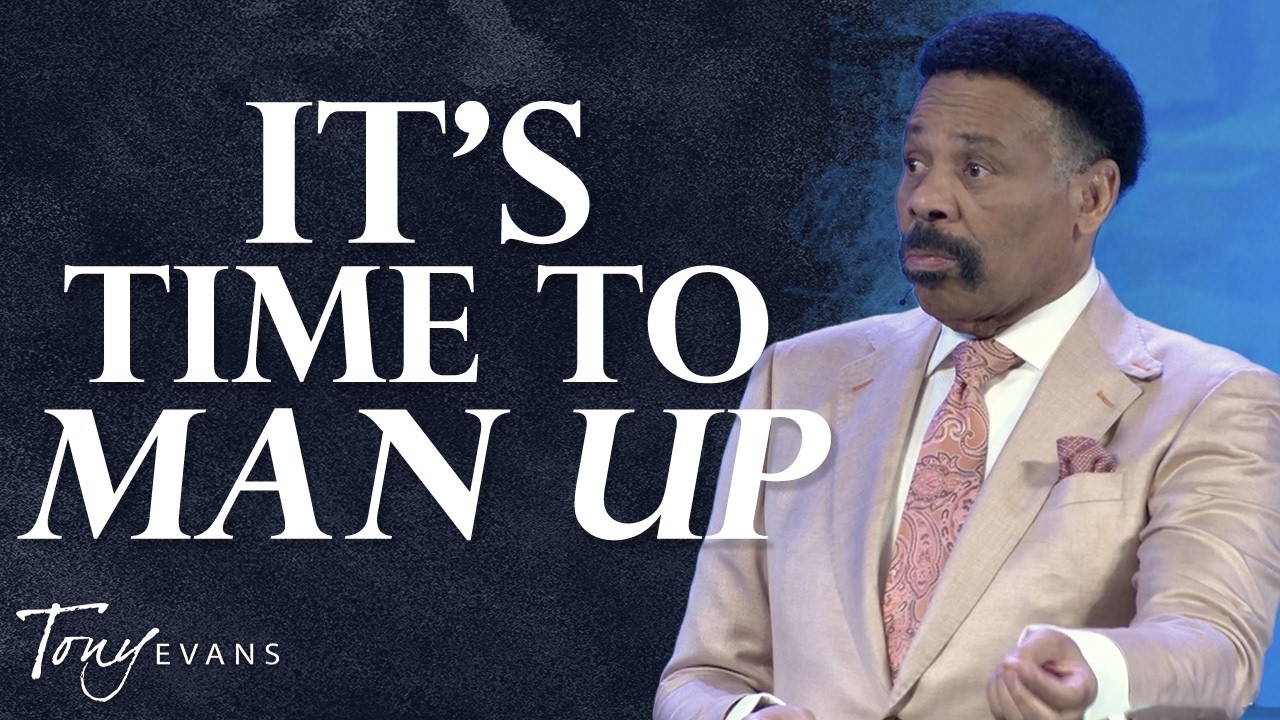
Video Summary
Evans opens by describing what he calls an epidemic crisis among men. Single women struggle to find qualified husbands, children grow up without a meaningful male presence, and communities suffer the consequences. He identifies two cultural extremes: passive men who have given up responsibility and float through life without a backbone, and men who confuse manhood with aggression, abuse and fathering children they refuse to care for.
Using a memorable chain of logic, Evans shows how a “messed up” man leads to a messed up family, church, community, city, state, nation and world, and concludes that a better world starts with better men. He then turns to Genesis, noting that God called out to Adam, “Where are you?” not because He did not know Adam’s location, but because Adam had abandoned his position. Evans explains that God introduced Himself as “the Lord God” when creating man, signaling relationship, and that He gave the first man three defining roles: provider, protector and spiritual leader.
Key Takeaways
- The cultural question “Where are the men?” is ultimately God’s question as well.
- Both passivity and destructive aggression distort what God intended manhood to be.
- Healthy families, churches and communities begin with men who walk with God.
- God’s power is accessed through relationship; He revealed Himself as Lord when He created man.
- A kingdom man cultivates and provides, guards and protects, and leads spiritually.
- A man’s identity is owned by his Creator, not by culture or even by a father who failed him.
The Crisis Behind the Question “Where Are the Men?”
According to Evans, the shortage of godly men affects nearly every part of society. He describes the ripple effects of absent or irresponsible men: struggling households, rising poverty and violence, and children left without guidance. While many voices propose solutions, he believes they often miss the root issue, which is that men have not understood or embraced what it means to be a man.
He also notes that culture tends to swing between extremes. On one side, men become passive, silent and disengaged while their families and communities drift. On the other, some men express what they call manhood through violence and neglect. Evans’ illustration of a “messed up man” producing a messed up family, church, neighborhood, city and nation drives home his point: if you want a better world, you have to begin by becoming a better man.
“Adam, Where Are You?”
Evans connects the modern question to God’s question in Genesis 3:9. When God called out to Adam after the fall, He was not searching for a hiding place on a map. He was confronting Adam about leaving his God-given position. Evans says this is the deeper issue for men today: many are physically present but have stepped away from their assigned role.
He also points out a detail in the creation account. In Genesis 1, the Creator is called simply “God,” emphasizing His power. Beginning in Genesis 2:4-7, as He forms man, He is called “the Lord God,” a name that emphasizes covenant relationship. Evans’ application is pointed: many men want God’s power without wanting a relationship with Him, but His power is experienced through submission to Him as Lord. When God is Lord, manhood can become what it was created to be; when He is not, men invent their own definitions.
Three Roles of a Kingdom Man
The heart of the sermon comes from Genesis 2:15-17, where God places Adam in the garden “to tend and keep it” and gives him a command. Evans draws three roles from these verses.
1. Provider: Cultivate and Produce
Before Eve was created and before there were any children, God gave Adam work. Evans says God wanted to know the man was willing to be productive before bringing anyone into his life. A man who is able but unwilling to work, he argues, is not fulfilling why he was created. He cites 1 Timothy 5:8, which says that anyone who does not provide for his own household has denied the faith, and 2 Thessalonians 3:10 on the importance of work. Evans clarifies that this does not exclude women from working, but that men are called to take the lead in producing and providing.
2. Protector: Guard the Garden
The word “keep,” Evans explains, carries the sense of guarding. God wanted the man to make his sphere of influence secure, so that his family could rest knowing someone was watching over them. Evans notes that God gave this instruction even in a perfect world because an enemy was about to enter the garden in Genesis 3. A man is to be a filter for his home, so that what comes in passes through him first.
3. Pastor: Lead Spiritually
Finally, God commanded Adam about the tree of the knowledge of good and evil before Eve existed. Evans sees this as a call for men to receive God’s word and pass it on to those in their homes. He points to Joshua 24:15, “As for me and my house, we will serve the Lord,” as a model of spiritual leadership. When a man does not know the answers, Evans says, he should be willing to go find them so that he can shepherd his family well.
Who Owns Your Manhood?
Evans emphasizes that God claims ownership of manhood. Society does not define it, and neither does a father who was absent or failed. The Creator who formed man from the dust is the one who gets to say what a man is. He adds that when a man embraces these three roles, God entrusts him with more, pointing to Genesis 2:19, where God brought the animals to Adam to name them, a sign of delegated authority.
His appeal is hopeful: regardless of past failures, men who choose a different tomorrow can help bring change to their families and to the culture. God is looking for men who are not ashamed of their manhood and who use it to glorify Him and benefit others.
For related teaching from Dr. Evans, read Discover the Woman God Created You to Be and How to Live Under God’s Protection.
Frequently Asked Questions
What are the three roles of a man according to Tony Evans?
Drawing from Genesis 2:15-17, Evans says a man is called to be a provider who cultivates, a protector who guards, and a spiritual leader who passes on God’s word.
Why does Evans highlight the name “Lord God” in Genesis 2?
He explains that “Lord” points to relationship. Men who want God’s power must also pursue a relationship with Him and submit to Him as Lord.
Can a man become a kingdom man if he had a poor example growing up?
Yes. Evans stresses that a man’s identity is owned by his Creator, not by his past or his father, and that anyone can choose a different tomorrow.
Final Thoughts
This sermon from Tony Evans is a clear call for men to return to their God-given position. By embracing the roles of provider, protector and spiritual leader under the lordship of God, men can strengthen their families, churches and communities. As Evans reminds his listeners, a better world really does begin with better men.
