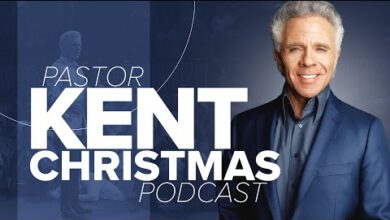
Pastor Kent Christmas | Battles That Only God Can Win | October 7, 2026
In this broadcast message, Pastor Kent Christmas speaks to anyone facing a situation that is simply beyond their ability to fix. Drawing on three Old Testament accounts, he explains that there are battles that only God can win, and that in those seasons the believer’s role shifts from fighting to seeking, resting, and worshiping. His message is a word of encouragement for those who feel overwhelmed by sickness, financial collapse, wayward children, or opposition they cannot overcome on their own.

Video Summary
Following a previous message about identity in Christ, Christmas begins by observing that not every battle has the same purpose. Some attacks aim to wound or to take something away, but others carry only one intention: total destruction. He points to John 3:16 and notes that the Father’s will has always been that believers should not perish.
He then asks what a person should do when every tool, weapon, and idea has run out, when the only honest prayer is that unless God shows up, it is over. Christmas acknowledges that believers often like to credit their survival to their own faith or effort, but he says that many of the hardest seasons were resolved by God’s mercy alone.
The message walks through King Hezekiah facing the Assyrian army, King Jehoshaphat facing a vast coalition, and Israel trapped at the Red Sea. In each case, he highlights how God intervened when human strength was gone.
Key Takeaways
- Some battles are designed by the enemy to destroy, and they cannot be won by human strength.
- When there are no answers left, God can respond quickly and decisively.
- Rest, grounded in God’s promise, can be a powerful spiritual weapon.
- Believers should ask God whether a battle is theirs to fight or His to win.
- Worship in the middle of a crisis often precedes God’s breakthrough, and loss can be turned into gain.
Hezekiah and the Army No One Could Stop
In 2 Kings 19, the Assyrian king sends a message boasting that no nation has ever stood against him. Hezekiah’s advisers describe the moment as a day of trouble and rebuke, like a woman ready to give birth with no strength left to deliver. Christmas says many people know that feeling: everything has been tried, and the enemy is still standing.
God answers through the prophet Isaiah, declaring that the Assyrian king will not enter the city, will not shoot an arrow there, and will return the way he came. The Lord promises to defend the city for His own sake. Christmas emphasizes how quickly God moved: the prayer went up during the day, and that very night one angel struck the Assyrian camp, as recorded in 2 Kings 19:35. Whether the threat is a terminal diagnosis, a prodigal child, or a failing business, he says, God is able to say, “I have this.”
Rest as a Weapon
Christmas shares a personal story from when he was seventeen, just weeks after reluctantly accepting the call to preach. After his car slid into a ditch during a snowstorm, he was standing beside the road with a tow-truck driver when a bus struck them both. According to witnesses, he was thrown back out from beneath the vehicle before the rear tires reached him. The driver did not survive. Christmas broke his back but recovered, and he credits God’s intervention for his life and ministry.
From that experience, he draws a lesson he has carried for decades: rest is one of the believer’s greatest weapons. He points to Peter in Acts 12, chained between soldiers on the night before his planned execution, yet sound asleep. When a child of God is in a place they cannot fix, he says, the only thing to do is rest on God’s word that He will not let them perish. He also cites David’s prayer to be led to the rock that is higher than he. This theme connects with his earlier message on Trusting God.
Jehoshaphat: This Battle Is Not Yours
The longest section of the message comes from 2 Chronicles 20. When Jehoshaphat hears that a great multitude is coming against him, he is afraid, but he sets himself to seek the Lord and calls a fast. All of Judah, including wives and little ones, stands before God. Christmas suggests that the king was, in effect, showing God everything that would be lost if He did not intervene.
Then the Spirit of the Lord comes on Jahaziel, who delivers a clear message: do not be afraid of this great multitude, for the battle is not yours but God’s (2 Chronicles 20:15). Christmas explains that sometimes the opposition a believer faces is really aimed at God. He cites Ananias and Sapphira lying to the Holy Spirit rather than merely to Peter, and the rebellion against Moses being treated as rebellion against the Lord.
He encourages listeners to ask God directly whether a particular struggle is theirs to fight. Some battles call for spiritual warfare and the weapons Paul describes, which are mighty for pulling down strongholds. But in others, God says to lay down the sword. “You will not need to fight in this battle,” the prophet said; stand still and see the salvation of the Lord.
Worship Before the Victory
Christmas highlights Judah’s response. Instead of arguing or asking more questions, Jehoshaphat bowed with his face to the ground, and the people worshiped. Later, as they began to sing and praise, God set ambushes, and the enemy armies turned on one another. When Judah arrived at the battlefield, the fight was already over, and the spoil was so great it took three days to gather.
For Christmas, this is the heart of the message. The most meaningful praise, he says, is offered when it looks like the enemy is winning but faith knows God will come through. If believers refuse to raise the white flag and choose to worship in the valley, God can turn what should have been loss into gain. What the enemy intended for evil, God can turn for good.
Standing Still at the Red Sea
The final account is Israel at the Red Sea in Exodus 14, hemmed in by mountains on both sides, water in front, and Pharaoh’s army behind. There was nowhere to go. Moses told the people not to fear but to stand still and see the deliverance God would bring, and God opened a path through the sea. Christmas uses the story to reinforce his theme: when every exit is closed, God can make a way where none exists. Readers looking for more on finding calm in turmoil can also read his message Looking For Peace.
Frequently Asked Questions
What does Kent Christmas mean by “battles that only God can win”?
He refers to crises that are completely beyond human ability, such as serious illness, financial ruin, or overwhelming opposition, where the only hope is direct intervention from God.
Why does he call rest a weapon?
Christmas teaches that when a believer rests on God’s promise instead of striving in fear, they demonstrate trust. He points to Peter sleeping in prison the night before his scheduled execution as an example.
What is the lesson from Jehoshaphat in 2 Chronicles 20?
Jehoshaphat sought God, received the word that the battle belonged to the Lord, and responded with worship. As the people praised, God defeated their enemies and gave them abundant spoil.
Final Thoughts
Pastor Kent Christmas reminds believers that reaching the end of their own strength is not the end of the story. Through Hezekiah, Jehoshaphat, and the Red Sea crossing, he shows a consistent pattern: seek God, rest on His word, stand still, and worship. Some battles are not meant to be fought with human hands. They are meant to reveal the power and faithfulness of a God who refuses to let His children perish.