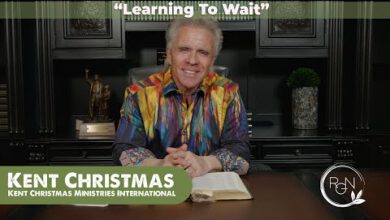
Pastor Kent Christmas | The Potter’s Wheel | September 23, 2026
In this short but personal teaching, Pastor Kent Christmas takes viewers to Jeremiah’s visit to the potter’s house. His message on the potter’s wheel explains why God sometimes breaks and remakes the people He intends to use. Whether someone has been marred by their own sin or wounded by what others have done, Christmas says God does not throw the vessel away; He puts it back on the wheel and shapes it again.

Video Summary
Christmas reads Jeremiah 18:1-4, where the Lord sends Jeremiah to watch a potter at work. The clay vessel becomes marred in the potter’s hand, so the potter makes it again into another vessel as seems good to him. Christmas says this principle is unavoidable for anyone who wants to be used by God: at some point, God will remake you.
He recalls a high school pottery class, pumping the wheel with his foot and never quite producing anything attractive, yet learning the process. From there he unpacks three key words in the passage, explains what it means for a vessel to be marred, and offers both David and his own life as examples of God’s restoring work. He closes with the promise that the inward person is renewed day by day.
Key Takeaways
- God fashions believers with a design in mind, shaping them to be His messengers and ambassadors.
- A vessel can be marred by personal sin or by injuries others inflict.
- God breaks the marred vessel not to discard it but to remake it into something useful.
- The clay has no right to question the potter; trusting God’s hands is the believer’s part.
- Even as the outer body ages, the inner person can be renewed every day.
Fashioned to Be an Ambassador
Christmas focuses on three words from the passage. The first, often rendered “wrought,” means to fashion; the potter has a design in mind and works the clay toward it. The second, “work,” he connects with the idea of a messenger or ambassador. He links this to Paul’s description of believers as ambassadors for Christ.
He explains the image further: an ambassador lives in a foreign land but represents another king and operates under the laws of his home country. An embassy’s grounds are treated as the home nation’s soil. In the same way, believers live in this world while representing the kingdom of heaven. The third word, “wheels,” he says can carry the sense of a birthing stool, suggesting that God is bringing forth something new, a life shaped by the Spirit.
When the Vessel Is Marred
The vessel in Jeremiah’s vision became marred, which Christmas defines as spoiled, corrupted, or injured. He reminds listeners of 2 Corinthians 4:7: the treasure is Christ, carried in earthen vessels. People are not the treasure; they are the containers.
His first example is King David. God had used David to defeat Goliath, lead Israel in victory, and bring the ark back to Jerusalem. Yet after his sin with Bathsheba, David was marred. In Psalm 51, David pleads for mercy, asks God to wash him and create in him a clean heart, and promises that once restored he will teach transgressors God’s ways. Christmas sees this as David asking to be put back on the potter’s wheel.
His second category involves people who did not turn away from God but were injured by others. A devastating betrayal, the loss of a child, rejection by a spouse, or parents who never believed in them can leave a person wounded and unable to function as before. In those cases, too, God takes the injured vessel and reshapes it. This theme of God’s purpose in pain echoes his earlier message, Why God Allows Suffering.
Broken, Not Discarded
A key point for Christmas is that the potter in Jeremiah did not throw away the marred clay. He broke it down and started again. Believers may go through seasons that feel like breaking, but the purpose is restoration, not rejection. He notes that God delights in a broken and contrite heart, and he cites Paul’s teaching that a person can become a vessel for honor, useful to the Master.
Christmas shares his own story. After a painful season, he lost his desire to preach entirely. When he married his wife, he told her that if she was hoping to marry a preacher, she should look elsewhere, because he would never preach again. He returned to work as a pipe fitter. Only later did he realize that God had placed him on the wheel and was quietly remaking him for the ministry he leads today.
Trusting the Potter’s Hands
When God is reshaping a life, it is natural to ask what He is doing. Christmas points to Isaiah’s question of whether the clay can say to the one who forms it, “What are you making?” and to Paul’s reminder in Romans 9:20-21 that the potter has authority over the clay. Believers, he adds, are not their own; they have been bought with a price.
He also points to Saul of Tarsus, whom God described as a chosen vessel. God removed from Saul what could not be used and remade him into the apostle Paul. Christmas encourages viewers that many of them are on the wheel right now, being reshaped because God still has much for them to do. Rather than resisting, they are invited to trust Him, a theme he develops further in Trusting God.
Renewed Day by Day
Christmas closes with Paul’s teaching that although the outward person is perishing, the inward person is renewed daily. Eyesight fades, hair changes color, and the body slows down, but for those who are new creations in Christ, God continues His work inside. He describes it as God’s hand reaching in while a weary servant sleeps, reshaping and refreshing so that they wake up renewed. When the wheel finally stops spinning, he says, God will look at the vessel and say it is ready to be used.
Frequently Asked Questions
What is the main lesson of the potter’s wheel in Jeremiah 18?
According to Kent Christmas, it shows that God does not discard marred vessels. He breaks them down and remakes them into something He can use for His purposes.
Can someone who has sinned still be used by God?
Christmas points to King David in Psalm 51 as proof that repentance and God’s restoring work can make a person useful again, even after serious failure.
What if someone was hurt by others rather than by their own choices?
He teaches that God also reshapes those who have been wounded by betrayal, loss, or rejection, healing them and restoring their purpose.
Final Thoughts
Pastor Kent Christmas offers hope to anyone who feels broken, disqualified, or worn out. The image of the potter’s wheel shows a God who is patient, intentional, and committed to His work. Being broken is not the end of a believer’s story; it is often the beginning of a new vessel. Those on the wheel today are encouraged to stay there, trust the Potter’s hands, and expect to be made into something He can use.