Creflo A. Dollar: True Holiness – Wednesday Morning Service
Few subjects have produced as much pressure and guilt among Christians as holiness. In this Wednesday morning message, Creflo A. Dollar sets out to recover what he calls the beauty of holiness. His central claim is bold: true holiness is not a conduct that believers must achieve, but a Person they have already received. Holiness, he teaches, is Jesus Himself, and when believers rest in that truth, their behavior begins to change from the inside out.
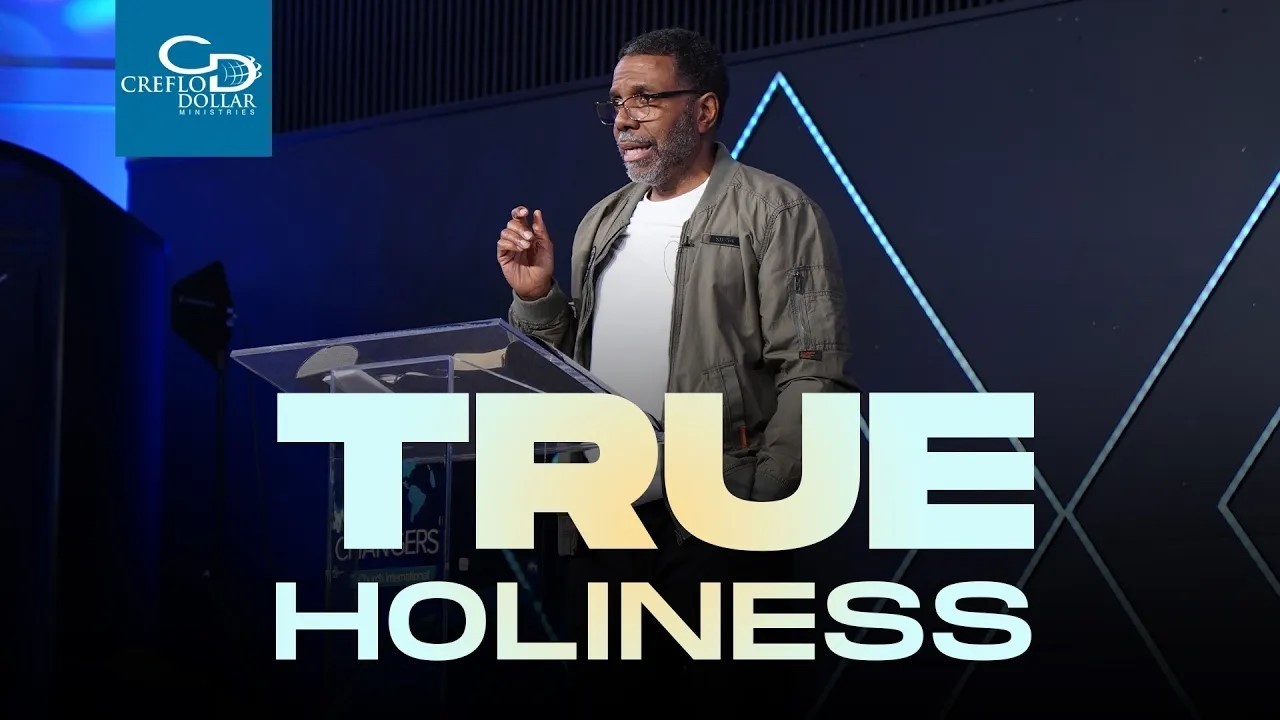
Video Summary
Creflo Dollar introduces this teaching as part of a monthly series called Living in the Rhythms of Grace, with a special focus on holiness. He explains that much of what he hears about holiness puts heavy pressure on believers and makes holiness seem anything but beautiful. He believes people avoid pursuing holiness mainly because they misunderstand it.
Starting from Romans 12:1-2, he explains that presenting one’s body as a living sacrifice means making oneself available for God to express Himself through everyday life. He then teaches from 1 Corinthians 1:30 that Jesus has been made the believer’s wisdom, righteousness, sanctification and redemption, concluding that holiness is a Person rather than a set of behaviors. Dollar moves through Romans 8:32 to show that God gave everything in Christ, then walks through Paul’s struggle in Romans 7 to explain the flesh and why willpower fails. He ends by saying that the key to deliverance is to stop looking at oneself and to look to Jesus, and closes with prayer and an invitation to receive Christ.
Key Takeaways
- Presenting your body as a living sacrifice means making yourself available for God to express Himself through your daily life.
- Grace does not permit wrongdoing; it shapes believers to do what is right.
- Practical holiness is impossible without understanding that you are righteous in Christ.
- Holiness and sanctification are not conduct; according to Dollar, they are a Person, Jesus.
- Your behavior does not determine your holiness; your Savior does.
- Willpower alone fails, as Paul describes in Romans 7.
- The key to deliverance is getting your eyes off yourself and onto Jesus.
A Living Sacrifice: Making Room for God’s Expression
Dollar’s starting point is Romans 12:1-2, where Paul urges believers, by the mercies of God, to present their bodies as a living sacrifice, holy and acceptable, and to be transformed by the renewing of their minds. He admits his first reaction is a question: how can anyone present an imperfect body as holy, when Old Testament sacrifices had to be without blemish?
Reading from a paraphrase, Dollar explains that the most practical expression of worship is to make one’s life available so God can find visible expression through it. That, he says, pleases God more than any religious routine. This kind of worship is not confined to a church service. It shows up at home with family, at work, and even in traffic when someone cuts you off and you choose patience instead of anger. The goal is that people would encounter God through a believer’s life.
He also warns against letting religious tradition shape one’s thinking, particularly the idea that believers must perform well before God will bless them. Many Christians, he says, were molded into that pattern simply because it was all they ever heard.
Grace Shapes, It Does Not Excuse
Dollar is careful to address a common objection. Grace, he insists, is not something that allows a person to do wrong; it is what shapes a person to do right. He acknowledges that no believer becomes flawless the moment they are saved. Growth and maturing take time, and grace is precisely what produces that growth.
He explains that the word sacrifice signifies a change of ownership: what is offered now belongs to the new owner and is used for His purposes. God is asking for that kind of availability. But because Paul also asks that the sacrifice be holy and acceptable, Dollar says believers must understand what holiness truly is before they can answer the call.
Holiness Is a Person
Dollar’s first and most radical statement is that practical holiness is not possible unless a believer understands that they are righteous in Christ. People are not righteous because they do right; they are righteous because Jesus is their righteousness. Staying close to Jesus will then influence their behavior, but even good behavior does not make them more righteous.
He turns to 1 Corinthians 1:30, which says that believers are in Christ Jesus, who became for them wisdom from God, righteousness, sanctification and redemption. Dollar notes that the Greek words for sanctification and holiness come from the same root. If Jesus has been made the believer’s sanctification, then the believer is holy because of Jesus. In his words, holiness is not conduct; holiness is a Person. That means believers cannot become more holy than they already are in Christ, because their holiness rests on Him rather than on themselves.
Dollar suggests that this is why so many people have struggled to find freedom. They kept looking at their own conduct instead of at Jesus. The key to holiness, as he presents it, is shifting one’s gaze from self to Christ.
God Will Not Give Up on You
From there Dollar reads Romans 8:32: God did not spare His own Son, so how will He not also freely give believers all things with Him? He calls the gift of Jesus the irrefutable evidence of God’s heart. God held nothing in reserve, and in Christ believers already have everything they need.
He describes how many Christians use religion like a costume to hide flaws that God already knows about. Yet God, he says, still takes full responsibility for those He loves and keeps pursuing them even when they try to walk away. Dollar points to the promise that God will never leave nor forsake His people, warning believers not to imagine their sin is greater than His love. Rather than trying to earn what has already been given, he urges them to realize it, receive it and rest in it.
The Flesh, Willpower and the Way Out
Dollar then explains why trying harder fails. Working from Romans 7:18-25, he describes Paul’s experience of good intentions he could not carry out. Willpower failed him, and he found himself doing the very things he wanted to avoid. Dollar notes that many Christians live in this same cycle of good intentions without follow-through.
He defines walking after the flesh not as having a physical body, but as living without regard for God, trusting one’s own abilities and understanding, and relying only on what the five senses report. Paul’s cry was not “What will deliver me?” but “Who will deliver me?” The answer is Jesus. Dollar adds that the most important thing a person can do is be born again, and the most important thing a born-again person can do is renew their mind, like installing new software suited to the new creation.
He illustrates with a race: someone who trusts in themselves may feel confident at first, but the one who trusts God will finish ahead. He also reminds listeners that God often chooses unlikely people, such as David, who was overlooked by his own family, and Paul, who once persecuted the church, so that the glory goes to God alone.
For more teaching from Creflo A. Dollar on grace and transformation, read The Old Testament Shadow vs. New Testament Reality and The War Against Habits and Addictions.
Frequently Asked Questions
What does Creflo Dollar mean when he says holiness is a Person?
Based on 1 Corinthians 1:30, he teaches that Jesus has been made the believer’s sanctification, which shares the same Greek root as holiness. Believers are therefore holy because they are in Christ, not because of their own conduct.
Does this teaching mean behavior does not matter?
No. Dollar stresses that grace is not a license to do wrong but the power that shapes people to do right. Staying close to Jesus, he says, will change a believer’s behavior over time.
Why does willpower fail in living a holy life?
Drawing on Romans 7, Dollar explains that the flesh resists God, so self-effort leads to good intentions without follow-through. Deliverance comes from looking to Jesus rather than to oneself.
Final Thoughts
True Holiness offers a freeing perspective for believers weighed down by the fear of never being good enough. Creflo A. Dollar invites listeners to see holiness not as a ladder to climb but as a gift already received in Jesus. From that place of security, believers can make their lives available to God, let grace shape their behavior and renew their minds, trusting that the One who began the work will continue it.
