Kirk Cameron: Why Isn’t the Book of Enoch in the Bible? The Answer Will Surprise You.
Why do some ancient writings appear in Scripture while others, like the Book of Enoch or the Gospel of Thomas, were left out? In this episode, Kirk Cameron on the Book of Enoch and the Bible tackles one of the most common questions skeptics and curious Christians ask. Rather than avoiding the topic, Cameron argues that the real history of how the Bible came together is far more inspiring than the conspiracy theories that claim a council of bishops or a Roman emperor invented it.
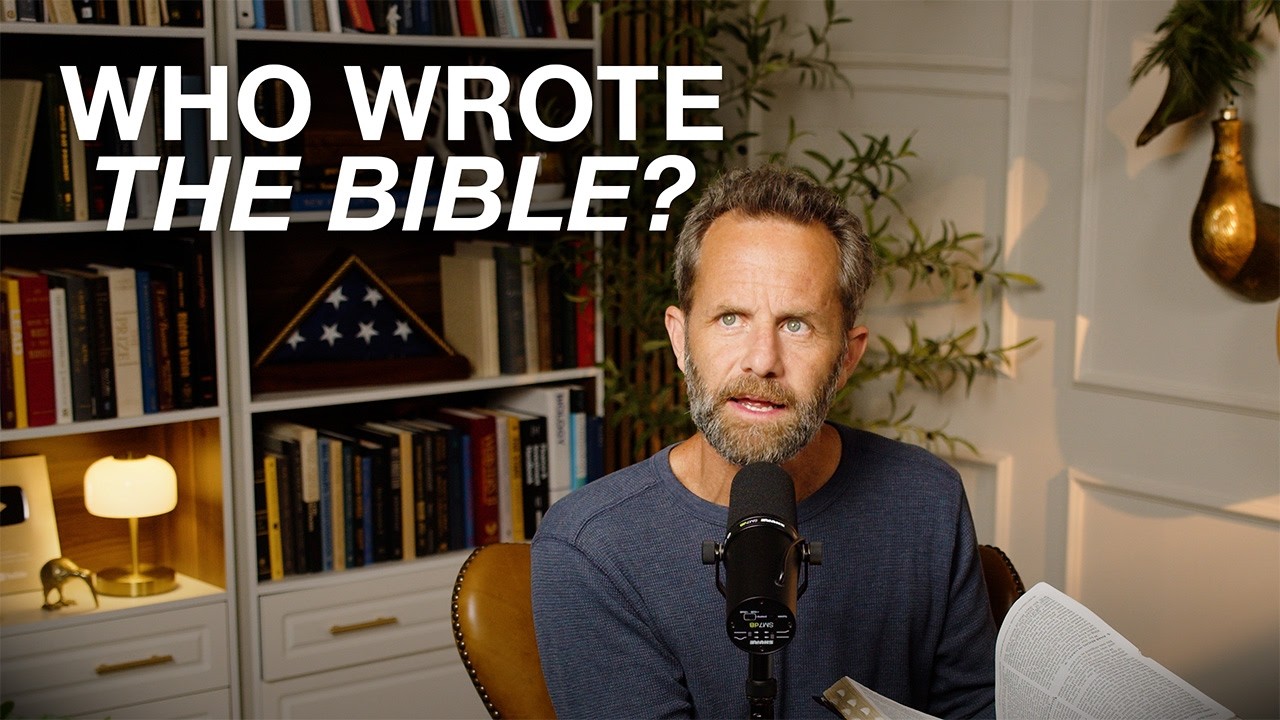
Video Summary
Cameron opens by addressing popular myths, especially the idea, popularized by novels and documentaries, that Emperor Constantine and the Council of Nicaea chose which books went into the Bible. He insists that this is not just slightly mistaken but badly wrong. He explains that the Bible is a library of 66 books written by many authors over many centuries, yet it tells one unified story of creation, rebellion, promise, redemption, and renewal.
He encourages Christians not to fear hard questions, since truth grows stronger when examined. He then describes how the Old Testament was already settled by the time of Jesus in its three-part form, why the Book of Enoch was never treated as Scripture despite being known and read, and how the New Testament books were recognized by the early church long before any formal list. He outlines the criteria early Christians used, contrasts the canonical Gospels with later writings like the Gospels of Thomas and Peter, and closes with lessons about the Bible’s strength, unity, and divine authority.
Key Takeaways
- The Council of Nicaea did not decide the books of the Bible; it focused mainly on the identity of Jesus as fully God.
- By the time of Jesus, the Hebrew Scriptures were already understood as the Law, the Prophets, and the Writings.
- The Book of Enoch is interesting but was written long after the biblical Enoch and was never accepted as inspired Scripture.
- The church did not create the authority of Scripture; it recognized the authority God had already given.
- Early Christians used clear criteria such as apostolic connection, wide acceptance, and consistency with received faith.
- The Bible is not fragile; it can withstand honest questions and centuries of challenges.
Asking Hard Questions Without Fear
Cameron acknowledges that some believers become uncomfortable when questions about the Bible’s origins come up. He believes that discomfort is unnecessary. Faith, he says, is not blind trust but informed trust. In an age when much of what people see can be faked, skepticism is natural, and many people assume the Bible might be another manipulated product until proven otherwise. Cameron’s goal is to show that the historical record actually supports confidence in Scripture.
He points out that the Bible did not drop from the sky as a leather-bound volume with maps in the back. It came through real people, in real places, over long stretches of history, and yet it holds together as one coherent account of God’s work in the world.
The Old Testament and the Book of Enoch
Turning to the Old Testament, Cameron explains that Jesus and the Jewish people of His day already recognized a settled body of Scripture: the Law (the five books of Moses), the Prophets, and the Writings such as Psalms, Proverbs, and Ecclesiastes. Jesus treated these as God’s Word, often saying “It is written” or “Have you not read?” He did not treat them as a rough draft to be corrected, but as authoritative revelation that He came to fulfill. As Jesus Himself said in Luke 24:44, everything written about Him in the Law, the Prophets, and the Psalms had to be fulfilled.
The Book of Enoch, Cameron explains, is fascinating because it expands on themes from Genesis 6, including fallen angels, giants, and the world before the flood. But he draws a firm line: interesting is not the same as inspired. The book was written long after the Enoch described in Genesis, so that Enoch could not have authored it. Fragments were found among the Dead Sea Scrolls, and some Jewish readers were familiar with it, but the Jewish community never placed it alongside the Law, the Prophets, and the Writings. Cameron compares it to imaginative literature: compelling to read, but not divine speech.
How the New Testament Was Recognized
Cameron emphasizes that every New Testament book was written in the first century, during the lifetime of the apostles and their close associates. These writings were read in churches, copied by hand, shared widely, and treated as authoritative long before any council produced an official list.
To illustrate, he uses the image of a thermometer: it does not create the temperature, it simply measures it. In the same way, the church did not give authority to books like Matthew or Romans; it recognized the authority they already carried because God inspired them. Cameron notes that around AD 180, Irenaeus defended the four Gospels as Scripture, that Origen in the third century used all 27 New Testament books, and that Athanasius in the fourth century listed the same 27 books found in Bibles today. That later list, he says, was like a family photo taken after the family had long been living together.
Criteria and Counterfeits
According to Cameron, early Christians asked practical questions about each writing. Was it connected to an apostle or a close associate? Was it widely received in the churches? Did it agree with the faith already handed down? Did it build up the church in holiness? Did it sound like the voice of the Shepherd?
He contrasts the canonical Gospels with later works. The Gospel of Thomas, he notes, was written later and was not composed by the apostle Thomas; it includes teachings that clash with how Jesus honored women in the four Gospels. The Gospel of Peter includes a strange resurrection scene with a gigantic Jesus and a talking cross. Cameron stresses that early Christians believed in miracles, but they were not gullible; they could tell the difference between the miraculous and the invented.
His concluding lessons are that the Bible is not fragile, that it is a unified collection rather than a random “junk drawer,” that the church received rather than invented Scripture, and that God works through human authors much as a writer uses a pencil. This echoes 2 Timothy 3:16, which teaches that all Scripture is given by inspiration of God.
For more from Cameron on challenging theological topics, see Are We Wrong About Hell? and The Truth About Death That Every Christian Needs to Hear.
Frequently Asked Questions
Why isn’t the Book of Enoch in the Bible, according to Kirk Cameron?
Cameron explains that it was written long after the biblical Enoch lived, that the Jewish community never treated it as equal to the Law, Prophets, and Writings, and that being interesting does not make a book inspired Scripture.
Did the Council of Nicaea decide which books are in the Bible?
No. According to Cameron, the Council of Nicaea dealt mainly with the identity of Jesus Christ as fully God. The New Testament books were already recognized and used by churches long before that time.
How did early Christians decide which books were Scripture?
They looked at apostolic connection, widespread acceptance among churches, agreement with the faith already received, and whether a writing built up believers and reflected the voice of Christ.
Final Thoughts
This episode offers a clear and accessible introduction to how the Bible came to be. Kirk Cameron encourages believers to welcome honest questions, confident that the history of Scripture can stand up to scrutiny. Far from being the product of political maneuvering, the Bible was received, recognized, and preserved by a faithful church, and it remains God’s trustworthy Word for every generation.
