Alistair Begg: How Long till the End?
“How long until the end?” It is a question children ask during long sermons and believers ask in seasons of suffering. In this Truth for Life message, Alistair Begg concludes his study of Daniel with chapter 12. In How Long till the End?, Begg shows that the prophecy was not given to satisfy curiosity about dates, but to strengthen God’s people to live faithfully today, trusting a sovereign Lord who holds their future and promises resurrection.
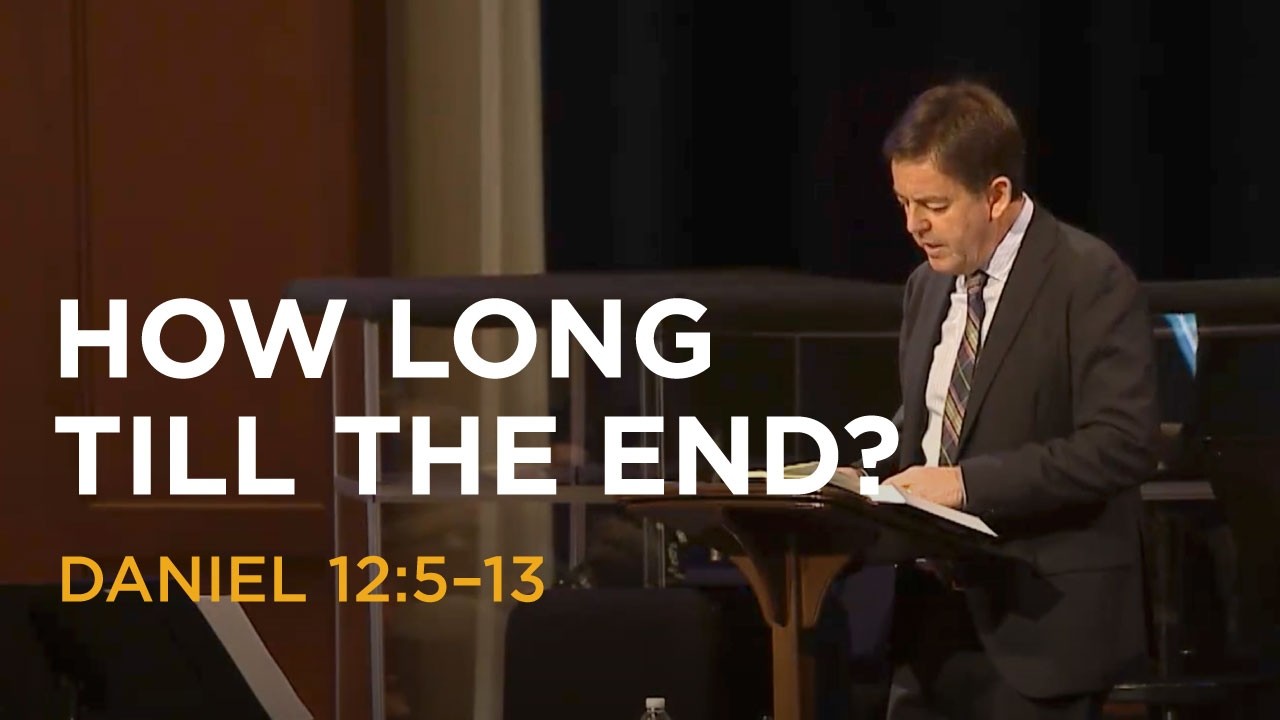
Video Summary
Begg reads Daniel 12, which speaks of a time of unprecedented trouble, the deliverance of those written in the book, the resurrection of the dead to everlasting life or everlasting contempt, and the promise that the wise will shine like the stars. Daniel overhears the question, “How long shall it be until the end of these wonders?” and receives a cryptic answer: “a time, times, and half a time.” Daniel admits, “I heard, but I did not understand.”
Begg connects the chapter back to Daniel 7, where one like a Son of Man receives an everlasting kingdom. He explains that history is not a steady march of triumph for God’s people; Scripture speaks of the “shattering” of the holy people before the end. Throughout history, persecuted Christians have often felt they were living in the end times, and in a sense they were experiencing a foretaste of what the end will be.
The heart of the sermon warns against using Daniel to calculate dates and instead urges believers to focus on faithfulness today. Begg tells the story of missionaries John and Betty Stam, martyred in China in 1934, and notes the extraordinary growth of the church in China since then. He closes with the promise given to Daniel: “Go your way till the end; for you shall rest, and will arise to your inheritance at the end of the days.”
Key Takeaways
- Daniel 12 promises resurrection, judgment and the deliverance of God’s people.
- History includes the suffering and “shattering” of God’s people, not uninterrupted triumph.
- Persecuted believers in every generation experience a foretaste of the end.
- Prophecy is not given for date-setting but for faithful living today.
- Faith often lives with unanswered questions: “I heard, but I did not understand.”
- Believers can rest, knowing God has a place for them at the end of days.
The Big Picture From Daniel 7 to Daniel 12
Begg reminds his congregation that Daniel 7, with its vision of the Son of Man receiving an everlasting dominion, serves as a fulcrum for the whole book. The first half of Daniel builds toward it, and the second half unfolds the conflicts that will precede the final victory. Daniel 12 brings the book to its conclusion with the promise that God will deliver His people and raise the dead.
Suffering Before the End
One of Begg’s key observations is that the Bible does not promise an easy, triumphant road for believers before Christ’s return. The passage speaks of “the shattering of the power of the holy people.” Begg points out that Christians facing fierce persecution have often concluded that they were living at the end of history. They were not wrong, he says, because their suffering mirrored what the end will be like, even if it was not the final end.
He illustrates this with John and Betty Stam, young missionaries who were killed in China in 1934, leaving behind a baby daughter. At the time, it might have seemed like a tragic waste. Yet Begg notes that the number of believers in China has grown dramatically since then, recalling Jesus’ words that unless a grain of wheat falls into the ground and dies, it remains alone (John 12:24).
Don’t Bring Your Calculator
Begg warns against treating Daniel 12 as a puzzle for calculating the timing of Christ’s return. The numbers 1,290 and 1,335, he says, are not given so believers can build elaborate end-time charts. “Run for the hills,” he jokes, when someone offers a watertight explanation. Instead, believers should pay attention to today and live faithfully in light of what God has revealed.
He finds encouragement in Daniel’s own words: “I heard, but I did not understand.” Being a person of faith does not mean understanding everything. The life of faith is lived amid unanswered questions, both about the end of history and about personal circumstances. Yet not understanding everything does not mean understanding nothing. Prophecy is often fully recognized only after its fulfillment.
Go Your Way
The final words to Daniel are deeply personal: go your way, you will rest, and you will rise to your allotted place at the end of days. Begg applies this to every believer: they will die, but they will rise, and God has a place prepared for them. In his closing prayer, he affirms Scripture’s trustworthiness and reminds the congregation that all their days were written in God’s book before one of them came to be (Psalm 139:16). For more from Begg, see A Trustworthy Saying and Enlightened Together: A New Ministry.
Frequently Asked Questions
What is the main point of “How Long till the End?”
Alistair Begg teaches that Daniel 12 calls believers to faithful living today and confident hope in resurrection, rather than speculation about dates.
Does Begg try to calculate the 1,290 and 1,335 days?
No. He cautions against using these numbers to build end-time timelines and encourages humility about difficult prophecies.
What hope does Daniel 12 offer?
It promises that God’s people will be delivered, that the dead will be raised, and that believers will rest and rise to their inheritance.
Final Thoughts
How Long till the End? brings Alistair Begg’s study of Daniel to a fitting close. Instead of feeding curiosity, he feeds faith. Believers may not understand every detail of prophecy, but they can trust the God who holds history, endure suffering with hope, and go their way confident that they will rise to their place at the end of the days.