Palm Sunday: Hosanna in the Highest | Paula White-Cain
In this Palm Sunday message, Pastor Paula White-Cain invites viewers to rediscover the meaning behind one of the most familiar scenes in the Gospels. Her sermon, Palm Sunday: Hosanna in the Highest, explores why the crowds cried “Hosanna” as Jesus rode into Jerusalem, how His entry fulfilled centuries of prophecy, and what it means today to recognize Him as the righteous King who brings salvation.
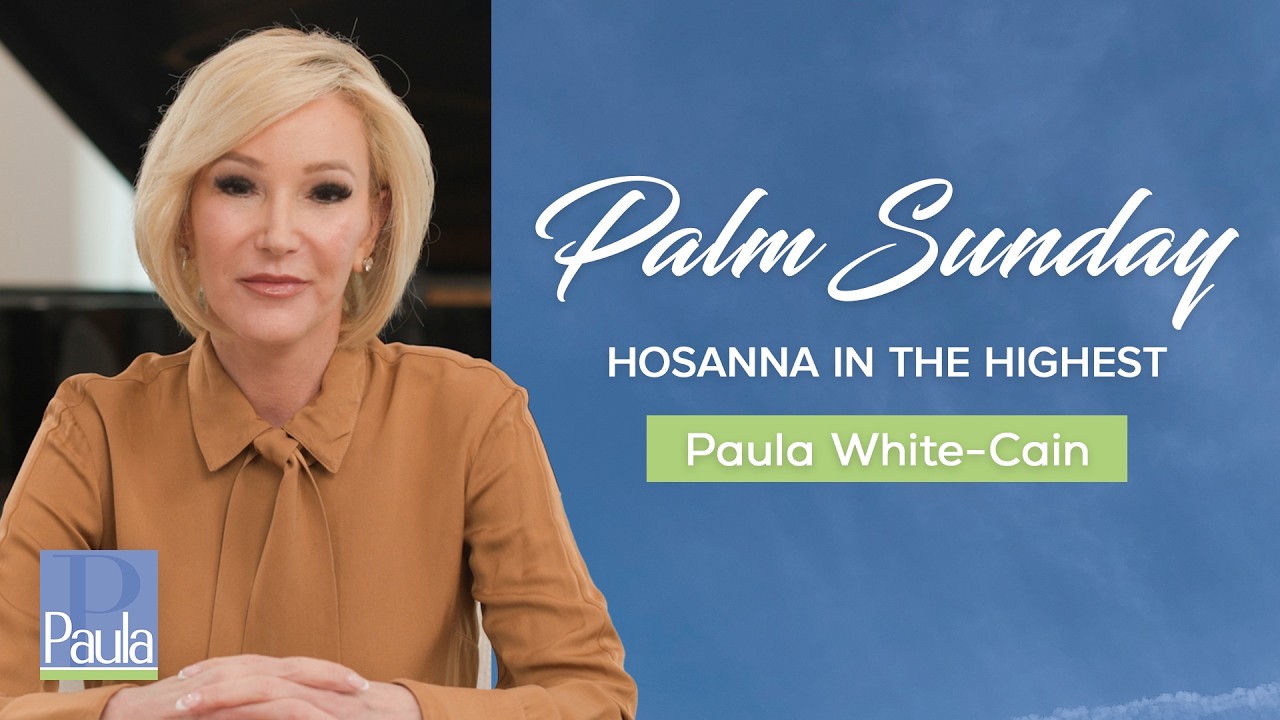
Video Summary
White-Cain opens by noting that Palm Sunday falls within the Passover season, which she describes as a divine appointment and a time to honor the power of the blood covenant. She explains that “Hosanna” was not the ordinary “hallelujah” of worship but a cry meaning “save now” or “deliver us now,” a first-of-its-kind praise that broke out as Jesus entered the city.
She then walks through the triumphal entry recorded in all four Gospels, emphasizing a contrast many readers overlook. For most of His ministry, Jesus avoided crowds, withdrew to pray, and repeatedly told people not to publicize His miracles. But during this final week, He deliberately presented Himself publicly. White-Cain describes the setting: Jerusalem packed with pilgrims for Passover, with historical estimates of hundreds of thousands of lambs and possibly millions of people.
The heart of the message connects Jesus’ ride on a donkey to Old Testament prophecies, especially Zechariah 9:9 and Genesis 49:10-11, and to the crowd’s cry, “Hosanna to the Son of David.” She concludes by urging listeners to “hear,” in the sense of understanding, that Jesus is their rightful King, and to respond by saying yes to Him.
Key Takeaways
- “Hosanna” is a cry for salvation and deliverance, not just a general expression of praise.
- Jesus often hid His ministry, but at the appointed time He revealed Himself openly as King.
- God works according to divine timing, and believers should honor His seasons.
- Jesus’ entry on a donkey fulfilled Zechariah 9:9 and echoed Genesis 49:10-11.
- Salvation means being made whole, restored and rescued, not only going to heaven.
- Right standing with God comes by grace, not merit; the starting point is simply saying yes to Jesus.
From Hidden Ministry to Public King
One of White-Cain’s most interesting observations is how often Jesus avoided publicity. She points to passages such as Mark 5, where after raising Jairus’ daughter He instructed witnesses not to tell anyone, and John 6, where He withdrew to a mountain when the crowd wanted to make Him king by force. Even after the Transfiguration, He told the disciples to keep silent until after the resurrection.
She contrasts this with modern tendencies to build entire ministries around a single miracle. For White-Cain, the lesson is about timing. Jesus did not resist recognition because He lacked authority but because there was an appointed hour. When that week arrived, everything changed, and He rode into Jerusalem in full view of the crowds.
Prophecy Fulfilled on a Donkey
White-Cain explains that the Jewish people knew their Scriptures well and would have recognized the significance of a king arriving on a donkey’s colt. Zechariah 9:9 declares, “Behold, your King is coming to you; He is just and having salvation, lowly and riding on a donkey.” Some may also have recalled Solomon being presented as king on David’s mule in 1 Kings 1.
She highlights an often-overlooked prophecy in Genesis 49:10-11, where Jacob blesses Judah and speaks of a coming ruler who will tether his donkey to a vine. What was only hinted at in Genesis, she says, became clear in the Gospels: Jesus, the Son of David from the tribe of Judah, entered Jerusalem as Israel’s rightful King. The crowd’s cry in Matthew 21:9, “Hosanna to the Son of David,” shows they understood the claim, drawing also on Psalm 118:26.
The Righteous King of Salvation
White-Cain explains that the biblical idea of salvation comes from a root meaning to be made whole, restored, rescued and put back together. It is not only about going to heaven someday; it is God bringing heaven’s reality into a person’s life now through the blood covenant of Jesus Christ.
She stresses that no one earns right standing with God. Quoting Jeremiah’s description of the human heart as deceitful, she says all people deserve separation from God, yet in His mercy He sent Jesus, the righteous King, to make wrong things right. People do not need to master theology or memorize hundreds of verses to begin; they simply need to say yes to Jesus. According to White-Cain, that yes empowers people to say no to addictions, depression and generational patterns, and can change the direction of a family line.
Hearing and Understanding Your God Moment
Drawing from John 12:12-13, White-Cain notes that the people “heard” Jesus was coming, which she interprets as understanding. When they understood it was their moment, they took palm branches and went out to meet Him. She calls listeners to the same response: when the heart grasps who Jesus is, it rises to meet Him with praise, receiving fresh vision, strategy and hope. For more of her teaching on spiritual growth, see Devoting Our Emotional Wholeness to God and The Crushing Process: Lessons from the Tabernacle.
Frequently Asked Questions
What does “Hosanna” mean according to Paula White-Cain?
She explains that “Hosanna” is a cry meaning “save now” or “deliver us,” a unique praise that recognized Jesus as the one bringing salvation.
Why did Jesus ride a donkey into Jerusalem?
According to the sermon, He was fulfilling Zechariah 9:9 and the older prophecy of Genesis 49:10-11, presenting Himself as the humble yet rightful King from the line of David and the tribe of Judah.
What does salvation mean in this message?
White-Cain teaches that salvation means being made whole, restored and rescued now, as well as eternal life, and that it begins with simply saying yes to Jesus.
Final Thoughts
Palm Sunday: Hosanna in the Highest reminds believers that the triumphal entry was not a random parade but the fulfillment of God’s carefully timed plan. Paula White-Cain encourages listeners to see Jesus as the righteous King who brings salvation, to recognize their own moment of encounter, and to respond with the same heartfelt cry the crowds raised in Jerusalem: Hosanna, save now.
