How Fear Quietly Steals Your Peace (and How to Take It Back) with Lysa TerKeurst
Many responsible, caring people do not think of themselves as controlling. Yet when fear knocks, they find themselves trying to manage outcomes far beyond their reach. In this conference message, Lysa TerKeurst explores how fear steals your peace, the “paper-thin line” between responsibility and control, and the biblical posture that allows weary believers to take their peace back. Drawing on the Last Supper, her own painful story and Isaiah 30, she offers both honesty and hope.
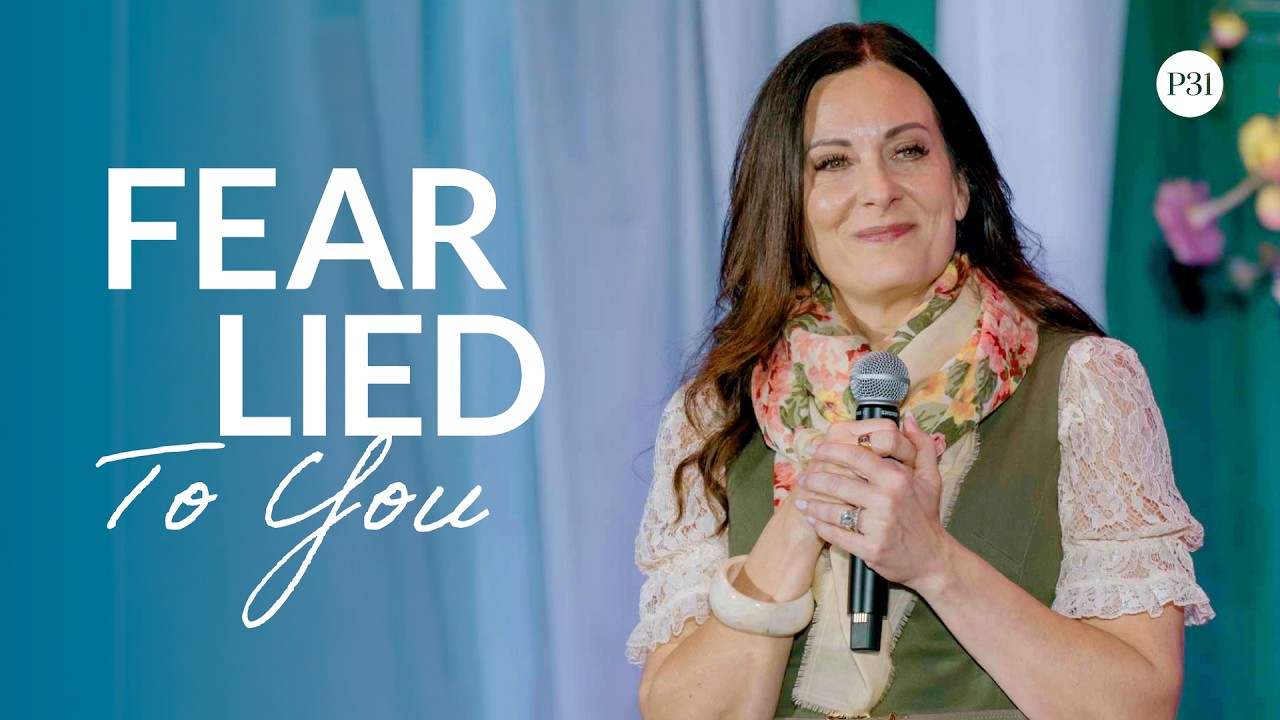
Video Summary
TerKeurst opens in Matthew 26:20–25, where Jesus tells His disciples that one of them will betray Him. She invites listeners to imagine the scene with its conversation, broken bread and shifting expressions, and to remember Jesus’ full humanity as He spoke those words. She shares that she has carried many heavy weights, including rejection, breast cancer, the loss of a sister and a life-threatening emergency surgery, but the heaviest of all has been betrayal. When someone dies, she observes, neither person wanted the separation; when someone walks away, they chose to go.
From there she reflects on Judas, then on her own tendency toward control, the role fear plays, the way memory and perception shape reactions, and the four-word prescription God offers in Isaiah 30:15.
Key Takeaways
- Betrayal can be one of the heaviest burdens a person carries.
- Control often grows from attachment to a particular outcome.
- Responsibility manages what is ours to manage; control tries to manage what is not.
- TerKeurst describes control as “fear disguised as a strength.”
- Fear involves an alarm, a memory, a perception and a reaction; preparation can change the response.
- Isaiah 30:15 points to repentance, rest, quietness and trust as the path to strength.
“Surely Not I, Rabbi”
TerKeurst notes a subtle detail in the passage. Each of the other disciples asked, “Lord, is it I?” but Judas said, “Rabbi, is it I?” She sees a meaningful difference between someone who is Lord of your life and a teacher you merely consult. While acknowledging that greed played a part, she suggests that Judas may also have been frustrated that Jesus was not doing what Judas thought He should do, such as overthrowing Roman rule. Judas became so attached to his preferred outcome that he could not accept any other.
With candor, TerKeurst admits she sometimes relates to that attachment. She describes laying out detailed plans before God and essentially asking Him to see why her way is best. For her, it is not about power; it is about fear of the emotional suffering that might follow if things go another way.
The Paper-Thin Line Between Responsibility and Control
TerKeurst explains that fear tells powerful lies: that what God provides will not be enough, that He will allow suffering beyond what we can bear, and that it is safer to fix things ourselves than to trust Him. Fear asks, “If I don’t step in, who will?”
She shares a painful season after a deep betrayal in her marriage, complicated by substance abuse, when she felt she had to hold everything together. She recounts waking at 2 a.m., checking a phone tracker and driving out to intercept a loved one, then weeping in her driveway because she realized she could not keep living that way. Later, she wrote in her journal that she had “done too much,” wondering how many joyful moments she missed and how many imagined tragedies she lived through because she believed everything depended on her.
Her definitions are clarifying. Responsibility means faithfully managing what is within our ability while trusting God with the ultimate outcome. Control means trying to manage even what is outside our ability and refusing to accept any outcome but our own. She illustrates with a friend who lost her father to cancer and became anxious about every detail of her children’s diet. Keeping children healthy is responsible, TerKeurst gently noted; guaranteeing they will never become ill is impossible.
Understanding the Stages of Fear
TerKeurst describes four parts of a fear response that she encountered in her research: an alert or alarm, a memory of the last time something similar happened, a perception or story we tell ourselves because of that memory, and finally a reaction or response. Believers cannot stop the initial alarm, she says, but they can do meaningful work on memory and perception, preparing in times of strength for seasons of struggle.
She shares, with humor, how she was initially skeptical of a counseling approach called EMDR until she joined her daughter for an intensive and found it helpful in reprocessing old memories. The memory did not disappear, she explains, but the story she told herself about it changed. She warns that a hurtful word can become a lie we believe, then a label we wear and finally a liability in every relationship, including our relationship with God. What we practice in our thinking, we perpetuate.
Repentance, Rest, Quietness and Trust
TerKeurst closes with Isaiah 30:15–18: “In returning and rest you shall be saved; in quietness and confidence shall be your strength.” Israel refused and said they would flee on swift horses, and as a result their pursuers would be swift. She laughs at how often her own first instinct is to look for “swift horses” rather than rest. Yet the passage ends with hope: the Lord longs to be gracious and rises to show compassion, and blessed are all who wait for Him. For more from TerKeurst, see What Does It Mean To Be Relationally Healthy? and Small Habits That Build Strong Families.
Frequently Asked Questions
What is the difference between responsibility and control?
According to TerKeurst, responsibility manages what is within our ability and trusts God with the outcome, while control tries to manage things outside our ability and refuses any outcome other than our own.
Why does Lysa TerKeurst call control “fear disguised as a strength”?
She explains that controlling behavior often feels responsible and strong, but it is usually driven by fear of suffering rather than by trust in God.
Which Bible verse does she recommend for fear?
She highlights Isaiah 30:15, which points to repentance, rest, quietness and trust as the source of salvation and strength.
Final Thoughts
“How Fear Quietly Steals Your Peace” is a tender, practical message for anyone exhausted from holding everything together. Lysa TerKeurst does not shame responsible people; she invites them to notice when responsibility has turned into fear-driven control. Her encouragement is to do what is ours to do, release what is not, and find strength in quiet trust in a God who longs to be gracious.
