The Principle of The Resurrection | Dr. Myles Munroe | MunroeGlobal.com
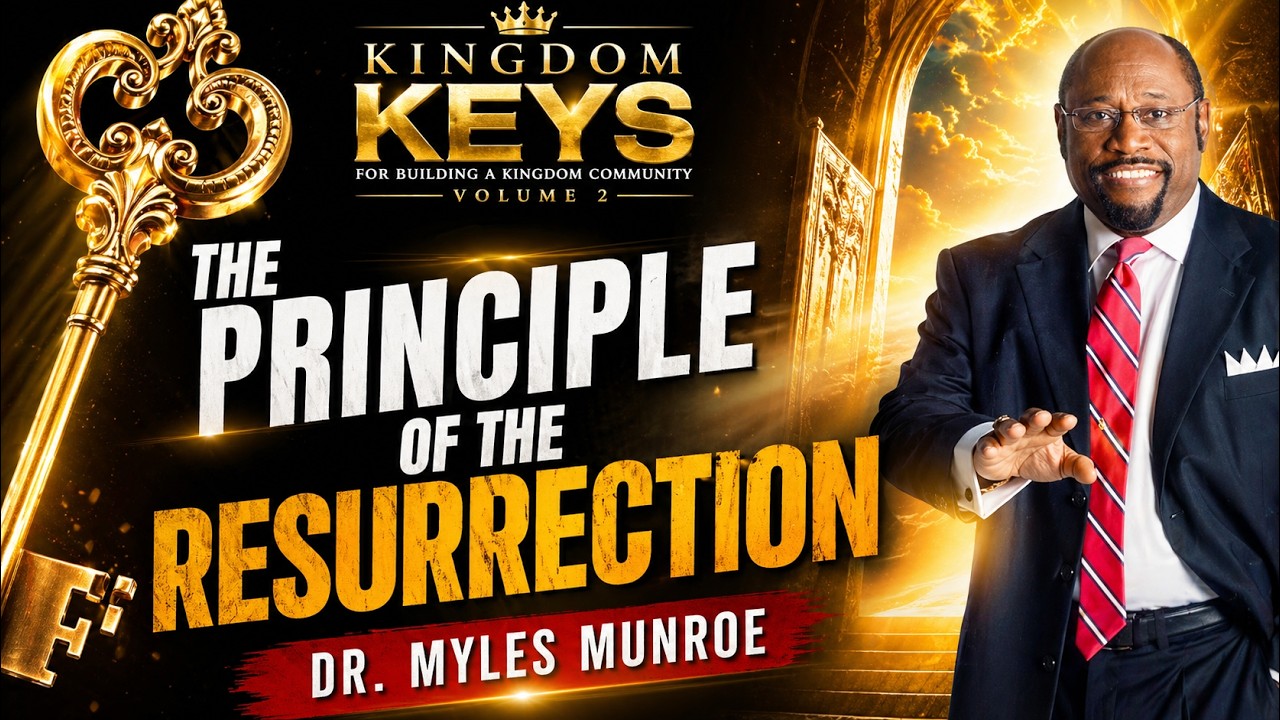
In The Principle of The Resurrection, the late Dr. Myles Munroe sets out to remove the fear of death from his listeners’ hearts. With stories from his childhood in the Bahamas, a careful reading of Genesis, 1 Corinthians 15 and Hebrews 2, and a deeply personal account of his brother’s death, Munroe explains where death gets its power, how Jesus Christ removed that power and why believers can face death without fear.
Video Summary
Munroe begins by recalling the superstitions he heard as a boy in the Bahamas: children were warned not to walk over graves or point at them, and they ran from hearses and the black birds that gathered near cemeteries. Those customs, he says, reflected a deeper reality: death reigned over their lives through fear.
He then presents a series of observations about death: it is humanity’s greatest fear, it shapes every religion, it controls every human, no one can resist or avoid it, and it is the great equalizer, placing kings and housekeepers in the same ground. From there he asks a crucial question: where did death get its power? His answer, drawn from Scripture, is that death draws its power from sin, and that Jesus Christ, by becoming a man and dying in humanity’s place, destroyed the power behind death. The message closes with a personal story about his brother’s sudden death and how God dealt with his grief and anger.
Key Takeaways
- Munroe describes the fear of death as humanity’s greatest fear and a driving force behind religion.
- Death is universal, unavoidable and the great equalizer of all people.
- In Munroe’s teaching, death existed in Eden without power until disobedience activated it.
- According to 1 Corinthians 15:56, the sting of death is sin.
- God’s justice required a man to die, so God became a man in Christ.
- Through His death, Jesus destroyed the devil’s power over death and freed people from its fear.
- For believers, resurrection is the natural result of death losing its grip.
Death Reigns Through Fear
Munroe’s opening observations are sobering. Death, he says, is the only power that controls every human being. Medicine may delay it, but no one can resist or escape it, and Hebrews 9:27 reminds us that it is appointed for people to die once. With humor, he notes that a wealthy person may have a more expensive tombstone, but everyone ends up in the same place. He even advises listeners not to be troubled by people who act superior, because death eventually humbles everyone.
He also observes that religions around the world are built around the question of death, offering different answers about reincarnation, paradise or other destinations. For Munroe, this shows how central the problem of death is to the human experience.
Where Death Came From
Munroe makes an unusual but thought-provoking point: death was not introduced by the devil but by God. In Genesis 2:16-17, God tells Adam he may eat freely from the trees of the garden except the tree of the knowledge of good and evil, “for in the day that you eat of it you shall surely die.” According to Munroe, Adam had never heard of death until God mentioned it.
In his interpretation, death existed as the opposite of life but had no power to kill. He compares it to a bee without a sting flying harmlessly in the garden. Death could only become active if humanity disobeyed God’s word. When Adam and Eve sinned, they gave death its power.
The Sting of Death Is Sin
To support this, Munroe turns to 1 Corinthians 15:54-57, where Paul writes, “O Death, where is your sting? O Hades, where is your victory? The sting of death is sin, and the strength of sin is the law. But thanks be to God, who gives us the victory through our Lord Jesus Christ.” Munroe describes Paul as “daring death” after the resurrection, confident that it no longer has authority over believers.
His logic is straightforward: if sin is what gives death its power, then removing sin removes death’s power. The problem, he says, is that humanity cannot remove sin on its own, because we are the sinners. This sets the stage for understanding why Jesus had to die.
Why a Man Had to Die
Munroe shares that people from other faiths sometimes ask him why God could not simply forgive everyone without a death. His answer is that God, as a faithful judge, must keep His word. God spoke to a human being, which Munroe describes as a spirit living in a physical body, and said that disobedience would bring death. Therefore, justice required that a human die, not an angel or an animal.
Because God loved humanity too much to destroy it, Munroe says, God chose to become a man Himself. He points to Hebrews 2:14-15: since the children share in flesh and blood, Christ also took part in the same, “that through death He might destroy him who had the power of death, that is, the devil, and release those who through fear of death were all their lifetime subject to bondage.” Munroe notes that the devil never owned death; he held its power because he led humanity into rebellion, which is how Munroe defines sin.
Death Could Not Hold Him
One of the most memorable moments of the sermon is Munroe’s description of a vision he says he had while meditating on this passage: he pictured Jesus laughing at death. The message he took from it was that resurrection is not a struggle for believers to escape the grave; rather, death struggles and fails to keep them there. Because Jesus removed sin, death lost the power it used to hold people captive. Resurrection, in his words, is the natural result of death no longer having anything to hold on to.
This echoes Peter’s words in Acts 2:24 that God raised Jesus up, “because it was not possible that He should be held by it.” For readers who want to explore Munroe’s teaching on purpose and leadership, see Laws and Principles For Success In Life.
A Personal Story of Grief
Munroe closes with a raw testimony. He received a call that his brother, one year older than he, had been in a serious accident. Arriving at the scene, he held his brother’s body in the road and prayed for him to come back, but he did not. In the days that followed, Munroe admits he was angry with God, questioning why such a faithful believer had died.
He describes how God gently confronted his complaints, reminding him that Jesus Himself died at thirty-three, younger than his brother. Munroe connects this to Jesus’ words to Martha before raising Lazarus: “I am the resurrection and the life” (John 11:25-26). The story shows that even a seasoned teacher can wrestle with grief, and that God meets His people honestly in their pain. For more from Munroe on family and legacy, see The Power and Purpose of The Family.
Frequently Asked Questions
What does Myles Munroe mean by “the principle of the resurrection”?
He teaches that because Jesus removed sin, which gave death its power, death can no longer hold believers, making resurrection the natural outcome for those in Christ.
According to Munroe, where does death get its power?
Citing 1 Corinthians 15:56, he explains that the sting or power of death is sin.
Why did Jesus have to become a man?
Munroe teaches that God’s word required a human to die for human disobedience, so God became a man in Christ to satisfy justice and save humanity.
Final Thoughts
The Principle of The Resurrection is a hopeful and heartfelt message from Dr. Myles Munroe. By explaining where death gets its power and how Christ took that power away, Munroe invites believers to live free from the fear of death. His honest account of grief reminds listeners that faith does not erase sorrow, but it does change the ending. In Christ, death has lost its sting.
