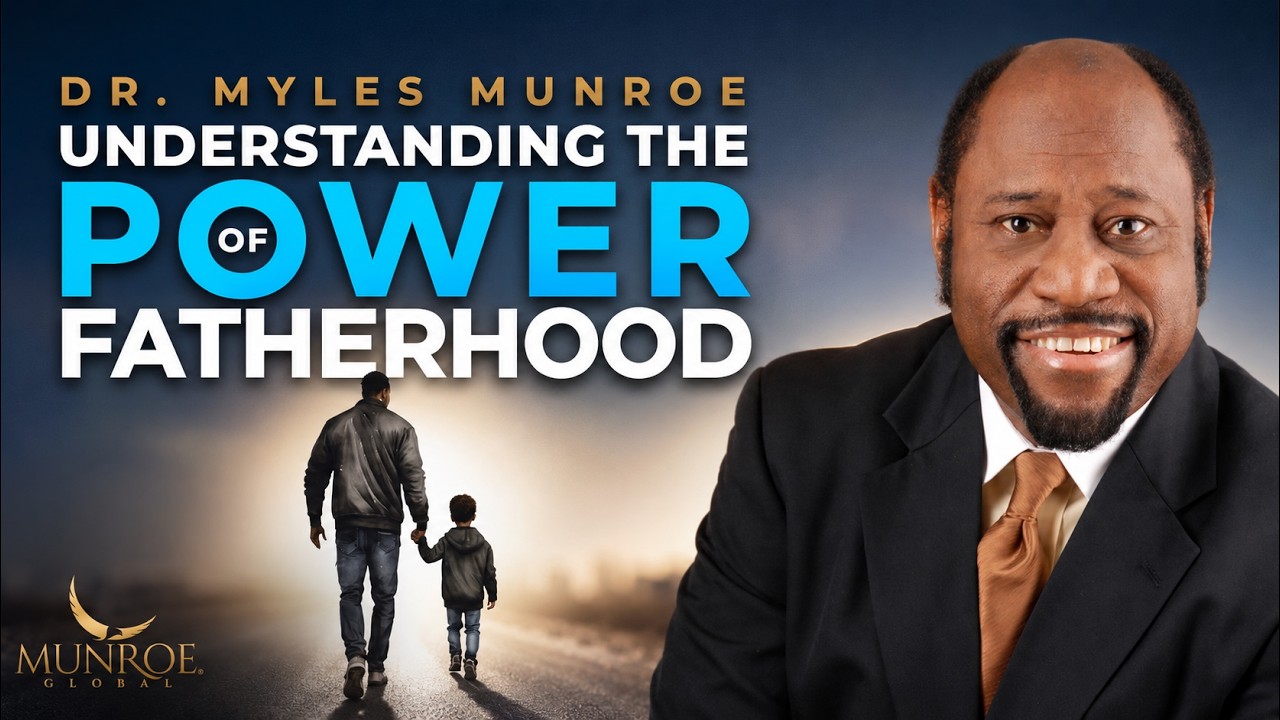
Understanding The Power of Fatherhood | Dr. Myles Munroe | MunroeGlobal.com
Preached on a Father’s Day, this message by the late Dr. Myles Munroe lays out a bold vision for the role of fathers in families and society. In Understanding The Power of Fatherhood, Munroe argues that fatherlessness is one of humanity’s deepest problems, defines a father as a “source and sustainer,” and calls families to restore honor to fathers as God intended.
Video Summary
Munroe opens by asking his congregation to take notes on the role of fathers in family development. He makes a striking statement: the greatest spiritual, social, economic and psychological curse on humanity is fatherlessness. He believes many of the problems facing nations today can be traced to the absence or ineffectiveness of fathers.
To explain why fathers matter so much, Munroe uses a series of illustrations. A tree is only as good as its roots. A house is only as valuable as its foundation. The quality of offspring is shaped by what is passed down. With humor, he describes how no hair product could reverse the balding he inherited from his father and grandfather, using it to show the power of what fathers transmit.
A memorable part of the message is a live demonstration of a wedding ceremony. Munroe uses it to explain the meaning of a father “giving away” his daughter: the father, as source and sustainer, transfers that responsibility to the husband. The sermon ends with teaching on honoring fathers, including ways children can dishonor them, and a prayer for a spirit of honor in families.
Key Takeaways
- Munroe calls fatherlessness the greatest spiritual, social, economic and psychological curse on humanity.
- Fathers function like roots and foundations: the health of the whole depends on them.
- The word “father” carries the meaning of source and sustainer.
- Fathers pass down influence, character and patterns to the next generation.
- In marriage, the role of sustainer is transferred from father to husband.
- Honoring fathers brings God’s promise of blessing and long life.
Why Fatherhood Matters So Much
Munroe insists that society cannot be healthy without healthy fathers. His first illustration is a tree: rotten roots produce a dead tree, and contaminated roots produce contaminated fruit. His second is a building: a structure may lose its roof or walls and still stand, but without a foundation it is condemned. The value of a house lies in its foundation, and in the same way, the strength of a family rests heavily on its father.
His third point concerns inheritance. Whether in plants, animals or people, offspring reflect what was passed down. Munroe’s playful story about his own hereditary baldness makes a serious point: fathers shape the next generation in ways that cannot easily be undone.
Father as Source and Sustainer
Central to Munroe’s teaching is his definition of a father as the source and sustainer. This reflects God Himself, the Father from whom all things come and by whom all things are sustained. A true father provides, protects and supports those under his care.
Munroe applies this to marriage. He suggests that many wives, at a deep level, are looking for someone who will provide the stability and care a good father gives. He challenges young men to understand that marriage is not merely about attraction but about taking on responsibility to sustain a wife and family: provision, protection, care and long-term commitment.
What Happens at the Altar
Munroe brings two members of his pastoral staff forward to act out a wedding. He explains that when a father walks his daughter down the aisle and the minister asks, “Who gives this woman?”, a transfer of responsibility takes place. The father, who has sustained her for years, places her hand in her husband’s, entrusting him with that role. With humor, he notes why fathers often smile at that moment, and why grooms should understand the weight of what they are receiving.
Honoring Your Father
Munroe closes by teaching on honor. God commands, “Honor your father and your mother,” and Paul calls it the first commandment with a promise: that it may be well with you and you may live long on the earth (Ephesians 6:1-3). He lists ways people dishonor fathers, including failing to respect the position and focusing on their flaws.
Applying the principle to spiritual fathers as well, he says every great leader he has met has defects, but he chooses not to magnify them. “Respect the anointing; don’t magnify the defect,” he advises. On Father’s Day, he urges listeners to set aside whatever might cancel honor and choose to esteem, encourage and speak well of their fathers. For more from Munroe, see 7 Success Principles of An Eagle and How To Fast And Pray Effectively.
Frequently Asked Questions
How does Myles Munroe define a father?
He defines a father as a “source and sustainer,” one who provides for, supports and protects those entrusted to him.
Why does Munroe call fatherlessness a curse?
He believes the absence or ineffectiveness of fathers contributes to many spiritual, social, economic and psychological problems in families and nations.
What Bible promise is connected to honoring fathers?
Ephesians 6:1-3, echoing Exodus 20:12, promises that those who honor their father and mother will experience well-being and long life.
Final Thoughts
Understanding The Power of Fatherhood is a passionate call to restore fathers to their God-given place. Dr. Myles Munroe reminds listeners that fathers are roots and foundations, sources and sustainers, whose influence shapes generations. Whether one is a father, a future husband or a son or daughter, the message invites everyone to value fatherhood and practice honor.