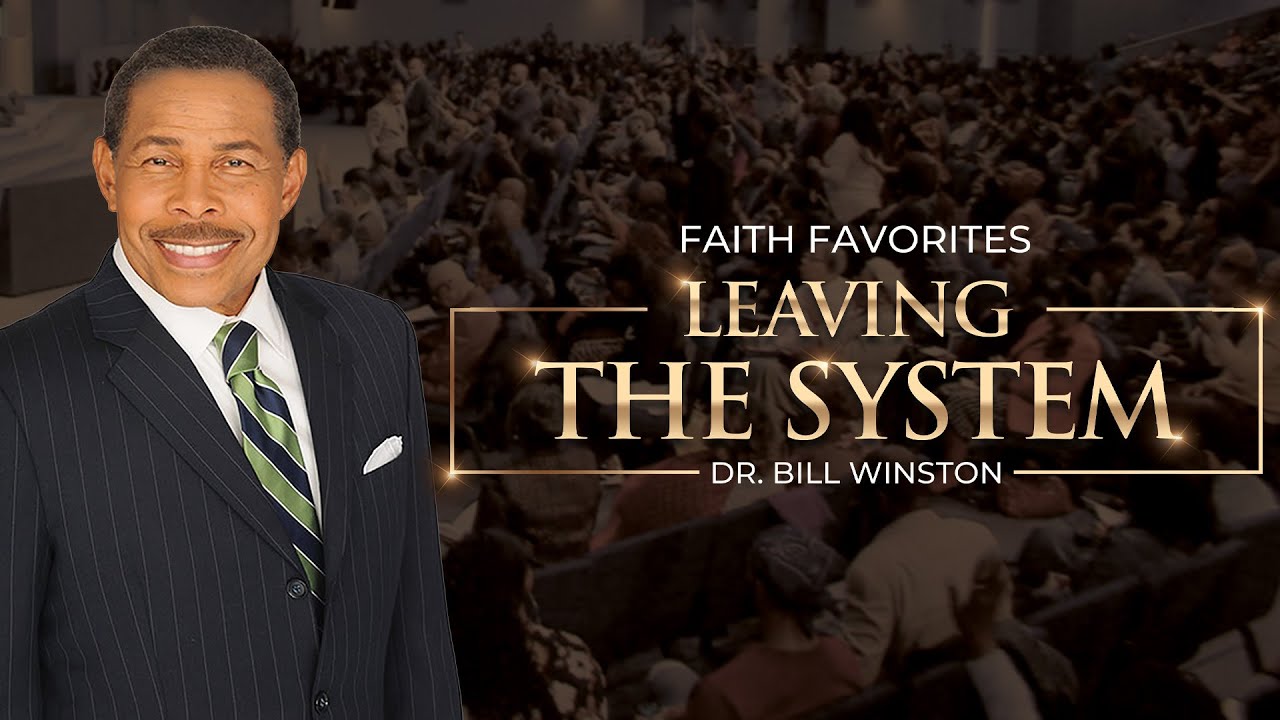
Dr. Bill Winston: Leaving The System
In this energetic message from his series “Take It All Back,” Dr. Bill Winston calls believers to step out of what he describes as the world’s system of bondage and into the kingdom system of God. The central idea of leaving the system is that God often hands His people opportunities that look impossible, not to crush them, but to reveal who they really are in Christ. Along the way, Winston teaches on dominion, godly desire, the danger of excuses and the transfer of anointing.
Video Summary
Winston begins by contrasting faith with what he calls religion. Religion, in his view, teaches passive acceptance: when trouble comes, people assume God must be teaching them something. Winston pushes back, saying believers must recognize when the enemy is attacking and resist him. He speaks about long life as part of what he calls the believer’s “redemption package,” and prays to bind harm, danger and accidents from the enemy over the lives of his listeners.
The heart of the sermon is identity. According to Winston, Satan tries to convince believers that they are “only human,” while God gives them seemingly impossible opportunities in order to reveal their true identity. He illustrates this with personal and pastoral examples, including God prompting him to purchase a shopping mall, something he says he never would have believed he could do. He also points to David, whose victories over a lion and a bear prepared him for the far bigger opportunity of facing Goliath.
Key Takeaways
- God uses impossible opportunities to reveal who believers really are in Christ.
- Passive “religion” can make people accept attacks that faith should resist.
- Humanity was created to exercise dominion, as described in Genesis 1:26.
- When a person’s desire matches God’s desire, wholeness follows.
- The enemy works to pervert desire, as seen in Eden and before the Flood.
- Scripture shows that anointing can be transferred and multiplied, as with Moses’ elders and Elisha.
Opportunities, Not Obstacles
Winston turns to Matthew 14:15–16, where the disciples urge Jesus to send a hungry crowd away to buy food. Jesus replies, “You give them something to eat.” Winston reads this as Jesus handing His disciples an opportunity rather than an obstacle. He applies the passage to his own church’s projects and to the personal challenges of his listeners, encouraging them to “talk bigger” in faith. Rather than speaking as though they have nothing, he urges believers to make bold faith declarations about healing, provision and breakthrough, giving God, in his words, something to work with.
Created for Dominion
Returning to the creation account, Winston cites Genesis 1:26, where God says humankind will have dominion over the fish, the birds, the cattle and all the earth. He leads the congregation in declaring dominion over every system and every work of the enemy. His application is direct: if believers are not transforming the places God has sent them, such as workplaces, neighborhoods and communities, they have not yet fully represented the kingdom.
When Desire Matches God’s Desire
Winston then examines the man at the pool of Bethesda in John 5, who had been ill for thirty-eight years. When Jesus asked whether he wanted to be made whole, the man answered with explanations: no one helped him, and someone always got into the water first. Winston sees this as a pattern of excuses and dependence. He teaches that when a person’s desire aligns with God’s desire, wholeness comes, citing the proverb that the desire of the righteous will be granted. God has said His people will be lenders and not borrowers, he notes, and believers must raise their desire to meet that word rather than explain why it cannot happen.
How the Enemy Perverts Desire
Desire is also the enemy’s target. In Genesis 3:6, Eve saw that the forbidden tree was good for food, pleasant to the eyes and “desirable to make one wise.” Winston explains that the serpent’s suggestions built a desire that led to disobedience and the fall. Genesis 6:5 later describes a world in which every intent of the human heart was only evil continually. Winston’s conclusion is that the earth fell out of order through corrupted desire, and the kingdom of God has the power to set it back in order.
He finds hope in the story of Nebuchadnezzar in Daniel 4. The proud king was warned, then driven from his throne to live like an animal until, after seven years, God restored his mind and his kingdom. If God could do that, Winston argues, He can turn around the mind of anyone whose desires have been twisted, including a struggling son or daughter for whom parents are praying. The only limit, he says, is unbelief.
Nothing Is Impossible and the Transfer of Anointing
At the tomb of Lazarus, Jesus told Martha, “Your brother will rise again,” even though Lazarus had been dead four days (John 11:23–25). Winston uses the scene to insist that no situation is beyond God. He also points to Numbers 11, where God placed the Spirit that was on Moses upon seventy elders, and to Elisha, who asked for and received a double portion of Elijah’s spirit. According to Winston, believers do not have to start where earlier generations started; through faith they can receive the anointing and begin from a higher place.
Closing the broadcast, Winston shares how he lacked joy growing up in a troubled home and as a young man, but found lasting joy after being born again, which he says also transformed his career at IBM and his relationships. He leads viewers in a prayer to receive Christ based on Romans 10:9. For more on the power of words in Winston’s teaching, read Give Value to Your Words and Seeing The Invisible.
Frequently Asked Questions
What does Bill Winston mean by “leaving the system”?
He describes the world’s system as a structure of bondage and teaches that believers are called to live by the kingdom system of God, where faith makes the impossible possible.
Why does God give impossible opportunities, according to Winston?
Winston teaches that God gives opportunities beyond a person’s natural ability in order to reveal their true identity and what God has placed within them.
What Bible story does Winston use to talk about excuses?
He uses the man at the pool of Bethesda in John 5, who responded to Jesus’ question about wanting to be healed with a list of reasons he had not yet been healed.
Final Thoughts
“Leaving The System” is a bold, high-energy challenge to stop thinking small. Dr. Bill Winston urges believers to see impossible situations as invitations, to align their desires with God’s, to resist the enemy rather than passively accept his attacks, and to believe that no mind, family or circumstance is beyond God’s reach. Whether or not listeners share every emphasis of his teaching, the message presses one question home: what might God be revealing about you through the opportunity that currently looks too big?
