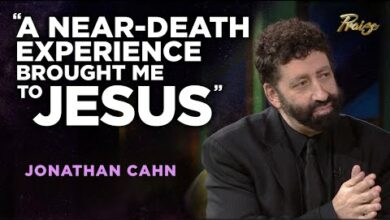
The Mysteries of The Fourth Beast | Jonathan Cahn Sermon
Daniel’s Vision, End-Time Prophecy, and the Rise of a Changing World
A powerful movement is emerging in today’s world—one that seeks to silence opposition and reshape morality. It is not limited to governments; it is spreading through media, entertainment, education, and global culture. At its core, it promotes a transformation of what is natural, redefining truth, identity, and even human nature itself.
This reality echoes a prophetic vision found in the Book of Daniel. In Daniel 7, the prophet describes a dream of four great beasts rising from the sea, each representing powerful kingdoms in world history. The first symbolizes Babylon, the second Persia, the third Greece, and the fourth—a terrifying and unique beast—represents Rome.
Unlike the others, the fourth kingdom is described as exceedingly powerful, crushing and devouring everything in its path. It is marked by iron strength and a global influence that extends far beyond its historical existence. From this kingdom emerges a “little horn,” widely understood as a symbol of the Antichrist—one who opposes God, alters truth, and persecutes the faithful.
Daniel’s vision connects directly with another prophecy in Daniel 2, where a great statue made of gold, silver, bronze, and iron represents the same sequence of kingdoms. As the materials decline in value—from gold to iron and clay—it reveals a world that is becoming increasingly fragmented, unstable, and morally weakened.
The fourth kingdom, Rome, is especially significant. Though it fell in history, its influence continues through modern systems—law, government structures, language, and culture. Its nature is to dominate, to mix and merge peoples, and to establish control. This “iron and clay” system reflects a divided yet powerful global order.
Prophetically, this system points to the last days. The Bible speaks of a period known as the Tribulation, lasting three and a half years, when a global power will rise, seeking to control not only actions but beliefs, speech, and conscience. This mirrors modern trends where dissent is increasingly suppressed and cultural pressures demand conformity.
A key insight from Daniel is the idea of something being “changed” or “altered.” The final kingdom is described as different—unnatural, transformed. This suggests a future culture that challenges the natural order established by God, redefining identity, morality, family, and truth itself.
When combined with the kingdom’s crushing power, a clear picture emerges: a system that both transforms reality and suppresses anyone who resists it. This aligns with what Scripture describes as the spirit of the Antichrist—already at work before the final fulfillment.
Yet, Daniel’s vision does not end in darkness.
He sees the “Ancient of Days” seated on His throne, and the final judgment of all earthly powers. The kingdoms of this world fall, but God’s kingdom remains forever. Authority is given to “One like the Son of Man,” whose dominion is eternal and unshakable.
The message is clear: despite the rise of powerful systems and cultural shifts, God is still in control. The forces of darkness may appear strong, but their time is limited. Believers are called not to fear, conform, or be silent—but to stand firm in truth, faith, and righteousness.
In the end, it is not the beast that prevails—but the Lamb.
God’s kingdom will overcome all, and those who remain faithful will share in that eternal victory.