The Importance of Becoming Stubborn | Jonathan Cahn Sermon
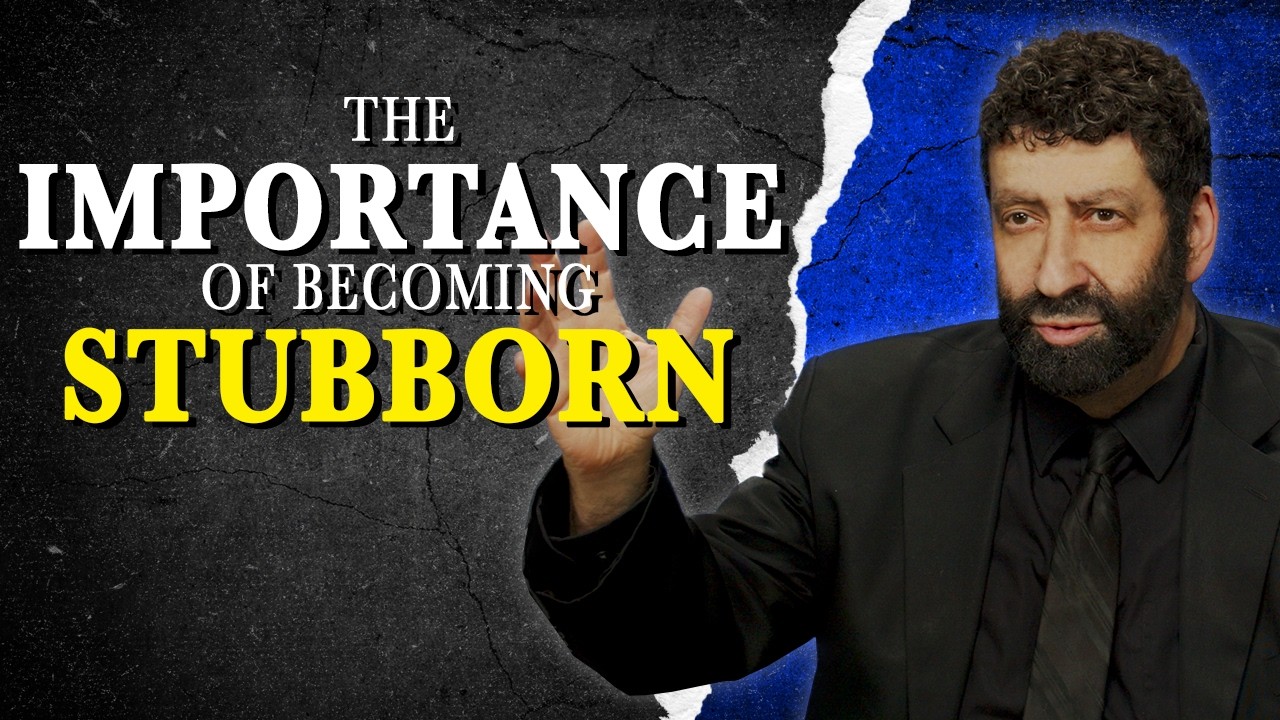
In The Importance of Becoming Stubborn, Jonathan Cahn turns a word most people treat as a flaw into a spiritual virtue. Being stubborn for yourself is a problem, he says, but being stubborn for God, unmoved in faith, love and the hope of the gospel, is exactly what Scripture calls believers to.
Video Summary
Cahn builds the message around God’s words to the prophet Ezekiel: “Like adamant stone, harder than flint, I have made your forehead” (Ezekiel 3:8-9; see also Ezekiel 2:6). Ezekiel would face rejection from his own people, so God told him not to be moved by their response. Cahn explains that being “like flint” does not mean being harsh with people. It means being soft toward the Spirit and full of compassion, while remaining hard as rock in the things of God.
He connects this to Jesus, who “steadfastly set His face to go to Jerusalem” (Luke 9:51), looking past every distraction to the cross where our salvation would be won. Believers are called to the same focus, fixing their eyes on Him.
Key Takeaways
- God wants His people to have faith, love and joy “like flint”: strong, steady and unmoved.
- Fixing your eyes on Jesus is the only reliable way to walk a straight path.
- Beware of new teachings or movements that pull you away from your first love and the simplicity of the gospel.
- Neither praise nor rejection from people should move you; you minister to people but answer to God.
- Anyone can become steadfast; it begins with a decision, and God supplies the strength.
Fixing Your Eyes on Jesus
Cahn leans on Hebrews 12:1-2: lay aside every weight and the sin that so easily ensnares, and run with endurance, “looking unto Jesus, the author and finisher of our faith.” The race is not about the track or the circumstances, he says, but about where your eyes are fixed. Whatever is not fixed on Him will eventually pull you off course.
He warns that there are a million ways to drift, even “in the name of the Lord”: the latest movement, the latest conspiracy theory, the latest doctrine. Paul, who wrote much of the New Testament, still resolved “to know nothing among you except Jesus Christ and Him crucified” (1 Corinthians 2:2). The new covenant, Cahn notes, is always new; believers do not need a new add-on to make it fresh. They are called to grow in the knowledge of the salvation they already have.
How to Walk a Straight Line
To illustrate, Cahn describes several ways someone might try to walk a straight line over a long distance: drawing a map, watching every footstep, or having someone shout corrections. All of these may mean well, he says, but they eventually fail. Rules, self-focus and even legalism cannot keep a person on course. The sure way is to fix your eyes on an object in the distance and walk toward it. In the same way, if your eyes are on Jesus and you keep moving closer to Him, you will walk straight without obsessing over every step.
Unmoved by Boos or Cheers
Cahn points to Stephen, who, while being stoned, gazed into heaven and saw Jesus (Acts 7:55-56). He also tells a parable of a king who promised his daughter’s hand to the man who could carry a cup filled to the brim across a great distance without spilling a drop. One man was distracted by the crowd’s boos, another by their cheers. The third succeeded because he listened to neither and kept his heart fixed on the course. The lesson: whether people accept or reject you, stay fixed on what God has called you to do.
Rooted, Grounded and Holy Stubborn
Drawing on Colossians 1:23 and Ephesians 3:17, Cahn urges believers to be rooted and grounded in love and unmoved from the hope of the gospel, as 1 Corinthians 15:58 says: “be steadfast, immovable.” The world’s values and events constantly shift, but God is a rock, and those who stand on Him become like a rock as well.
He offers biblical examples of holy stubbornness: Joshua declaring, “As for me and my house, we will serve the Lord” (Joshua 24:15); Daniel’s friends refusing to bow; and Joshua and Caleb insisting the promised land was good despite the giants. You can read more about that last story in Cahn’s message on the Joshua and Caleb key to victory.
He closes with Hebrews 10:23, “Let us hold fast the confession of our hope without wavering,” and Paul’s words in Philippians 3:13-14: “forgetting those things which are behind and reaching forward to those things which are ahead, I press toward the goal.”
For a related teaching on standing firm, see the devil’s strategies against you.
Frequently Asked Questions
Is it biblical to be stubborn?
Scripture warns against stubbornness toward God, but Jonathan Cahn points out that it also calls believers to be steadfast and immovable in faith. Being “stubborn” for God means refusing to be moved from His word, His promises and the gospel.
What does “set your face like flint” mean?
It describes unwavering determination. God made Ezekiel’s forehead “harder than flint” so he would not be moved by opposition, and Jesus “set His face” toward Jerusalem to accomplish our salvation.
How can I stay focused on Jesus amid so many voices?
Cahn’s counsel is to keep the gospel at the center, measure every new teaching against the love of God and the cross, and keep your eyes on Jesus rather than on people’s approval or criticism.
Final Thoughts
This message is a call to steadfast faith in a restless age. Jonathan Cahn invites believers to choose a holy stubbornness: to set their hearts like flint on the Lord, to stay rooted in His love, and to keep pressing forward with eyes fixed on Jesus, the author and finisher of their faith.
