The Truth About Hell, Part 2 (Selected Scriptures) | John MacArthur | GTYtv
What exactly does the gospel save people from? In this sobering message, John MacArthur argues that the biblical answer is clear and cannot be softened: salvation is rescue from eternal punishment. Continuing his series, The Truth About Hell John MacArthur examines why hell is so often ignored in modern churches, how Jesus Himself spoke about it, why the punishment is eternal, and why Christ is the only way of escape.
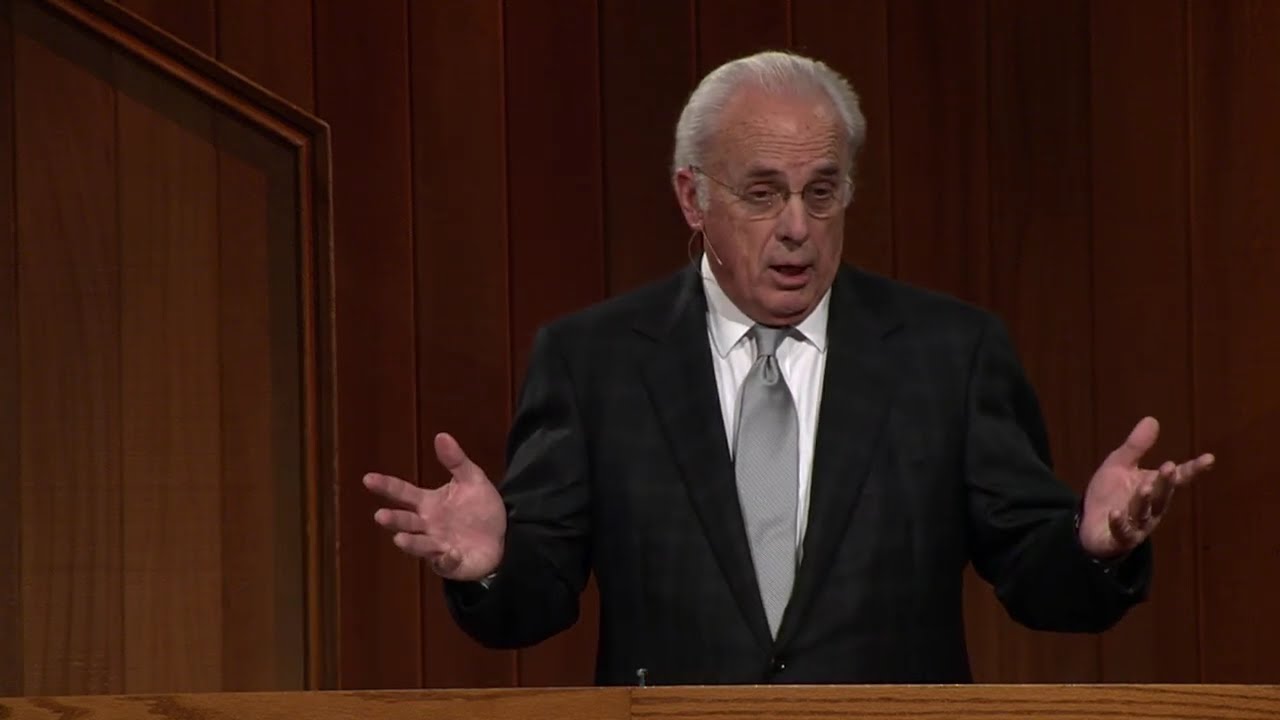
Video Summary
MacArthur opens by asking what Christians want people to be saved from. His answer is eternal punishment: conscious existence in a resurrected body, in the place Scripture calls hell, Gehenna, or the lake of fire. He laments that many churches pass over this subject, and some preachers avoid it entirely, even though he believes it should be central to any presentation of the gospel.
He then explains why the doctrine is so hard for modern people to accept. In his view, contemporary culture imposes few consequences for sin, so people grow used to sinning without immediate cost. The idea of deferred, eternal consequences feels foreign. Yet Romans 2 warns that people are storing up wrath for the day of judgment.
The middle of the sermon shows that Jesus was, in MacArthur’s words, a preacher of hell. He walks through passages in Matthew and the account of the rich man and Lazarus in Luke 16. He then presents rational, theological and biblical reasons for believing that hell is eternal, including the parallel in Matthew 25:46 between eternal punishment and eternal life. He closes by pointing to the one way of escape: faith in Jesus Christ, who rescues believers from the wrath to come.
Key Takeaways
- Biblical salvation is first and foremost rescue from eternal punishment, not merely relief from loneliness, anxiety or poverty.
- A culture that removes consequences for sin makes the doctrine of judgment feel unfamiliar.
- Jesus spoke about hell more than anyone else in Scripture.
- Matthew 25:46 uses the same word for eternal punishment and eternal life.
- MacArthur teaches that hell is retributive, not remedial, and that its inhabitants never repent.
- There are many roads to hell, but only one way of rescue: Jesus Christ.
Why the Church Must Speak About Hell
MacArthur observes that many Christians comfortably distance themselves from the reality of hell. It is overlooked in preaching and avoided as too negative. He contends that this is backwards. Salvation means deliverance or rescue, and the natural question is: rescue from what?
He criticizes what he sees as substitutes for the biblical answer. Some present Jesus mainly as the solution to purposelessness, loneliness, failure, sickness or financial struggle. While God cares about every area of life, MacArthur insists that the heart of the gospel is rescue from eternal judgment. Without that, he says, the message of salvation loses its meaning.
He also notes that it is not enough to persuade people that hell exists. The more pressing point is that every unforgiven sinner is already on the way there. Romans 2 describes those who are treasuring up wrath for the day of wrath and the revelation of God’s righteous judgment (Romans 2:5). No sin of thought, word or action escapes God’s notice.
For the first part of this series, see The Truth About Hell, Part 1.
Jesus, the Preacher of Hell
MacArthur points out that the theme is not new. Even in Deuteronomy, God speaks of a fire kindled in His anger that burns to the lowest depths. But he puts special emphasis on Jesus, noting that people who dislike the topic often forget how often the Lord addressed it.
In the Sermon on the Mount, Jesus warned that calling a brother a fool puts a person in danger of the fire of hell, and that it would be better to lose an eye or a hand than for the whole body to be cast into hell (Matthew 5:22-30). He spoke of hell as though His hearers already understood it. In Matthew 10:28 He told His followers not to fear those who can kill only the body, but to fear Him who can destroy both soul and body in hell. MacArthur also mentions references in Matthew 11, 18 and 23.
He then turns to Luke 16, the account of the rich man and Lazarus. The poor man died and was carried to Abraham’s side, a place of comfort, while the rich man found himself in torment, thirsting for even a drop of water. Abraham told him that a great chasm had been fixed that no one could cross (Luke 16:19-26). For MacArthur, this story shows hell as a real place of conscious suffering after death from which there is no escape. He asks whether the Son of God could have been mistaken.
MacArthur treats this same passage in more depth in A Voice from Hell, Part 1.
Why the Punishment Is Eternal
A major section of the sermon addresses those who teach annihilation, the view that the wicked simply cease to exist. MacArthur points to Matthew 25:46, where Jesus said the wicked will go away into everlasting punishment but the righteous into eternal life (Matthew 25:46). Since the same word describes both, he argues, denying the eternity of hell would also undermine the eternity of heaven.
He then offers a rational perspective. Satan and the fallen angels will be cast into the lake of fire forever because of rebellion against God, and Revelation 20 shows that human beings such as the beast and the false prophet share that fate. In MacArthur’s reasoning, sinners commit the same crime of rebellion and therefore share the same punishment. Because sin is committed against an infinitely holy God, he says, its guilt is infinite.
He adds a point he considers essential: hell is not remedial. Those there do not repent; they continue to hate and blaspheme God. The punishment therefore never catches up with the sin, because the sinning never stops. He connects this with Jesus’ warning in Mark 3 about eternal sin.
Theologically, MacArthur teaches that God’s holiness and justice require that sin be punished, and that God’s glory is displayed in that justice. Biblically, he cites passages describing hell as outer darkness, weeping and gnashing of teeth, and points to Ezekiel 32, where Egypt, Assyria, Edom and other nations are pictured descending to the pit.
The Only Way of Escape
After listing many biblical words used for hell, including darkness, fire, separation, shame and torment, MacArthur makes a striking contrast. There are many roads to hell, because any sin unforgiven leads there, whether pride, immorality or self-righteous religion. But there is only one way to escape.
He quotes the familiar promise that God so loved the world that He gave His only begotten Son, so that whoever believes in Him should not perish but have everlasting life (John 3:16). He also points to 1 Thessalonians 1:10, which describes Jesus as the one who delivers believers from the wrath to come. For MacArthur, the seriousness of hell is exactly what makes the good news of the gospel so precious.
Frequently Asked Questions
Does John MacArthur believe hell is eternal?
Yes. He teaches that hell is conscious, eternal punishment, pointing especially to Matthew 25:46, where the same word describes both eternal punishment and eternal life.
Why does MacArthur say Jesus was a preacher of hell?
Because Jesus spoke about hell frequently, including in the Sermon on the Mount, in Matthew 10, 18 and 23, and in the account of the rich man and Lazarus in Luke 16.
What is the way to escape hell according to this sermon?
MacArthur teaches that the only way of escape is faith in Jesus Christ, who rescues believers from the wrath to come, as stated in John 3:16 and 1 Thessalonians 1:10.
Final Thoughts
The Truth About Hell, Part 2 is a direct and serious message that many listeners may find uncomfortable, and that is exactly John MacArthur’s point. He believes that a gospel without hell is a gospel without urgency. By tracing the theme from Moses to the teaching of Jesus and on to Revelation, he aims to show that the Bible speaks plainly about eternal judgment. Yet the sermon does not end in despair. It ends with the invitation of John 3:16 and the assurance that Christ rescues all who trust Him from the wrath to come.
