The Truth About Hell, Part 1 (Selected Scriptures) | John MacArthur | GTYtv
Few subjects are as uncomfortable, or as frequently avoided from the pulpit, as the doctrine of eternal judgment. In this message, John MacArthur confronts that silence directly. He argues that the truth about hell is not a side issue but central to the gospel, because salvation is fundamentally a rescue. If the church does not explain what people need to be saved from, he contends, it cannot clearly explain why they need a Savior.
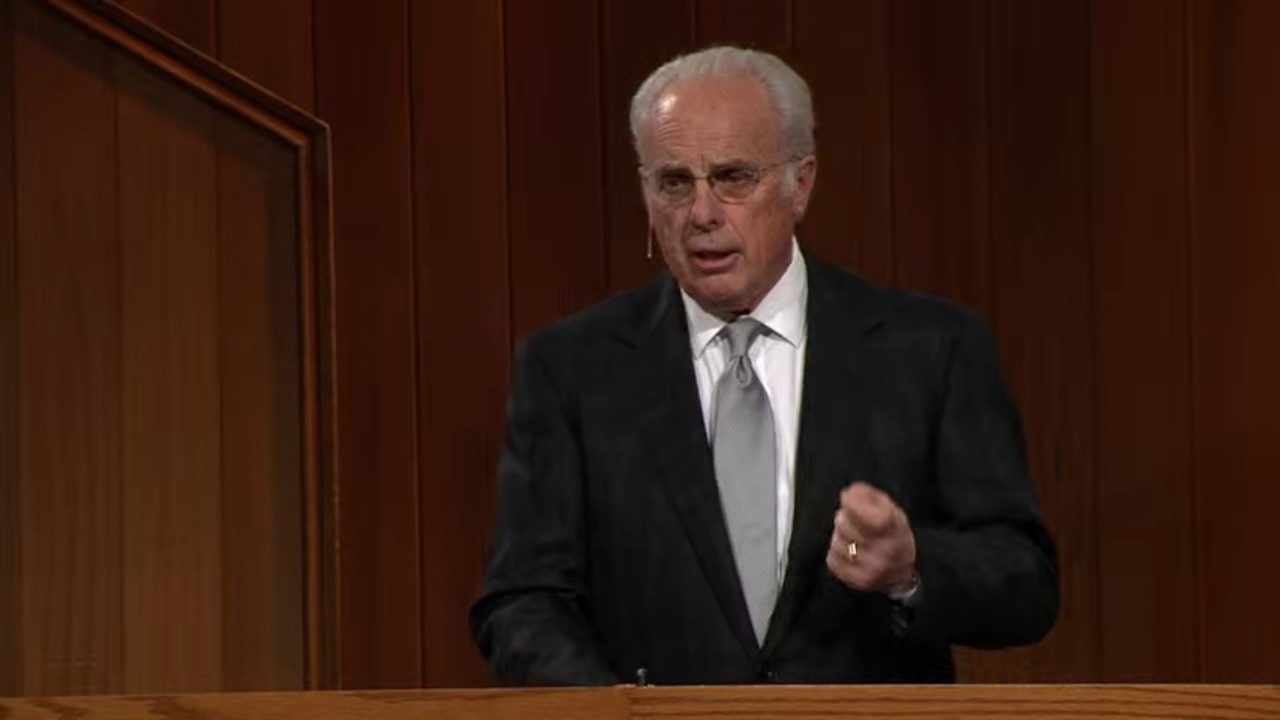
Video Summary
MacArthur opens with a simple question: what do Christians want people saved from? His answer, drawn from Scripture, is eternal punishment, a conscious existence in a resurrected body suited for everlasting judgment, in a place the Bible calls hell. He observes that many churches ignore the topic and some preachers avoid it entirely, even though it ought to be among the first things discussed when presenting the gospel.
He cites a survey suggesting that roughly three-quarters of Americans believe hell exists, but only a tiny fraction think there is any chance they might go there. In MacArthur’s view, the culture has absorbed the idea of hell but not the personal reality of being under God’s judgment. Because modern society attaches few consequences or stigmas to sin, people grow accustomed to sinning without immediate penalty, which makes the idea of deferred, eternal consequences feel foreign.
Key Takeaways
- Salvation means rescue, and Scripture identifies hell as what people need rescuing from.
- Many people believe hell exists but do not believe they are in danger of it.
- Romans 2 warns that unrepentant people are storing up wrath for the day of judgment.
- Jesus spoke about hell frequently, more than anyone else in Scripture.
- The account of the rich man and Lazarus describes hell as conscious, painful and permanent.
- MacArthur rejects annihilationism, universalism and inclusivism as unbiblical.
Storing Up Wrath
MacArthur points to Romans 2:5, which warns that a hard and impenitent heart is “treasuring up for yourself wrath in the day of wrath and revelation of the righteous judgment of God.” No sin escapes notice, he says, whether in thought, word or action. Every unforgiven sin of those who reject Christ will be justly judged. He stresses that this is not a new idea, tracing it back to Deuteronomy 32:22, where God speaks of a fire kindled in His anger that burns to the lowest depths.
Jesus, the Preacher of Hell
Some people object that preaching about hell is too negative. MacArthur responds that Jesus Himself spoke more about hell than anyone else in Scripture. In the Sermon on the Mount, Jesus warned that calling someone a fool brings danger of “the fire of hell” (Matthew 5:22), and that it is better to lose an eye or a hand than for the whole body to be cast into hell (Matthew 5:29–30). In Matthew 10:28, He said not to fear those who kill the body but cannot kill the soul, but to fear Him who is able to destroy both soul and body in hell. Jesus also spoke of hell in Matthew 11, 18 and 23, often assuming His listeners already understood the concept.
MacArthur warns against reducing salvation to rescue from loneliness, anxiety, poverty, failure or sickness. Those are real struggles, he acknowledges, but the Bible’s central message is deliverance from God’s righteous judgment.
The Rich Man and Lazarus
MacArthur walks through Luke 16:19–31. A rich man lived in luxury while a poor man named Lazarus lay at his gate covered in sores. Both died. Lazarus was carried to Abraham’s side, a place of comfort, while the rich man found himself in torment, begging for a drop of water to cool his tongue. Abraham replied that a great chasm separated them, and no one could cross over. MacArthur draws several observations from Jesus’ description: it is a place entered after death, a place of torment, thirst, agony and fire, and a place from which there is no escape.
Three Modern Denials of Hell
MacArthur identifies three popular alternatives to the historic doctrine:
- Annihilationism teaches that unbelievers simply cease to exist. MacArthur considers this the most widespread alternative today, noting that even some capable Bible teachers have adopted it because it feels more comfortable and fair.
- Universalism teaches that everyone will ultimately be saved. MacArthur argues that this contradicts the Bible’s repeated statements about the eternal exclusion of the ungodly.
- Inclusivism, as he describes it, holds that those who never heard the gospel will be saved. MacArthur rejects this on the basis that salvation comes only through faith in Jesus Christ.
What Does “Destroy” Mean?
Because annihilationism often relies on the word “destroy” in Matthew 10:28, MacArthur examines the Greek term apollumi, which appears around eighty times in the New Testament. He notes that it is used of Herod seeking to kill the infant Jesus, of food that perishes and of Judas, who “perished” yet, according to Scripture, went “to his own place” rather than ceasing to exist. Similarly, the word translated “destruction” in 2 Thessalonians 1:9 is used in 1 Corinthians 5:5 and 1 Timothy 6:9 in ways that describe ruin rather than annihilation. MacArthur concludes that these terms describe something ruined for its intended purpose, not something that stops existing.
He supports this with Scripture’s descriptions of “unquenchable fire” (Matthew 3:12) and the smoke of torment rising “forever and ever” with no rest day or night (Revelation 14:11). He also points to Gehenna, the burning refuse valley outside Jerusalem that became a picture of hell, and to Jesus’ words about Judas in Matthew 26:24: it would have been better for that man if he had never been born. Such a statement, MacArthur argues, makes little sense if the end were simply non-existence. For related teaching, see MacArthur’s The Foundation of Fifty-Five Years of Ministry and Hearers and Doers.
Frequently Asked Questions
Why does John MacArthur say hell must be preached?
He teaches that salvation is a rescue, and people cannot understand the gospel without understanding what Christ saves them from: God’s eternal judgment.
Did Jesus teach about hell?
Yes. MacArthur points out that Jesus spoke about hell repeatedly, including in the Sermon on the Mount, Matthew 10:28 and the account of the rich man and Lazarus in Luke 16.
What is annihilationism?
It is the view that unbelievers will ultimately cease to exist rather than experience eternal punishment. MacArthur argues that the biblical words used for destruction do not support this view.
Final Thoughts
“The Truth About Hell, Part 1” is a sobering, Scripture-saturated message. John MacArthur insists that love does not hide danger; it warns. By grounding his teaching in the words of Jesus, he challenges both preachers and listeners to take eternity seriously and to see the cross of Christ as the only refuge from the judgment every person will one day face.
