Testing the Spirits (Selected Scriptures) | John MacArthur
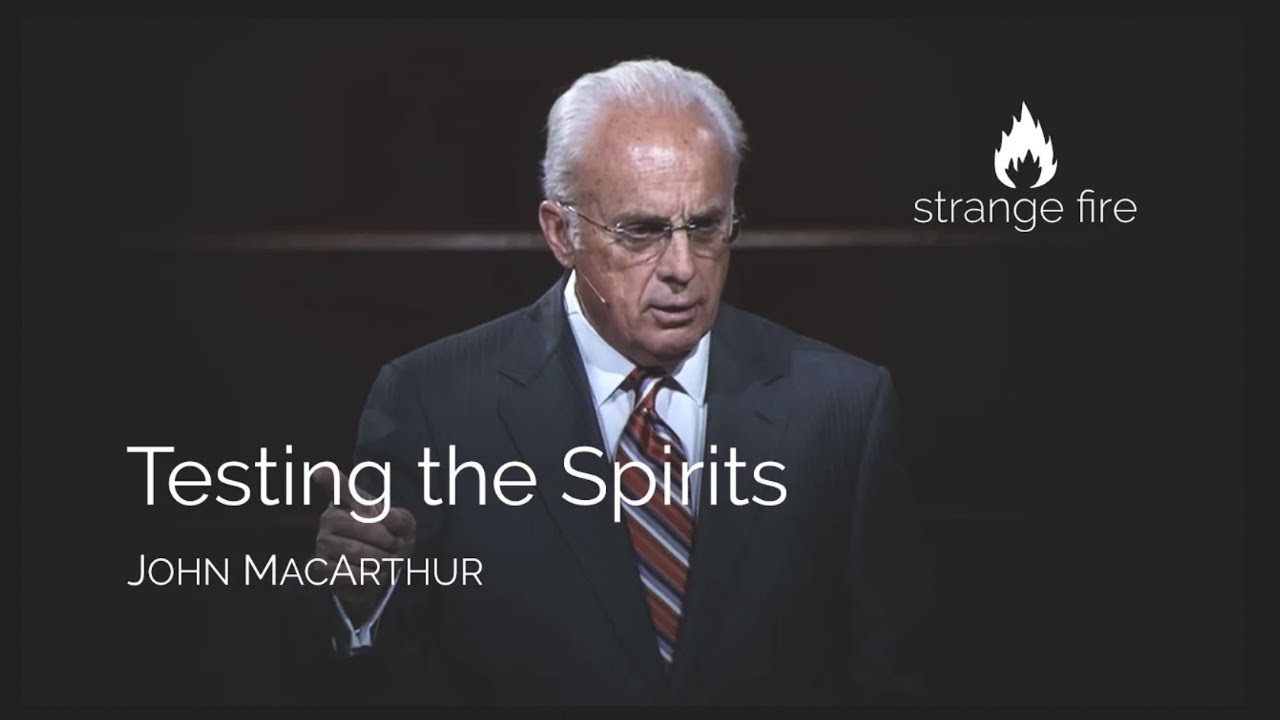
In this message, the late John MacArthur turns to 1 John 4 and the apostle’s command to “test the spirits.” Testing the spirits, he argues, is not optional for Christians but a mandate rooted in the reality of spiritual deception. Drawing on 2 Corinthians 10, Jonathan Edwards’s classic work on revival and the apostle John’s teaching on the person of Christ, MacArthur explains why discernment is essential and how believers can distinguish the genuine work of the Holy Spirit from counterfeits.
Video Summary
MacArthur reads 1 John 4:1–8, where John urges believers not to believe every spirit but to test them, “because many false prophets have gone out into the world.” He explains that “spirits” here refers to persons, whether human or angelic, who claim to speak for God. The Greek verb for “test,” dokimazō, was used in metallurgy for assaying the purity of metal. Paul gives a similar instruction in 1 Thessalonians 5:21: test all things and hold fast what is good.
Why is this so important? According to MacArthur, Satan is real, demons are real, and they run a kingdom of lies. He contends that Satan’s primary strategy is not merely encouraging obvious immorality, which human flesh produces on its own, but promoting false religion and deceptive belief systems. Satan disguises himself as an angel of light, so error often looks attractive and spiritual.
Key Takeaways
- John commands believers to test every person who claims to speak for God.
- Spiritual warfare, in MacArthur’s view, is primarily a battle for the mind and for truth.
- The weapons of this war are divine, not human cleverness or technique.
- The Holy Spirit’s work is invisible, but its fruit in a believer’s life is visible.
- The first test of any teaching is Christological: does it present the true Christ, fully God and fully man?
- A genuine work of the Spirit exalts Jesus Christ and the gospel, not experiences.
Spiritual Warfare as a Battle for the Mind
MacArthur challenges popular notions of spiritual warfare that focus on rebuking or “binding” Satan. He recalls a pastors’ conference where the opening prayer began by addressing the devil, which he found deeply misguided. Instead, he turns to 2 Corinthians 10:3–5. Believers live in human bodies but do not fight with human weapons. Their weapons are divinely powerful for pulling down strongholds.
Those strongholds, MacArthur explains, are defined as “arguments” or speculations, the Greek logismos: ideologies, philosophies, religions and belief systems raised up against the knowledge of God. People are imprisoned in these fortresses of thought, which eventually become their tombs. The Christian’s task is to demolish false ideas with the truth and bring every thought captive to Christ. In MacArthur’s words, it is “a truth war.”
He traces this theme across Scripture: warnings against false prophets in the Old Testament, in Jesus’ Sermon on the Mount, throughout Paul’s letters, in 2 Peter and Jude, and in John’s short letters, where the word “truth” appears repeatedly in the opening verses. The final apostolic word to the church before Revelation, he notes, is a call to remain faithful to the truth.
Jonathan Edwards and the Marks of the Spirit
MacArthur points out that during the Great Awakening of the 1730s and 1740s, Jonathan Edwards faced questions about which experiences were genuinely from God. Edwards answered with The Distinguishing Marks of a Work of the Spirit of God (1741), built on this same passage. MacArthur calls these marks timeless tests by which all preaching and spiritual movements should be measured, much like the Bereans who examined the Scriptures daily to see whether what they heard was true.
How We Know the Spirit Is at Work
Before turning to the tests, MacArthur looks back to 1 John 3:24: believers know that God abides in them “by the Spirit whom He has given us.” He stresses that the Spirit’s work is invisible and cannot be directly felt, so he is cautious about people who claim to know precisely when the Spirit is leading them. What believers can see are the results. He compares this to Jesus’ words to Nicodemus in John 3:8: the wind cannot be seen, but its effects can.
MacArthur describes the changes he experienced after his own conversion: a new hatred of sin, a hunger for God’s Word, compassion for the lost and love for fellow believers. Assurance of salvation, he says, is not about perfection but direction. He lists the Spirit’s fruit in believers: repentance, faith in the gospel, love for Christ, delight in Scripture, a desire to obey, joy in trials, love for other Christians, a desire to pray, thanksgiving, worship and growing Christlikeness.
The First Test: Who Is Jesus?
The first test in 1 John 4:2–3 is Christological. Every spirit that confesses that Jesus Christ has come in the flesh is from God; every spirit that does not is not from God. MacArthur explains that John was confronting early teaching, later called Docetism, which claimed Jesus only appeared to be human because matter was considered evil. This matters greatly, he says, because Christ had to be truly human to die as a substitute for sinners and to live a righteous life credited to believers. He notes that the church later affirmed at the Council of Chalcedon in 451 that Christ’s two natures are united in one person without being mixed.
From this, MacArthur draws a broader principle: any movement or teacher that distorts the person of Christ, diminishes His preeminence or obscures the gospel is not operating by the Spirit. Citing John 14–16, he notes that the Spirit’s ministry is to point to Christ. In the message, he applies this test critically to several contemporary movements and teachers, particularly within charismatic and Word of Faith circles, arguing that their emphasis on spiritual experience over Scripture fails John’s test. These are MacArthur’s assessments, and they reflect his long-standing concerns about those movements.
He summarizes the point memorably: a Spirit-filled person is not someone obsessed with the Holy Spirit, but someone obsessed with Jesus Christ, never tiring of learning about Him, loving Him and seeking to obey Him. He grounds this in Paul’s prayer in Ephesians 3:14–19 that the Spirit would strengthen believers so that Christ may dwell in their hearts and they may know His love. For more of MacArthur’s teaching, see Hearers and Doers (James 1:19–25) and The Benefits of Abiding in Christ, Part 1.
Frequently Asked Questions
What does “test the spirits” mean in 1 John 4:1?
According to MacArthur, it means examining every person who claims to speak for God, assessing their teaching against Scripture the way a metallurgist tests metal for purity.
What is the first test John gives?
The first test concerns Christ: genuine teaching from God confesses that Jesus Christ has come in the flesh, affirming His true deity and true humanity.
How does MacArthur define spiritual warfare?
He describes it as a battle for the mind, using God’s truth to tear down false ideologies and belief systems that oppose the knowledge of God, based on 2 Corinthians 10:3–5.
Final Thoughts
“Testing the Spirits” is a sober call to discernment. John MacArthur reminds Christians that deception often comes dressed as light, that sincerity is not the same as truth, and that every claim made in God’s name must be weighed against Scripture. Whether or not readers agree with every application he makes, his central conviction is clear: the true Spirit of God always leads people to the true Christ.
