Discipline Determines Destiny – Dr. Charles Stanley
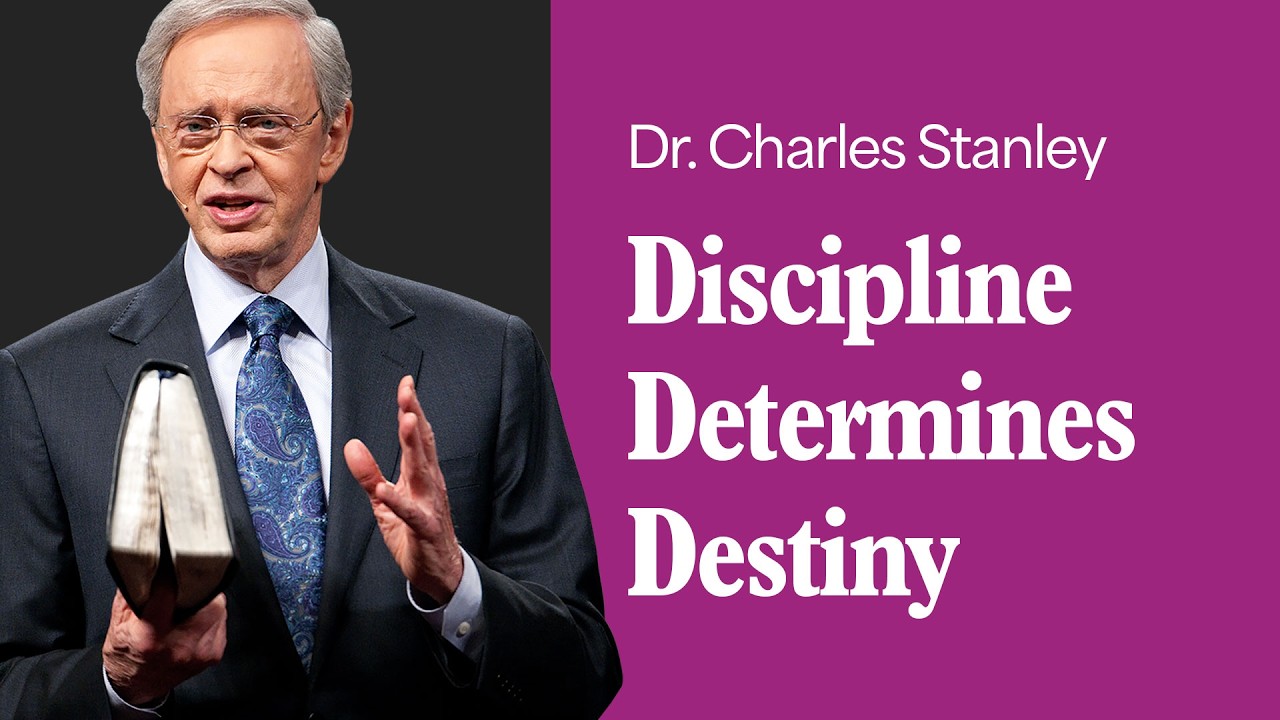
Every believer wants to look their best, do their best, and fulfill God’s purpose for their life. But desire alone does not get anyone there. In this In Touch message, Dr. Charles Stanley teaches that discipline determines destiny. Drawing on Paul’s athletic imagery in 1 Corinthians 9, he explains the difference between self-discipline and divine discipline, lays out what a disciplined life requires, describes its rewards, and offers simple first steps anyone can take today.
Video Summary
Stanley begins by clarifying what he does not mean. He is not talking about eternal destiny, which is settled the moment a person trusts Jesus Christ as Savior. He is talking about life here and now: whether a believer achieves the goals God has set and walks fully in His plan. That, he says, is determined not by desire but by discipline.
He reads 1 Corinthians 9:24-27, where Paul compares the Christian life to a race and a boxing match. Athletes exercise self-control in everything to win a perishable crown, while believers pursue an imperishable one. Paul says he runs with purpose and disciplines his body so that he will not be disqualified. Stanley encourages viewers to take notes, especially parents and grandparents who want to pass these principles on.
Key Takeaways
- Discipline, not desire, determines how well a believer fulfills God’s purpose in this life.
- Self-discipline is personal training that builds self-control and character and leads to an orderly life.
- Divine discipline is God’s correction when His children step out of His will.
- A disciplined life requires a clear purpose, diligence, consistency, and the help of the Holy Spirit.
- Stanley suggests starting with daily Bible reading, daily prayer, and faithful giving.
Self-Discipline and Divine Discipline
Stanley defines self-discipline as personal training that develops self-control and character and results in an orderly and efficient life. It is something believers do, in the power of the Holy Spirit.
Divine discipline is different. Turning to Hebrews 12:5-6, he explains that God lovingly corrects His children when they disobey, in order to bring them back on course. God does not practice self-discipline on us; He practices divine discipline. Self-discipline is our responsibility. Stanley emphasizes that discipline is a practice, something learned over time. Because people are not perfect, they will stumble, but the key is not to quit.
Discipline and a Godly Life
Stanley connects discipline directly with holiness. He cites Peter’s call to be holy in all conduct and Paul’s instruction in 1 Timothy 4:7-8 to train oneself for godliness. Paul notes that bodily exercise has some value, but godliness is valuable in every way, holding promise for this life and the next. Stanley adds with a smile that those who dislike exercise will appreciate that verse.
Living a godly life requires choices. It may mean deciding what time to get up, how to handle money, or even which friendships to keep, since Scripture warns about relationships that pull a person down. Stanley asks listeners where their values truly lie: in walking with God and fulfilling His purpose, or in collecting accolades and achievements. For more on making those choices, see Making Wise Decisions.
What a Disciplined Life Requires
Stanley outlines several requirements. First, a definite purpose and goal. If someone cannot say what they are living for, they will not accomplish much. He challenges listeners to name anything of real value that can be achieved without discipline. He points to Jesus, who did not spend His life but invested it, and to the apostle Paul as examples of disciplined living.
Second, diligence. Using dieting as an example, he notes the endless programs promising a secret to weight loss, and jokes that the real secret is simply to walk away from the table. It comes down to how much value a person places on the goal. Third, consistency: starting is easy, continuing is hard. Fourth, practice. A person will not succeed the first time, but failing one day does not make someone a failure. They simply start again the next day.
He applies these principles to finances, noting that Scripture describes the borrower as servant to the lender, and urging people to decide today to handle money with discipline. He also speaks to parents, warning that those who cannot say no to their children because they fear rejection often pass their own lack of discipline to the next generation. Children learn self-control, he says, in homes where parents practice it. Above all, he reminds believers that the Holy Spirit, the Helper, empowers them to say no when they need to.
The Rewards of Discipline
Stanley lists several benefits of a disciplined life. It produces a more orderly and less stressful lifestyle; he suggests that much discouragement can be traced to disorder and aimless living. Discipline brings peace, confidence, and a sense of accomplishment, and it fuels spiritual growth. It also makes a person more productive and contributes to good health through better rest and eating habits.
A disciplined life influences others too. Stanley clarifies that he is not describing rigid legalism, but a sense of direction that is contagious. Children and grandchildren are shaped not by perfect parents but by parents who keep working at it, get back up when they fall, and never quit. Discipline also opens doors of opportunity; an employer would much rather hire a person with goals and integrity than someone with none. Finally, Stanley lifts the focus to eternity. If believers could spend ten seconds seeing the reward Christ has for faithful living, he says, no one would ever need another sermon on discipline. Hearing “Well done” from the Lord will be worth it forever. His message Guided by God offers further encouragement on following God’s direction.
How to Start Today
Stanley closes with simple, concrete steps. First, decide to read a portion of God’s Word every day; everyone can do that. Second, pray every day, talking with God not only about needs but about what He says in Scripture. Both steps require controlling one’s time, which might mean getting up earlier or setting aside something less important. Third, he encourages faithful giving, explaining that he is not trying to talk about money but about success, because discipline in finances is part of becoming the person God intends.
Frequently Asked Questions
Does “discipline determines destiny” refer to salvation?
No. Stanley clarifies that eternal destiny is settled when a person trusts Christ. He is speaking about fulfilling God’s purpose and goals in this life.
What is the difference between self-discipline and divine discipline?
Self-discipline is the personal training a believer practices in the Spirit’s power. Divine discipline is God’s loving correction when His children stray from His will.
Where should someone start if they want to become more disciplined?
Stanley recommends beginning with daily Bible reading and prayer, managing time to make room for them, and practicing faithful stewardship of finances.
Final Thoughts
Dr. Charles Stanley offers a clear, practical message: wanting good things is not enough. God has a purpose for every believer, and reaching it requires discipline, practiced consistently and empowered by the Holy Spirit. The path is not easy, but the rewards are real, both now and in eternity. The best day to start is today.
