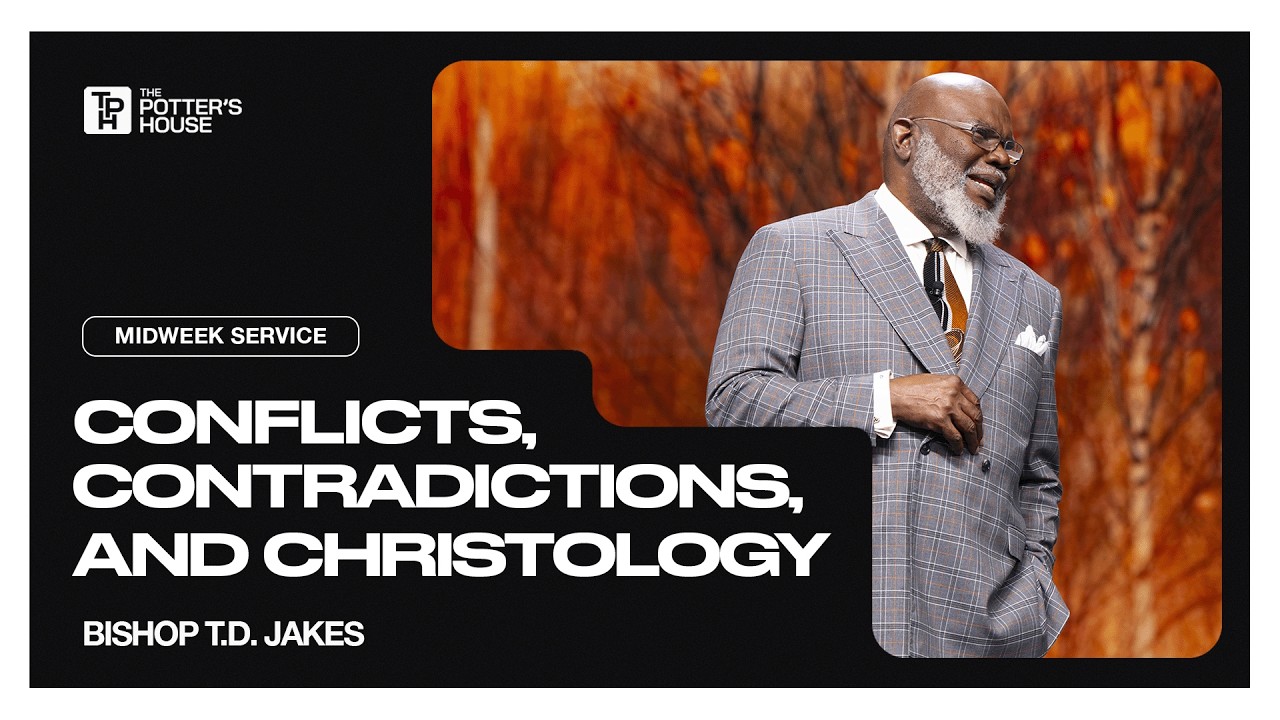
Conflicts, Contradictions, and Christology – Bishop T.D. Jakes
In Conflicts, Contradictions, and Christology, Bishop T.D. Jakes preaches from Hebrews 12:2-6 about the complicated, in-between seasons of life when nothing dramatic is happening and believers are left to wrestle with their own feelings. Jakes argues that Jesus, the author and finisher of our faith, is also the model for enduring the middle of the story, and he calls the church back to endurance, repentance and a truly Christ-centered faith.
Video Summary
Jakes begins by observing that the Bible highlights peaks and valleys, miracles and hardships, but says relatively little about ordinary, uneventful days. Yet those “bland” or “nebulous” days can be the hardest, because a person is left to face themselves. Human beings, he says, are complicated, and Christians often hide that complexity behind phrases like “I’m too blessed to be stressed.”
Turning to Hebrews 12:2-6, Jakes reflects on Jesus as the author and finisher of faith, on the joy that was set before Him even as He endured the cross, and on the exhortation not to grow weary. He then speaks about striving against sin, repentance as the doorway to revival, the comfort of being a son or daughter of God and the reality of the Lord’s discipline. The sermon builds toward three themes: conflicts, contradictions and Christology.
Key Takeaways
- People are complex, and real faith makes room for honest, layered emotions.
- Jesus experienced joy and shame at the same time, showing that conflicting feelings can coexist in a faithful life.
- Being in God’s will does not exempt anyone from pain or hardship.
- The antidote to weariness is looking to Jesus and considering what He endured.
- Real revival comes through repentance, not just exciting services.
- God’s discipline is a sign of sonship and love.
- The church must be Christ-centered rather than self-centered.
Faith for the In-Between Days
Jakes notes that Hebrews 12:2 calls Jesus “the author and finisher of our faith.” An author starts a story and a finisher completes it, he says, but the verse says nothing directly about the middle. Yet it is in the middle, the mood swings, uncertain seasons and ordinary days, where believers often need faith the most.
He compares this to Job, who searched for God on the left and on the right but could not perceive Him. Jakes acknowledges that many sincere believers have days when they do not feel God’s presence. He describes how, during a difficult season, someone asked how he felt, and he answered that he was happy, sad, a little angry, glad, confused, standing on the Word and troubled all at once. Life, he says, does not move in the straight lines church culture sometimes expects; it has a topography with rises and falls.
Joy and Shame in the Same Sentence
One of the most striking insights in the sermon is Jakes’ observation that Hebrews 12:2 places two contrasting ideas side by side: “who for the joy that was set before Him endured the cross, despising the shame.” Joy and shame cohabit in the same verse and in the same Person.
Jakes emphasizes that the greatest burden of the cross was not only the nails but the shame. The One who walked on water was stripped before His disciples and His mother. In Jakes’ reading, the joy set before Jesus gave Him grace to endure what He despised. For believers, this means that conflicting emotions do not automatically signal a lack of faith; they may simply reflect the complexity of following Christ in a broken world. This theme resonates with his message God Has Given You What You Need to Overcome.
You Can Be in God’s Will and Still Be Bleeding
Hebrews 12:3 urges believers to “consider Him who endured such hostility from sinners against Himself, lest you become weary and discouraged in your souls.” Jakes says this is meant to give believers a barometer for their own experience, so the enemy cannot convince them that if they were truly saved they would not feel the way they do.
He states plainly that a person can be in the will of God and still be wounded. The will of God, he says, does not protect anyone from life’s ups and downs. He describes a kind of weariness that sleep does not fix, where people wake up tired and feel decades older than they are. Life itself, without any special attack, can wear a person down. The antidote, according to Jakes, is to look to Jesus.
He adds a sobering perspective: believers today may feel embarrassed in heaven standing beside apostles and martyrs who endured far greater suffering. He encourages listeners to endure rather than quitting easily, noting that while there are situations where letting go is necessary, many people give up too soon. A culture focused on claiming blessings, he suggests, often forgot to teach endurance.
Repentance and Revival
Hebrews 12:4 reminds readers that they have not yet resisted to the point of bloodshed in striving against sin. Jakes warns against praying for things one is unwilling to pay a price for and then blaming God. He challenges believers who wear the cross as decoration to carry it as a calling.
He insists that real revival cannot happen without repentance. A church can have services, offerings and enjoyable gatherings, but genuine revival comes when people weep at the altar, tired of their own temper, words and ways, crying out like Paul in Romans 7, “O wretched man that I am! Who will deliver me?”
The Comfort and Discipline of Sonship
Jakes then highlights the tenderness of Hebrews 12:5, where God addresses believers as sons. He describes the joy of being legitimate children of God, noting that knowing one’s spiritual lineage brings confidence. He recalls the woman Jesus called “a daughter of Abraham,” and says God sometimes blesses His children beyond what they have earned.
Yet the same passage says, “For whom the Lord loves He chastens, and scourges every son whom He receives” (Hebrews 12:6). Jakes observes that church testimonies often focus only on victories and leave out seasons of correction. He encourages believers to recognize God’s discipline as evidence of His love.
Conflicts, Contradictions and Christology
In the final movement, Jakes names his three themes. He says believers live in a conflicted age and frequently face contradictions. He expresses concern that the church sometimes understands the Holy Spirit or end-times debates better than it understands Christ Himself. Referring to Revelation 3:20, he notes that the Christ who once stood among the golden lampstands is pictured knocking on the door from outside, inviting any individual who hears His voice to open.
He describes the paradoxes of Christ: the Alpha and Omega, the first and the last, present in yesterday and forever. True Christology, Jakes says, must be Christ-centered rather than self-centered, because all of Scripture, from the Old Testament to the New, points to Jesus. He notes that Christ is “the Lamb slain from the foundation of the world,” meaning that God was never reacting to events; redemption was settled before the story began. For another message from Jakes on endurance, see Come Out of the Tombs!
Frequently Asked Questions
What Bible passage does T.D. Jakes preach from in this sermon?
He preaches from Hebrews 12:2-6, focusing on Jesus as the author and finisher of faith, enduring the cross and the Lord’s loving discipline.
What does Jakes mean by “Christology”?
He uses the term to describe a Christ-centered understanding of faith, insisting that the church’s message and worship should focus on Jesus rather than on ourselves.
Can a believer be in God’s will and still suffer?
Yes. According to Jakes, the will of God does not shield anyone from pain, and believers can be faithful and still be wounded.
Final Thoughts
Conflicts, Contradictions, and Christology is an honest and searching sermon that gives believers permission to be complicated while calling them to endure. Bishop T.D. Jakes points weary Christians to Jesus, who experienced joy and shame together and finished what He started. For anyone living in the middle of their story, the message is clear: look to Jesus, embrace repentance, accept the Father’s correction and keep Christ at the center.
