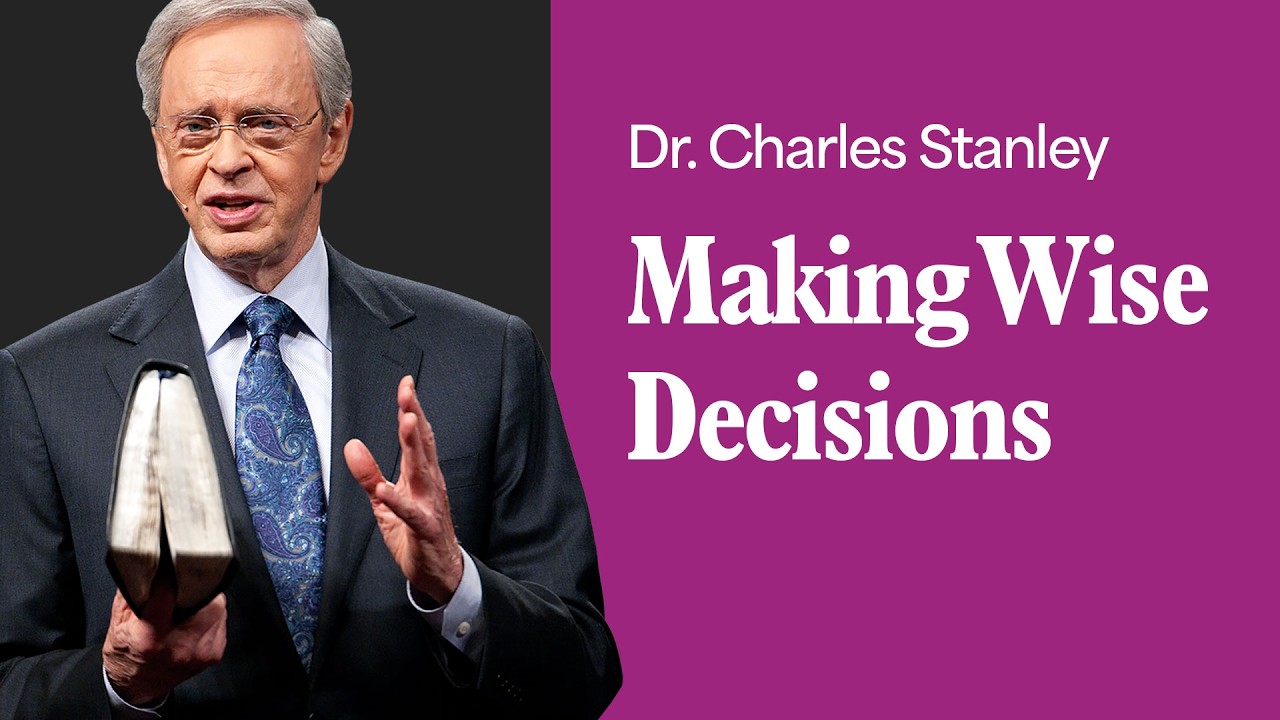
Making Wise Decisions – Dr. Charles Stanley
In his sermon Making Wise Decisions, Dr. Charles Stanley of In Touch Ministries offers a practical, Bible-based plan for discerning God’s will in the choices of everyday life. Stanley explains that most people have plans for their finances, careers and vacations, but very few have a plan for making decisions. Drawing on more than fifty years of personal experience, he presents a step-by-step approach rooted in Scripture, prayer and patient trust in God.
Video Summary
Stanley begins by noting that life is made up of decisions, starting from infancy and continuing throughout every stage of life. The most important decision anyone will ever make, he says, is to receive Jesus Christ as personal Savior and Lord, confessing and repenting of sin and surrendering one’s life to Him. Every other decision flows from that foundation.
He then asks his audience how they actually go about making choices. Many people rely on impulse, popular opinion, the advice of friends or family, or even random signs such as tossing a coin or watching the weather. Stanley contrasts these approaches with the promise of Psalm 25:12-13: “Who is the man that fears the Lord? Him shall He teach in the way He chooses.” To fear the Lord, he explains, is to acknowledge one’s absolute dependence on God for everything.
From there, he outlines a plan with several clear steps: clear your heart of known sin, bring your desires to neutrality, exercise patience, be alert to pressure, persist in prayer, rest in God’s promises and wait for His peace. Along the way, he shares a memorable story from his early ministry in Atlanta that illustrates how God guides even when the path seems blocked.
Key Takeaways
- The most important decision in life is to receive Jesus Christ as Savior and Lord.
- Unconfessed sin clouds the mind and hinders the ability to hear from God.
- Saying “Lord, I want what You want” brings desires into a place of neutrality.
- Waiting on God means confident expectation, not passively marking time.
- Both external pressure from others and internal pressure from fear can push people into unwise choices.
- Persistent prayer, the promises of Scripture and the peace of Christ help confirm God’s direction.
Step One: Clear Your Heart of Known Sin
According to Stanley, the first step in making a wise decision is spiritual rather than strategic. Sin introduces confusion into the mind and heart and hinders a believer’s capacity to hear and receive from God. Sin and the wisdom of God, he says, simply do not fit together.
He encourages believers to pray a simple but searching prayer: “Lord, is there anything in my life that would keep me from hearing the truth?” The Holy Spirit, he says, will faithfully point out a relationship, habit or way of thinking that needs attention. The response is confession, which means agreeing with God that something is sin, followed by repentance, which means turning away from it. Stanley warns that many people stop at this step because they are unwilling to give up something they want, and later look back on their choices wondering how they could have been so unwise.
Step Two: Bring Your Desires to Neutrality
The second step is to approach God with genuine openness: “Lord, I want what You want.” Stanley admits that the first time a person prays this, they may not fully mean it, because their heart is already set on a particular house, car, career or spouse. Yet as they keep praying with sincerity, God begins to work.
He reminds listeners that they are asking the One who knows everything about them, including what will bring them lasting joy and what would make them miserable. Bringing desires to neutrality is not about having no preferences; it is about trusting that God’s wisdom is greater than personal wishes. This theme connects naturally with Stanley’s teaching in Guided by God.
Step Three: Exercise Patience and Wait on God
Stanley calls patience the point where many people get into trouble. Nowhere in Scripture, he says, does God promise to answer immediately. Some prayers he prayed for a long time before receiving an answer, and he came to see that God’s pauses are an important part of His plan. Often God is preparing a person to receive the answer.
He offers a helpful definition: waiting upon God is not merely marking time. It is living in confident expectation of His action on our behalf and refusing to run ahead of Him to solve problems on our own. Quoting Psalm 46:10, “Be still, and know that I am God,” he acknowledges that stillness is difficult, especially in a culture that demands everything now. For a deeper look at this principle, see When It’s Wise to Wait – Part 1.
Step Four: Be Alert to Pressure
Stanley identifies two kinds of pressure that can distort decision-making. External pressure comes from friends, family and coworkers. Even the people who love us most may give advice designed to please us rather than to reflect God’s will. Internal pressure comes from our own fears, insecurities and desire for control.
To illustrate, he recounts his arrival in Atlanta, a move he resisted until God made His will unmistakably clear. As a new associate pastor, he was given a desk with locked drawers and no key and received little welcome. Before a crucial church vote on whether he would become pastor, he found himself without a sermon from Thursday through Sunday morning. As the choir finished singing, he opened his Bible and it fell to Proverbs 3:5-6: “Trust in the Lord with all your heart, and lean not on your own understanding.” He then preached for thirty-five minutes. The lesson he took away was that God can shut a person down when He chooses and open them up powerfully when the time is right, and that the pressure he felt was his own.
Steps Five Through Seven: Pray, Rest and Wait for Peace
The fifth step is to persist in prayer. Citing 1 Thessalonians 5:17, “pray without ceasing,” Stanley challenges the tendency to pray for a few days and then make a decision when heaven seems silent. God’s delays, he says, are purposeful. While waiting, God is sifting our thoughts, motives and purposes and teaching us to trust Him even without visible evidence.
The sixth step is to rest in God’s promises. Stanley calls the Bible “the mind of God in print” and the most valuable resource for decision-making. Scripture filters our thinking and desires, counters the constant influence of the world and builds faith as we stand on what God has said.
The seventh step is to wait for God’s peace. Turning to Colossians 3:15, “Let the peace of God rule in your hearts,” Stanley explains that the Greek idea behind peace includes being bound together. When God’s peace settles over a decision, it signals that the believer and the Lord are in agreement.
Frequently Asked Questions
What are Charles Stanley’s steps for making wise decisions?
He teaches believers to clear their hearts of known sin, bring their desires to neutrality, exercise patience, be alert to pressure, persist in prayer, rest in God’s promises and wait for God’s peace.
Why does sin affect decision-making?
According to Stanley, sin brings confusion to the mind and heart and hinders a believer’s ability to hear and receive wisdom from God.
What does it mean to wait on the Lord?
Stanley explains that waiting on God means living in confident expectation of His action while refusing to run ahead and solve problems in one’s own strength.
Final Thoughts
Making Wise Decisions is a clear and practical message that reflects the heart of Dr. Charles Stanley’s ministry: a deep confidence that God speaks to those who seek Him. Rather than offering shortcuts, Stanley lays out a path of humility, patience and trust. For anyone facing a major choice, his plan provides a reliable framework, and his own story from Atlanta is a reminder that God’s guidance often arrives right on time.