El Shaddai: All Powerful God With Us Now | Tim Sheets
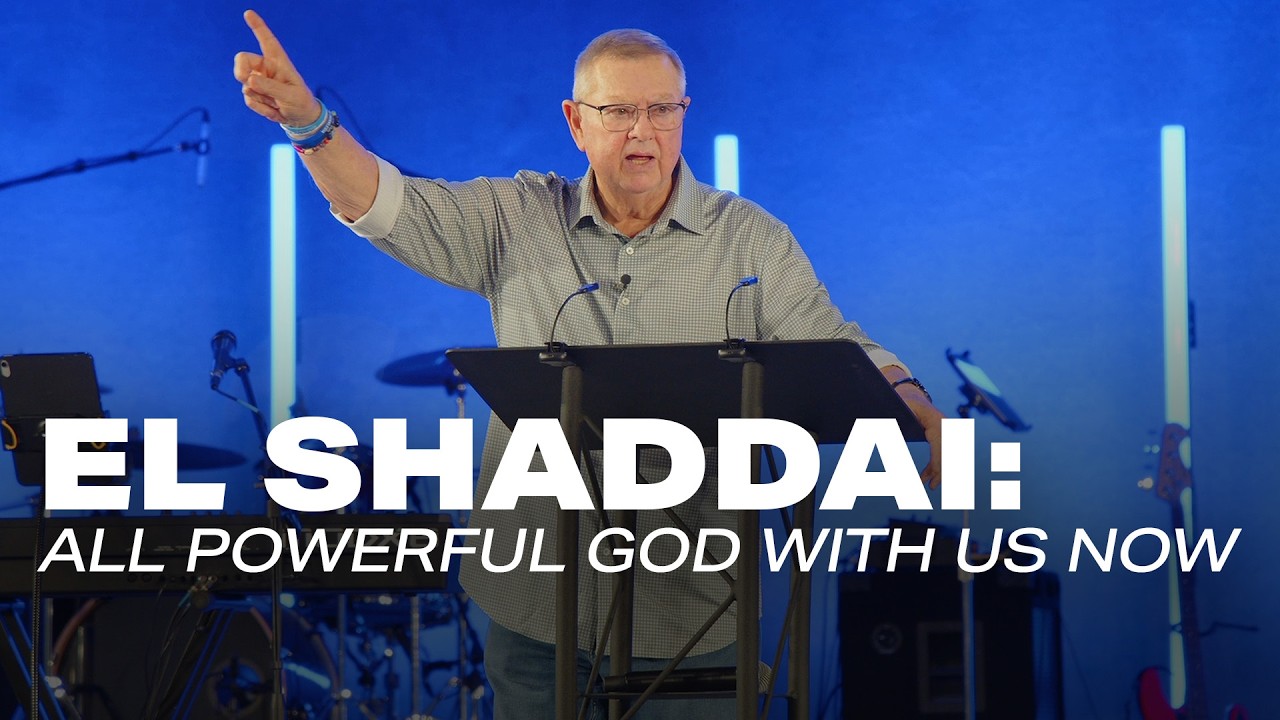
In his teaching El Shaddai: All Powerful God With Us Now, Tim Sheets of Oasis Church continues a series on growing faith by examining the long journey of Abraham and Sarah toward the birth of Isaac. Sheets argues that the turning point in their story came when God revealed Himself as El Shaddai, the all-powerful, all-sufficient God who is present and able to act now, not merely someday.
Video Summary
Sheets opens by reviewing principles from earlier messages. Drawing on Romans 12:3, he reminds listeners that every believer has been given a measure of faith, but that faith must be kept alive and growing through God’s word. He points out that Jesus spoke of faith “as a grain of mustard seed,” which Sheets interprets not as faith the size of a tiny seed, but faith that grows the way a mustard seed grows once planted. According to Sheets, Scripture describes little faith, small faith and great faith, and mountains move by great faith that acts on what it believes.
The main body of the message traces Abraham’s story from Genesis 12 to 17 alongside Paul’s summary in Romans 4. God promised Abraham and Sarah a son when they were 75 and 65, but Isaac was not born until 25 years later. Sheets identifies several obstacles that delayed the promise: relying on hope rather than faith, leaning on human reasoning, and holding a view of God that rested entirely on His sovereignty. The breakthrough came, he says, when God appeared to Abraham at 99 and declared, “I am Almighty God,” or El Shaddai.
Key Takeaways
- Faith is given in measure but must be fed and grown through God’s word, consistent words and personal relationship with Jesus.
- Hope looks forward to “one day,” while faith says “now.”
- Human reasoning born of frustration can produce an “Ishmael” and delay God’s promise.
- According to Sheets, many believers wait passively on God’s sovereignty for promises God intends them to receive by faith.
- God’s call to “walk before Me and be blameless” invites integrity and wholehearted trust, not flawless perfection.
- El Shaddai reveals God as all-powerful and all-sufficient in the present tense.
Paul’s Summary Versus the Full Story in Genesis
Sheets addresses an apparent tension in Scripture. Romans 4:16-21 says Abraham was not weak in faith, did not waver at the promise of God and was fully convinced God could perform what He had promised. Yet Genesis shows Abraham and Sarah doubting, with Sarah even laughing at the idea of bearing a child in old age.
His explanation is that Paul and Genesis are describing different time frames. Genesis covers the full 25-year journey, while Paul focuses on the final season when Abraham and Sarah finally grew their faith. In Sheets’ reading, once they understood that the promise came in seed form and needed to be tended with faith, the fulfillment came within months. He also notes that God did not condemn Abraham and Sarah for their doubts; the consequence of their unbelief was simply that nothing happened for a long time.
Hope Is Good, but Hope Is Not Faith
For eleven years after moving to Canaan, Abraham and Sarah prospered materially, but they still had no child. Sheets imagines their growing frustration as they aged and wondered who would inherit their wealth. He argues that Abraham kept hoping, but hope alone did not bring the promise into reality.
Citing Hebrews 11:1, “Now faith is the substance of things hoped for, the evidence of things not seen,” Sheets stresses the word “now.” Hope is valuable, and without it people become miserable, but in his teaching hope says “one day” while faith says “now.” Believers, he says, must go beyond hoping a promise will happen to becoming convinced that it is theirs.
How Human Reasoning Delays the Promise
Frustration eventually gave way to a human plan. Sarah suggested that Abraham have a child with her servant Hagar, and Ishmael was born. Sheets describes Ishmael as a “son of human reasoning”: technically it seemed to solve the problem, but it was not what God had promised. Abraham even prayed that Ishmael might be the answer, and God said no.
According to Sheets, another thirteen years passed before Abraham and Sarah opened themselves again to God’s original word. His application is direct: faith is not based on what a person sees, feels or can figure out, and human reasoning is often the adversary of real faith. Trying to engineer God’s promises by natural means can delay, hinder or even choke them out.
Beyond “If God Wants It, It Will Happen”
Sheets then highlights a subtle detail in Genesis 15. When the Lord came to Abraham, Abraham addressed Him as “Adonai,” a title emphasizing God as sovereign master. Sheets suggests this revealed Abraham’s mindset: he was waiting for the sovereign God to act whenever He chose, with nothing for Abraham to do.
Sheets says many believers think the same way today: if God wants them healed, provided for or blessed, it will simply happen. He affirms that God is sovereign, but argues that God has chosen to work with His people on the basis of faith where His promises are concerned. Referencing James’ teaching that faith without works is dead, he insists that believers cannot be passive. If God has given a promise, Sheets says, His will is already settled; the question is whether His people will receive it by faith.
The Revelation of El Shaddai
When Abraham was 99, God appeared and said, “I am Almighty God; walk before Me and be blameless” (Genesis 17:1). Sheets explains that “walk” implies a process of moving forward rather than staying put, and that the Hebrew word translated “blameless” or “perfect” carries the sense of completeness, wholeness and integrity, including the idea of sincerely trying. God was not demanding flawless performance; He was inviting Abraham to walk with Him in truthful trust.
The name El Shaddai, Sheets says, speaks of the all-powerful, strong and self-sufficient One, with a present-tense emphasis. In his paraphrase, God was telling Abraham that He was not only the God of heaven whom Abraham worshiped, but the almighty God with him right now, able to change his and Sarah’s bodies and bring the promise to pass. Sheets mentions a tradition that Abraham began to declare his faith by calling for Isaac before Isaac was born. Within months, Sarah conceived.
The message closes by applying this revelation to the church corporately, encouraging believers to see God as present and powerful in their gatherings today. For more of Sheets’ teaching on present-tense faith, see Move From Someday to Now and No More Dismay – No More Delay.
Frequently Asked Questions
What does El Shaddai mean?
According to Tim Sheets, El Shaddai means the all-powerful, strong and self-sufficient One, emphasizing that God is mighty and able to act in the present moment.
Why did it take 25 years for Abraham to receive the promise?
Sheets teaches that hope without faith, human reasoning that produced Ishmael, and a passive view of God’s sovereignty all delayed the promise until Abraham embraced God as El Shaddai.
Does Tim Sheets reject God’s sovereignty?
No. He affirms that God is sovereign, but argues that God has chosen to fulfill most of His promises in partnership with the faith of His people.
Final Thoughts
This teaching invites believers to examine how they view God. According to Tim Sheets, it is not enough to know Him only as the eternal God of heaven or the sovereign Lord who acts at a distance. Abraham’s breakthrough came when he embraced El Shaddai, the almighty God present with him now. For anyone waiting on a long-delayed promise, the message offers both comfort and challenge: God does not demand perfection, but He does invite His people to walk forward in growing, present-tense faith.
