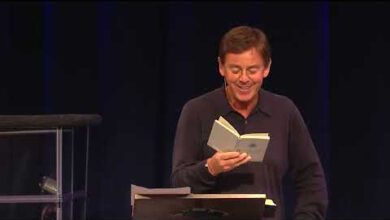
Alistair Begg: Create in Me a Clean Heart
Psalm 51 is one of the most honest prayers in the Bible, written after King David’s sin was exposed. In this brief reflection, Alistair Begg revisits the psalm after writing a foreword for a friend’s book on it. He explains why David’s cry, “Create in me a clean heart,” is a prayer every believer can make their own, and how it ultimately points to the cleansing that Jesus Christ provides.

Video Summary
Begg notes that Psalm 51 is one of the seven penitential psalms, Old Testament prayers of repentance. Its background is found in 2 Samuel 11–12. David, who seemed to have everything as a successful and admired king, violated his marriage vows with Bathsheba and tried to cover it up. In His mercy, God sent the prophet Nathan, who told David a story about injustice and then delivered the crushing words, “You are the man.” Begg describes that moment as the instant David’s life began to crumble before him, and Psalm 51 as David’s meditation on being uncovered.
From there Begg explores David’s opening plea for mercy, his recognition of sin at the level of the heart, his request for a new creation within, the link with Psalm 32, and the gospel fulfillment found in Jesus.
Key Takeaways
- Psalm 51 is a penitential psalm written after Nathan confronted David about his sin.
- David begins where we all should begin: asking for mercy based on God’s steadfast love.
- Sin is not only wrong behavior but a condition of the human heart.
- David does not excuse or minimize his sin; he comes clean.
- “Create” in Psalm 51:10 uses the same verb as God’s creative work in Genesis 1.
- The cleansing David longed for is provided fully through Jesus Christ.
“Have Mercy Upon Me, O God”
Begg points out that David begins in a way believers ought to begin far more often: “Have mercy upon me, O God, according to Your lovingkindness” (Psalm 51:1). David recognized that his greatest need was the same as ours: to be made right before a holy God.
David also recognized that his problem was not simply what he had done but who he was by nature. When he says he was “brought forth in iniquity,” Begg explains, David is not suggesting that there was anything sinful about his conception or birth. Rather, he is acknowledging that Adam’s sin, as the representative of all humanity, has affected every human being, including David and every one of us.
No Excuses, Just Honest Confession
When a guilty conscience presses down, people are often tempted to cover it over by focusing on things that make them look better, or to explain sin away by pointing to extenuating circumstances. Begg observes that David does none of this. He simply comes clean. His cry is not only to be pardoned but to be purified.
A New Creation in the Heart
That is why David prays, “Create in me a clean heart, O God, and renew a steadfast spirit within me” (Psalm 51:10). Begg explains that in Scripture the heart is not merely a physical organ or the seat of emotion; it is the center of life, including the mind, intellect and will. In every one of these areas, David had gone badly wrong.
Begg highlights a striking detail: the verb translated “create” is the same word used in Genesis 1, where God creates out of nothing. David understood that what he needed was not a minor repair but a re-creation that only God could accomplish. And the purpose was not merely to feel better about himself, but to sing of God’s salvation and encourage others who face similar struggles.
Psalm 32 and the Weight of a Cover-Up
Begg mentions that Psalm 51 is often read alongside Psalm 32, where David describes the misery of trying to hide his sin: “When I kept silent, my bones grew old… For day and night Your hand was heavy upon me.” Whatever the exact timing between the two psalms, the same mindset appears in both. Cover-ups are crushing; confession brings relief.
The Gospel Fulfillment
Begg connects Psalm 51 with the New Testament promise of 1 John 1:8–9: if we say we have no sin, we deceive ourselves, but if we confess our sins, God is faithful and just to forgive us and cleanse us from all unrighteousness. This is not a superficial “repackaging of the old thing,” Begg says, but a life-transforming reality. Reading the Old Testament in light of the New, believers understand that the cleansing David sought was provided by Jesus, “great David’s greater Son,” who is the true Prophet, Priest and King and who bore the burden of sin so that sinners might be set free.
He closes by suggesting that some listeners may want to tuck this truth away for the future, while others may realize it is exactly what they need today. He points them to David’s prayer in Psalm 139:23–24: “Search me, O God, and know my heart… and lead me in the way everlasting.” For more from Begg, read The Ministry of Reminder and Abounding Hope.
Frequently Asked Questions
What is the background of Psalm 51?
Psalm 51 was written after the prophet Nathan confronted King David about his sin with Bathsheba and the cover-up that followed, as recorded in 2 Samuel 11–12.
What does “create in me a clean heart” mean?
Begg explains that “create” is the same verb used in Genesis 1, meaning David was asking God to do a new creative work in his heart, not merely improve his behavior.
How does Psalm 51 connect to the gospel?
According to Begg, the cleansing David longed for is fully provided through Jesus Christ, as 1 John 1:9 promises forgiveness and cleansing to all who confess their sins.
Final Thoughts
“Create in Me a Clean Heart” is a short but powerful reminder that God does not ask sinners to fix themselves. Alistair Begg shows how David’s honest prayer still offers a pathway for anyone burdened by guilt: stop covering up, ask for mercy and trust the God who can create a new heart through the work of His Son.