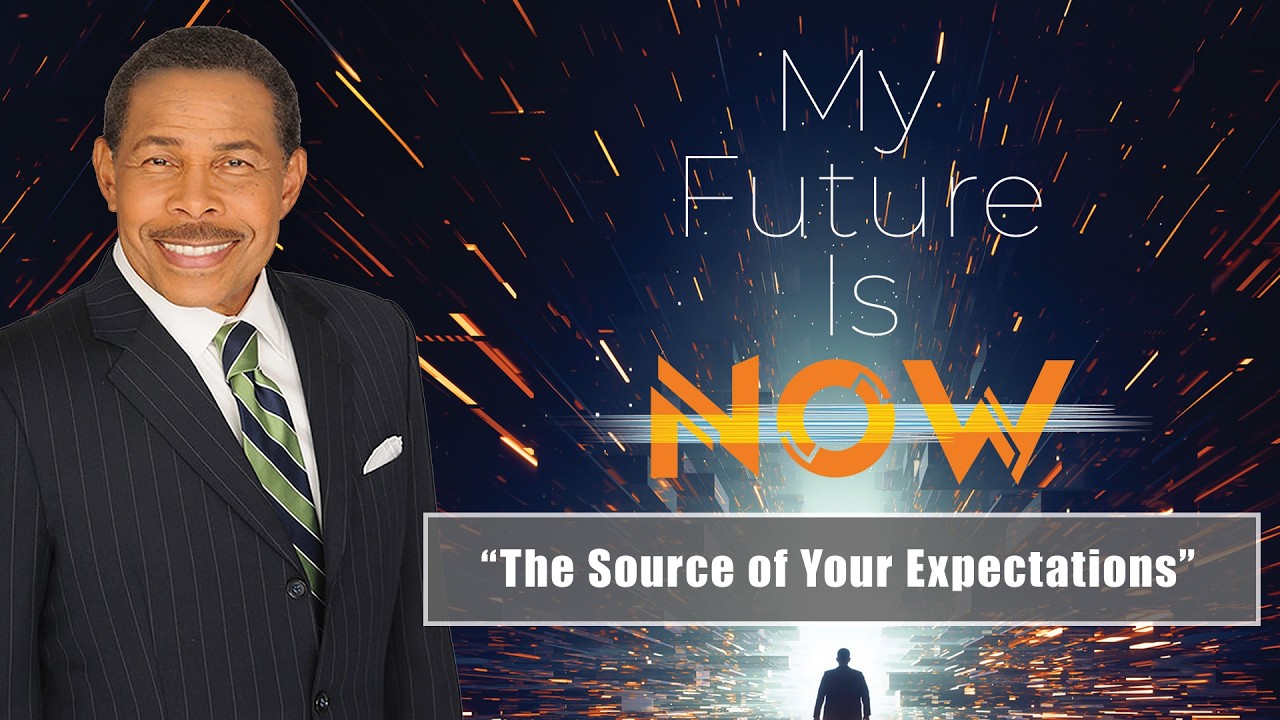
Dr. Bill Winston: The Source of Your Expectations – My Future is Now
Recorded at an international faith conference as part of his series “My Future is Now,” this message from Dr. Bill Winston explores what it means to live “from the inside out.” His core conviction is that God must be the source of your expectations, not jobs, people, resources or circumstances. Drawing on the prodigal son, David’s battle with Goliath, Psalm 62 and his own years as an IBM salesman, Winston explains how identity, righteousness and trust in God shape a believer’s future.
Video Summary
Winston opens with a contrast between living from the outside in and living from the inside out. When people are governed by outside circumstances, he says, they are easily offended and limited by droughts, economies and other people’s opinions. But after a person is born again, the Creator comes to live within, and the believer can draw on what God has deposited in the heart. According to Winston, the kingdom of God is a new order of living by faith.
He then lays out principles he credits for the success he has experienced. The first is that a believer’s inheritance comes in proportion to his or her new identity. The second is that God must be the only source of a believer’s expectation. Throughout the message he adds a third emphasis: God’s supernatural ability to transform and equip ordinary people whom He has chosen.
Key Takeaways
- Believers are called to live from the inside out, drawing on what God has placed in their hearts.
- A believer’s inheritance flows in proportion to how clearly they understand their identity in Christ.
- Righteousness, not merely more faith, is what causes faith to flow freely.
- The prodigal son and his older brother both misunderstood their identity as sons.
- Resources can quietly become a substitute for God; He must remain the only source of expectation.
- God chooses unlikely people and supernaturally equips them for His purposes.
Identity, Righteousness and Inheritance
Winston quotes E. W. Kenyon’s teaching that righteousness causes faith to flow like a flood. Many believers, he suggests, are trying to get more faith when what they really need is a deeper understanding of righteousness, meaning seeing themselves the way God sees them. He points to James 5:16–17, which says the effective, fervent prayer of a righteous man avails much, and reminds readers that Elijah, a man with a nature like ours, prayed and it did not rain for three and a half years.
Lessons From the Prodigal Son
Winston spends considerable time in Luke 15. The younger son demanded his inheritance, wasted it, and ended up feeding pigs before he came to himself and returned home, planning to ask to be treated as a hired servant. Winston stresses that the father ignored that request. He called for the best robe, a ring and shoes, because the young man was a son, not a servant. In Winston’s reading, the son was trying to bring a servant’s mindset into his father’s house, and the father would not allow it.
The older brother had a similar problem. Angry that his wayward sibling received a celebration, he complained, and the father answered, “Son, you are always with me, and all that I have is yours.” According to Winston, what kept the older son from celebrating was not his father’s stinginess but his own self-image. Winston applies this to believers who think they must wait or earn what God has already provided in Christ.
Faith in the Marketplace
Winston shares a story from his years in computer sales at IBM after he came to faith. He had begun turning his monthly sales forecasts into faith declarations, drawing on Job 22:28 about decreeing a thing. One day his manager told him a major client did not want him on the account because he was African American. Rather than becoming bitter, Winston calmly suggested reassigning the account to someone else and giving him another territory of similar potential. He explains that he had come to see his deepest identity as a member of God’s family. While not denying his heritage, he says, that higher identity kept him from being controlled by offense. That same year, according to Winston, he became the top salesman in downtown Chicago.
His conclusion is that no one can stop a person who knows who they are in God. He ties this to Matthew 12:35: a good person brings good things out of the good treasure of the heart. What is deposited inside is what will be produced outside, which is why a believer’s future is not ultimately in anyone else’s hands.
God Must Be the Only Source
The message’s title comes from Psalm 62:5–6: “My soul, wait silently for God alone, for my expectation is from Him.” Winston recalls a visiting pastor from Guatemala telling his American congregation that their resources had become their stumbling blocks, a remark he says cut straight through him.
He illustrates with 1 Samuel 17. When David prepared to face Goliath, King Saul tried to help by giving him his own armor. David took it off because he had not tested it. Saul meant well, Winston notes, but resources can subtly become a person’s source and draw them away from trusting God. When God is not the only source of expectation, he warns, frustration follows.
A God Who Chooses and Equips
Winston mentions Gideon, who protested that he came from the weakest clan and was the least in his family, yet God chose him. He also cites Numbers 11:17, where God took of the Spirit upon Moses and placed it on seventy elders so they could share the burden of leadership. To Winston, this shows that God can supernaturally equip people beyond their training. He emphasizes that God chooses people regardless of their past, whether prison, addiction or broken relationships, cleanses them through the blood of Jesus and gives them the mind of Christ. Related teachings from Winston include Live By Timeless Faith and Lined Up with GOD: The Mystery of Confession.
Frequently Asked Questions
What does Bill Winston mean by living “from the inside out”?
He means drawing direction, confidence and provision from what God has placed in the heart rather than being governed by external circumstances or other people’s opinions.
Which Bible verse is the basis of “The Source of Your Expectations”?
The key verse is Psalm 62:5, “My soul, wait silently for God alone, for my expectation is from Him.”
Why does Winston use the story of David and Saul’s armor?
He uses it to show that even well-meant resources can become a substitute for trusting God, which is why God must remain the believer’s only source.
Final Thoughts
“The Source of Your Expectations” invites believers to examine where their hope is really anchored. Dr. Bill Winston argues that when Christians understand they are sons and daughters rather than servants, and when they look to God alone rather than to their resources, they become difficult to stop. The message closes with an invitation to receive Christ and begin living from the new identity He gives.
