Lysa TerKeurst: Are You Being Responsible or Trying to Control? | Therapy & Theology
Caring people often struggle with a hidden tension: the desire to act responsibly can slowly turn into an exhausting need to control. In this episode of Therapy and Theology, Lysa TerKeurst on responsibility versus control explores that “paper-thin line” alongside counselor Jim Cress and theologian Dr. Joel Muddamalle. Through honest confessions, a moving personal story, and a look at stewardship in Scripture, they help listeners recognize when they have stepped beyond what God has given them to carry.
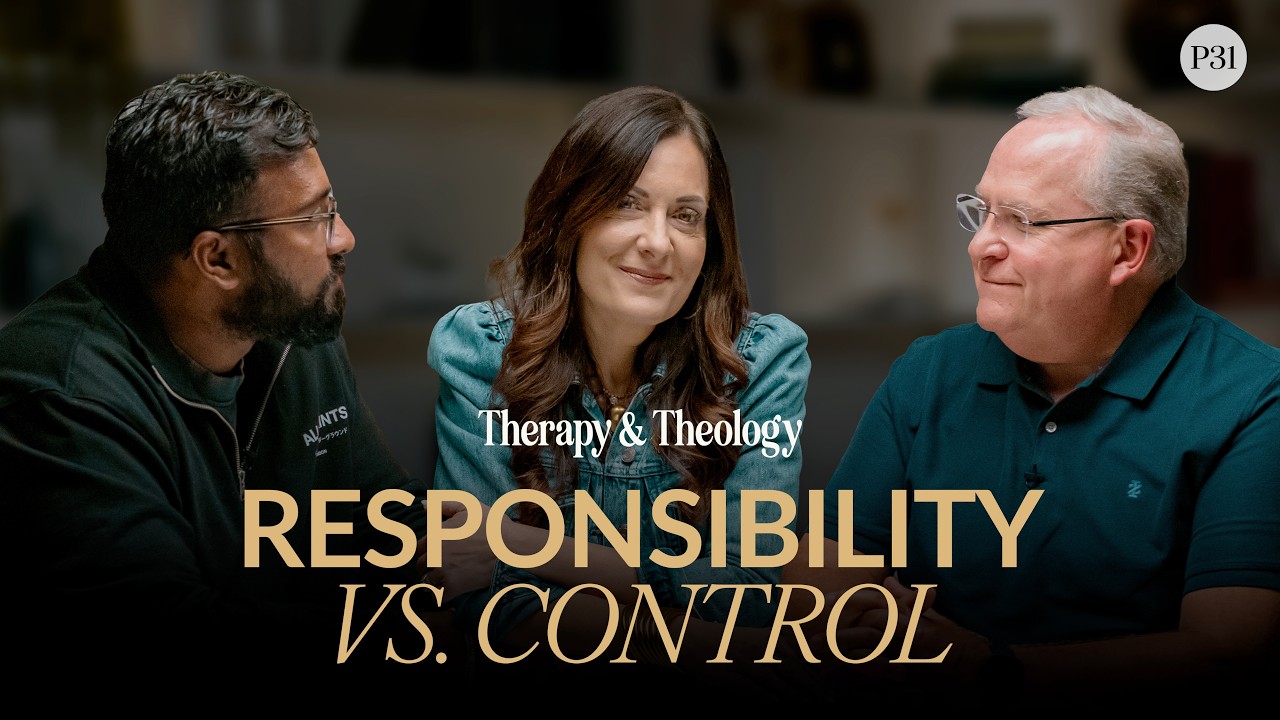
Video Summary
TerKeurst begins with a simple framework centered on one word: outcome. A person in “responsibility mode” does what is within their ability, then trusts God with the result. A person in “control mode” does everything they think needs to be done, often takes on what others should be doing, and will only accept the outcome they believe is best. She illustrates this with the story of a close colleague who, after losing her father to brain cancer, became intensely focused on feeding her children only healthy foods, to the point that it strained her marriage.
The hosts then go through a list of common controlling tendencies, confessing which ones they personally relate to, from needing to control every detail to giving the silent treatment. Cress emphasizes self-awareness, avoiding self-condemnation, and inviting trusted people to point out blind spots. Muddamalle introduces the biblical concept of stewardship and shows how Adam and Eve stepped beyond the responsibility God gave them. The episode closes with a listener question about coping with codependent dynamics between family members.
Key Takeaways
- The difference between responsibility and control often comes down to how we handle the outcome.
- Responsible people do what they can and entrust the final result to God.
- Controlling tendencies frequently grow out of fear and past pain.
- Common signs include overplanning, rigid expectations, guilt-tripping, and the silent treatment.
- According to Jim Cress, unmet expectations can become “simmering resentments in disguise.”
- Self-awareness, freedom from self-condemnation, and trusted friends help believers grow.
- Stewardship means faithfully handling what God has entrusted to us without reaching for what is not ours.
The Outcome Is the Dividing Line
TerKeurst encourages listeners to picture the word “outcome” with “responsibility” on one side and “controlling” on the other. When a person is being responsible, they manage what is truly within their reach and make peace with the fact that the final outcome belongs to God. When a person slips into control, they begin doing what others should be doing, stretch themselves beyond reasonable capacity, and shift from helping to trying to rescue or save.
The heart of the issue, she says, is whether a person is willing to accept any outcome other than the one they have decided is best. This kind of rigid insistence is often a sign that fear, rather than faith, is in charge. Scripture’s invitation in Proverbs 3:5-6 to trust the Lord with all our heart rather than leaning on our own understanding speaks directly to this tension.
A Story About Fear and Healthy Food
TerKeurst shares, with permission, the story of a longtime colleague whose father, who had seemed perfectly healthy, was diagnosed with a brain tumor and eventually passed away. During his illness, she became the family researcher, investigating every possible treatment. After his death, while raising young children, she became intensely focused on giving them only healthy foods.
TerKeurst notes that feeding children well is responsible and good. But when it began to cause conflict in her colleague’s marriage, TerKeurst asked her a pointed question: was she trying to keep her children healthy, or was she trying to prevent cancer? The first is within reach; the second never fully is. Her colleague admitted she often wondered what moment might have set off her father’s illness. TerKeurst observed that this unresolved pain was driving her to try to control an outcome only God could hold. She adds that she relates to this pattern herself, because past experiences shape the stories people tell themselves.
Confession Time: Naming Controlling Tendencies
In a lighthearted but revealing segment, the three hosts work through a list of controlling behaviors. These include needing to control every detail, obsessively trying to prevent bad things, going to great lengths to avoid being caught off guard, getting annoyed when plans change, holding unrealistic expectations, assuming others are incapable, overplanning, rigid boundaries, believing one’s way is best, guilt-tripping, the silent treatment, treating small annoyances as major offenses, and wanting to say “I told you so.”
Cress recalls once gently challenging TerKeurst’s frequent use of the word “expectations,” suggesting that expectations can quietly become resentments. Muddamalle admits that he tends to withdraw and go silent when something is wrong. Cress responds by encouraging people to describe such patterns as “issues” or “styles of relating” rather than identity labels. He also shares a practical habit: when he needs time to think, he lets others know rather than simply going silent, so they do not feel shut out.
Self-Awareness and Biblical Stewardship
Cress offers three practical steps. First, cultivate self-awareness, which he considers one of the most important practical tools for growth. Second, avoid self-condemnation; recognizing a tendency is not a reason for shame. Third, build a small circle of trusted people, like Moses had Aaron and Hur, who can lovingly point out blind spots.
Muddamalle frames the discussion theologically through stewardship. He shares the famous description of theology as “thinking God’s thoughts after Him,” and applies it to responsibility: believers need to discern what God has actually given them to care for. In Genesis 1 and 2, God gave Adam and Eve meaningful work and dominion, as seen in Genesis 1:28. Yet they reached beyond that stewardship by eating from the one tree they were told to avoid. Muddamalle suggests that if they had stayed focused on their God-given responsibilities, they might not have been drawn into that conversation at all. Fear that God will not come through, he argues, often pushes people beyond responsibility into control.
Toward the end, TerKeurst reflects on ways people try to control outcomes, such as performing well in hopes of guaranteeing results or overthinking in hopes of predicting the future. Both can lead to exhaustion when they are really attempts to secure what only God can give. For more on this theme, readers can explore You’re Not Controlling, You’re Afraid and When Helping Others Starts Hurting You.
Frequently Asked Questions
How can I tell if I am being responsible or controlling?
Lysa TerKeurst suggests looking at how you relate to the outcome. If you do what you reasonably can and then trust God with the result, you are being responsible. If you can only accept the outcome you have decided is best, you may have slipped into control.
Why do people develop controlling tendencies?
The hosts suggest that control often grows out of fear, past hurts, and a deep worry that God will not work things out. Painful experiences can lead people to try to prevent every possible bad outcome.
What should I do if I see unhealthy patterns in family members?
Jim Cress recommends privately asking if they are open to a thought, sharing a few observations gently, and respecting their response. If they are not open, you have done your part and can leave it with God.
Final Thoughts
This episode offers a compassionate, practical look at a struggle many caring people share. Lysa TerKeurst, Jim Cress, and Dr. Joel Muddamalle remind listeners that responsibility is good and godly, but control is a burden God never asked anyone to carry. By growing in self-awareness, staying free from shame, inviting honest friends into the process, and faithfully stewarding what God has entrusted to them, believers can find rest in trusting Him with the outcomes they cannot control.