Lysa TerKeurst: You’re Not Controlling — You’re Afraid | Therapy & Theology
Many people who try to control others do not see themselves as controlling at all. They believe they are simply helping. In the season 13 premiere of the Therapy & Theology podcast, Lysa TerKeurst, licensed counselor Jim Cress and theologian Dr. Joel Muddamalle explore a key idea from TerKeurst’s book Making Peace with What I Can’t Control. Their conversation, You’re Not Controlling, You’re Afraid, argues that the root of control is usually not a desire for power, but fear.
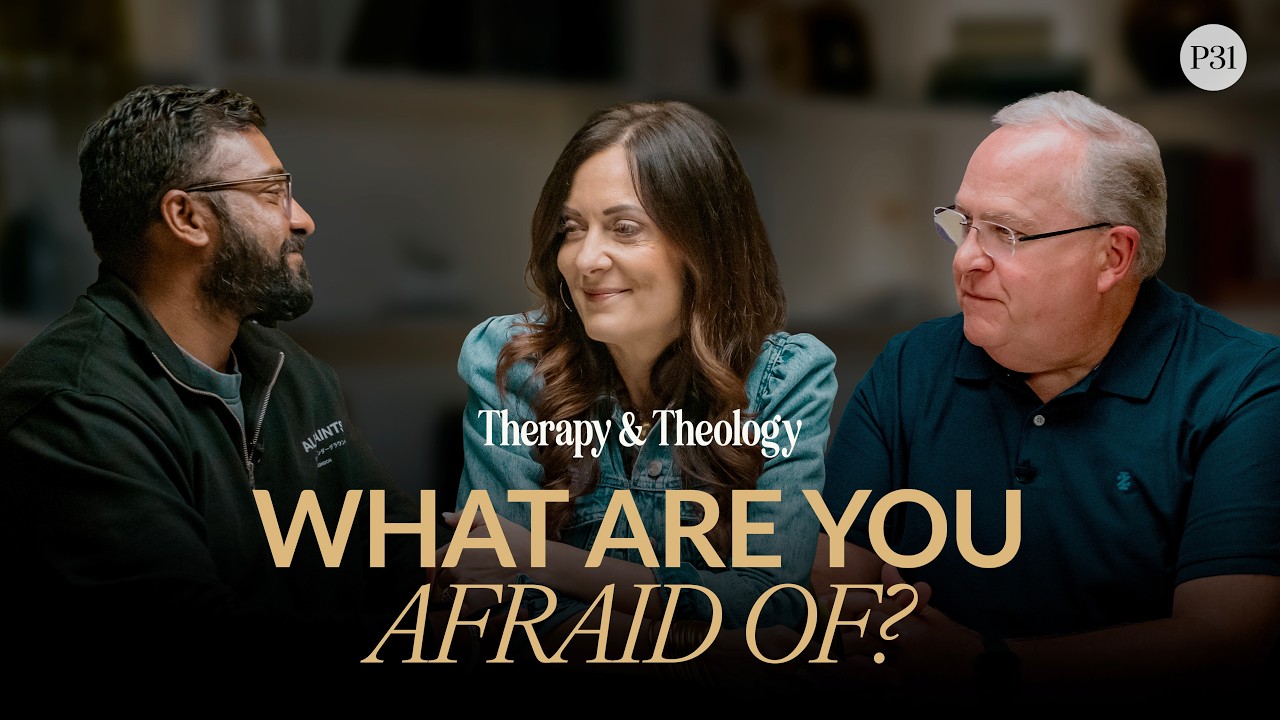
Video Summary
The episode opens with host Shae Hill introducing the season, which walks through TerKeurst’s new book on finding relief from overthinking, trying to fix others and needing to figure everything out. The podcast’s mission, she explains, is to help listeners work through what they have walked through, trusting that God is present in every hardship.
TerKeurst shares that she would not naturally describe herself as a controlling person. Yet when she sees someone she loves heading toward harm, especially when the consequences will affect her too, she can slip into control mode. She explains that what drives this is not power but fear. Cress adds that he frequently sees this dynamic in counseling, particularly among couples where one spouse’s harmful patterns lead the other to try to rescue, fix or manage them.
The panel discusses common fears that fuel control: fear of being betrayed again, of being taken advantage of, of rejection or abandonment. They talk about how to speak honestly to loved ones without trying to force change, drawing on the image of the watchman in Ezekiel. The episode ends with Dr. Muddamalle answering a listener question about Psalm 37:4.
Key Takeaways
- The root of controlling behavior is often fear, not a desire for power.
- People may call control “helping,” “fixing” or “saving” without realizing it.
- Past betrayal can cause us to treat ordinary mistakes as major betrayals.
- Fear of rejection can make relationships feel transactional.
- We can warn and advise others, but we cannot make their choices for them.
- Delighting in the Lord reshapes our desires to align with His.
Fear Beneath the Need to Control
TerKeurst describes the moment control kicks in for her: she can see the future consequences of someone’s decisions, almost like a train barreling toward them, and she knows that when it hits, it will impact her as well. That fear can feel like panic. She notes that fear can push people to act in ways that are not even part of their normal personality.
Cress explains that in betrayal trauma, spouses often move into hypervigilance, trying to prevent further harm. While understandable, this can become exhausting and ineffective. Recognizing fear as the root helps people respond more wisely.
Naming Our Fears
The panel candidly lists the fears that drive them. One acknowledges that after being hurt, it is easy to assume everyone will eventually break trust. Another admits to a fear of being taken advantage of. Several mention fears of rejection, abandonment and not being loved, which can lead to transactional thinking: “If I do these things, they will stay.” They agree that people really might disappoint or leave, and that the healthy response is to show up as healthy as possible while allowing others to make their own choices.
They also discuss the importance of giving grace for ordinary mistakes. Not every broken promise is an epic betrayal, and treating it as such can damage relationships.
The Watchman and the Coffee Cup
Cress shares a framework he uses in counseling, borrowing the image of the watchman from Ezekiel 33:7-9. While acknowledging the passage’s original context, he notes that a watchman’s responsibility is to warn, not to force. This has set him free to speak truth while leaving the response to others. TerKeurst adds a phrase she learned from him: asking, “Are you open to a thought?” before sharing a difficult perspective. Cress compares it to offering a cup of coffee: you can offer it, but you cannot make someone drink.
TerKeurst admits she sometimes feels compelled to keep going back and pulling people off the tracks. Ultimately, she says, she can share wisdom and pray, but she cannot make choices for someone else.
Understanding Psalm 37:4
In the listener question segment, Dr. Muddamalle addresses Psalm 37:4: “Delight yourself also in the Lord, and He shall give you the desires of your heart.” He explains that the verse is not a promise that God will grant every wish like a gift dispenser. Rather, delighting in the Lord reorients a heart that is “curved in on itself” toward God, so that our desires begin to match His, especially the desire to belong to God’s family and experience His love through Jesus. For more, see When the Person Who Hurt You Wasn’t Held Accountable and The Steps to Repairing Trust.
Frequently Asked Questions
What is the root of controlling behavior according to Lysa TerKeurst?
She teaches that control is usually rooted in fear, such as fear of loss, betrayal or consequences, rather than a desire for power.
How can I share concerns without being controlling?
The panel suggests asking permission (“Are you open to a thought?”), offering honest input, praying, and then allowing the other person to make their own decision.
What does Psalm 37:4 really mean?
Dr. Joel Muddamalle explains that delighting in the Lord reshapes our desires so they align with God’s desires, rather than guaranteeing every personal wish.
Final Thoughts
You’re Not Controlling, You’re Afraid offers a gentle but revealing look at a struggle many people share. Lysa TerKeurst, Jim Cress and Dr. Joel Muddamalle help listeners identify the fears beneath their need to control and offer practical, biblical ways to let go. Peace comes not from managing every outcome, but from trusting God with what we cannot control.
