Jack Hibbs: America Is Now In A War That We Cannot Win
In America Is Now In A War That We Cannot Win, Pastor Jack Hibbs of Calvary Chapel Chino Hills offers his biblical perspective on the ongoing conflict involving Iran, the United States and Israel. Hibbs argues that, according to his reading of Ezekiel 38, Persia (modern-day Iran) must still exist in the last days, and he urges believers to look to Scripture rather than political or military strength for hope. This summary presents his views as he shared them, without endorsing any political position.
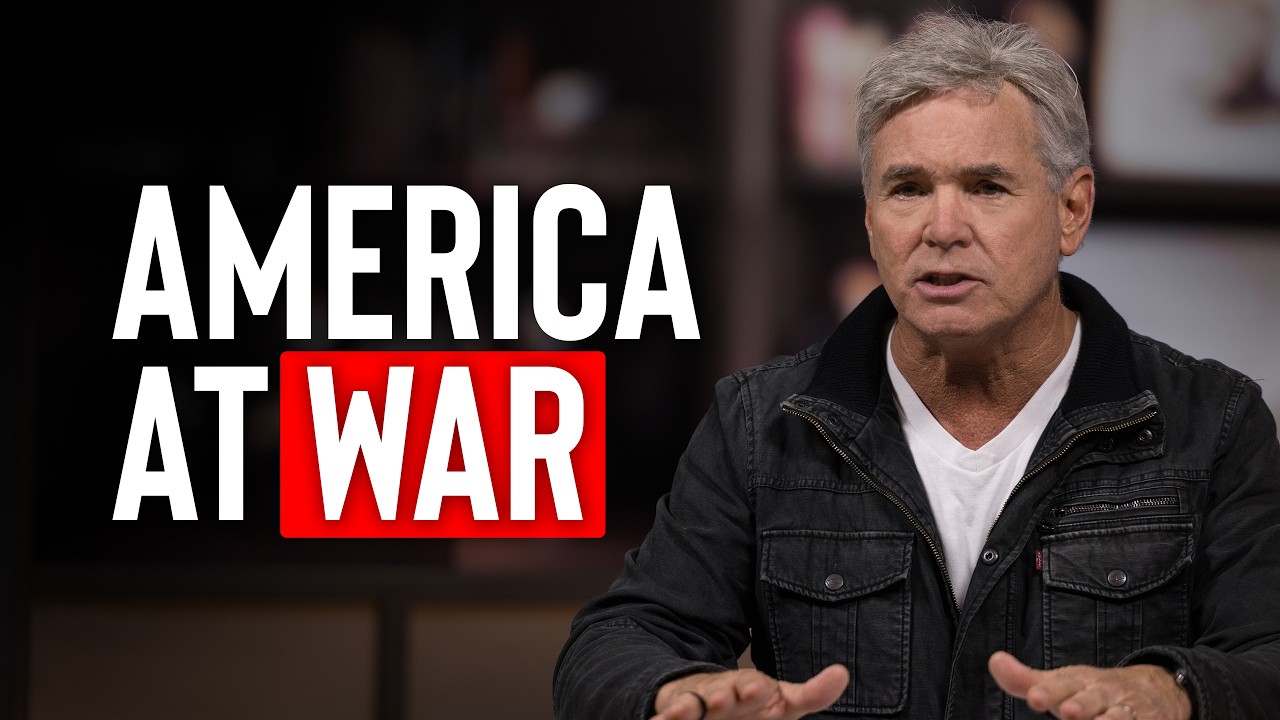
Video Summary
Hibbs opens by reflecting on post-election commentary, noting that some analysts linked voters’ frustrations to the cost of living, fuel prices and the war. He then states a provocative thesis: in his view, there was never a way for the United States to fully “win” a war against Iran, not because of a lack of capability, but because of what he believes Bible prophecy reveals.
He offers his historical perspective on long-running conflicts with militant groups, beginning with the Barbary Wars under Presidents Jefferson and Adams and continuing through the attacks of September 11, 2001. He then turns to Ezekiel 38-39, Isaiah 17 and Psalm 20 to explain where he believes history is heading, and closes with an invitation to follow Jesus Christ. Some of his comments include strong political opinions; this article focuses on the biblical teaching while noting that these opinions are his own.
Key Takeaways
- Hibbs believes Bible prophecy, not military power alone, determines the outcome of history.
- He reads Ezekiel 38 as indicating that Persia (Iran) will exist and join a coalition against Israel in the last days.
- He describes the peace of Ezekiel 38 as an “assumed” or false sense of security.
- According to Hibbs, God Himself will defeat the invading coalition, leading Israel to turn to the Lord.
- He emphasizes that “God is not an American” and that nations must align with God’s will.
- He calls believers to trust in the Lord rather than chariots and horses.
A Long Historical Conflict
Hibbs recounts how President Thomas Jefferson, following earlier diplomatic efforts during John Adams’ presidency, sent American forces against the Barbary pirates of North Africa, who had captured ships and sold captives into slavery. He sees that conflict as the beginning of a long struggle between the United States and militant Islamist movements, a struggle he believes came into sharp focus on September 11, 2001.
He also distinguishes between Iran’s ruling regime and the Persian people, noting that many Iranians do not share the views of the revolutionary government that took power in 1979. He expresses hope for the people of Iran even as he warns about the regime.
Ezekiel 38 and an Assumed Peace
The heart of the message is Hibbs’s reading of Ezekiel 38. He explains that the prophecy describes a time when Israel dwells in a kind of peace, which he describes as an assumed or false sense of security rather than true shalom. During that time, a coalition led by “Gog, of the land of Magog, the prince of Rosh, Meshech and Tubal” will invade.
Among the nations listed is Persia, which Hibbs identifies with modern Iran. Because Persia must exist for this prophecy to be fulfilled, he concludes that Iran will not be permanently eliminated by any nation before that time, even if its leadership is weakened. He suggests other powers could help it rebuild.
Three Groups of Nations
Hibbs identifies three groups of nations in Ezekiel 38. The first is the invading coalition, which he associates with regions that include Russia, Iran, Turkey, Libya and Sudan, based on ancient names in Genesis 10. The second is Israel. The third consists of nations that ask, “Have you come to take plunder?” (Ezekiel 38:13), which Hibbs interprets as nations that object but do not intervene.
He notes that, in his understanding, the United States is not specifically mentioned in end-times prophecy. He also discusses Isaiah 17, which foretells the ruin of Damascus, and suggests it may relate to the events of Ezekiel 38.
God Will Defend Israel
According to Ezekiel 38-39, God’s fury will rise and He will judge the invading armies on the mountains of Israel. Hibbs emphasizes that the purpose of this intervention is that the nations will know “I am the Lord,” and that Israel’s heart will begin to turn back to God (Ezekiel 39:21-29). He sees this as both a warning and a reason for hope.
God Is Not an American
Hibbs makes a striking statement: “God is not an American.” While expressing love for his country and gratitude for believers serving in the military, he asks whether the nation as a whole has honored God. He points to Psalm 20:7: “Some trust in chariots, and some in horses; but we will remember the name of the Lord our God.” Military strength, he says, is no substitute for God’s favor. He also expresses skepticism toward political leaders of every party, saying he trusts only a few personally.
For more of his prophetic teaching, see The Moon Will Be Like Blood (The 7 Year Tribulation Explained) and The Rapture Could Happen Today. Here Is Why.
The Living Word and an Invitation
Hibbs closes by affirming that the Bible is alive, relevant and prophetic. Even if every Bible were destroyed, he says, God’s eternal truths would remain. He believes every person who can read or hear is responsible for knowing God’s Word, and he invites listeners to follow Jesus Christ, the central figure from Genesis to Revelation, who could return at any time.
Frequently Asked Questions
What does Jack Hibbs say about Iran in Bible prophecy?
He teaches that Persia, which he identifies as modern Iran, is named in Ezekiel 38 as part of a future coalition against Israel, so he believes it will continue to exist until that time.
Is the United States mentioned in Bible prophecy according to Hibbs?
Hibbs says he does not believe the United States is specifically mentioned in end-times prophecy.
What does “God is not an American” mean?
Hibbs means that God is not bound to any nation’s interests, and that nations experience His favor only when they honor Him.
Final Thoughts
This message reflects Jack Hibbs’s prophetic perspective on world events. Readers will hold different views on politics and on the interpretation of Ezekiel 38, and they are encouraged to study the Scriptures for themselves. The central encouragement remains: rather than placing ultimate trust in governments or armies, believers are called to trust in the Lord and to share the hope of Jesus Christ.
