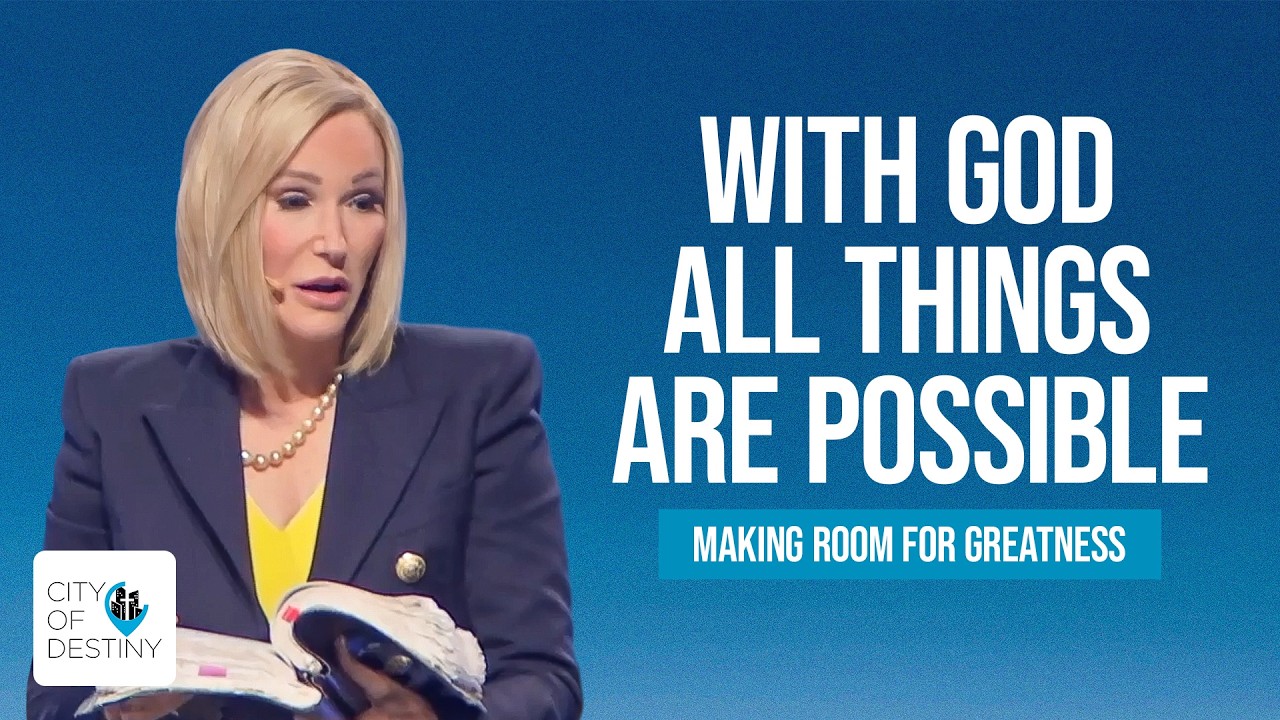
With God All Things Are Possible | Paula White-Cain | City of Destiny
In this Mother’s Day message at City of Destiny, Pastor Paula White-Cain draws on the lives of Mary and Elizabeth to deliver a word of faith for every listener, whether a parent or not. The theme of With God All Things Are Possible Paula White-Cain preaches is both comforting and challenging: no family situation, medical report, financial crisis or past regret is beyond the reach of God, and every hardship can become part of the process that prepares a believer to birth what God has placed inside them.
Video Summary
Paula White-Cain opens with a lighthearted story about a child asking his mother where he came from, then moves quickly to honest reflection on motherhood. She argues that the idealized images of family life seen in culture are not realistic. No one truly has it all, and life involves trade-offs. She even explains that she stopped teaching on the idea of a perfectly balanced life, preferring instead to talk about seasons and learning to flow with what God is doing in each one.
She shares personal stories, including her conviction to stay home with her son Brad during his first years, even though it meant living in a trailer and stretching every dollar. Brad later went through seasons of atheism and addiction, but according to White-Cain he is now a preacher of the gospel. She also speaks tenderly about her late mother, a brilliant reader whose relationship with her daughter included tension, deep love and very different political views, and who shared before her death that she had accepted Christ.
From there, White-Cain points to Scripture’s honest portrayal of women: Ruth widowed young, Sarah, Rachel and Hannah facing infertility, and even Mary enduring the suffering of her Son. Her message is that God knew exactly which child to give each parent and which parents each person needed, so that every experience shapes a person for their purpose.
The heart of the sermon centers on Mary and Elizabeth and the declaration that with God all things are possible. White-Cain then teaches on the Hebrew idea behind the word woman, the meaning of virtue in Proverbs 31, and why endurance and perseverance are essential for anyone who wants to bring forth a move of God.
Key Takeaways
- There is no perfect, idealized picture of motherhood or family life; Scripture shows real people in real struggles.
- Life is lived in seasons, and wisdom means flowing with each one rather than chasing perfect balance.
- A parent’s spiritual influence can bear fruit even after years of rebellion.
- With God, all things are possible, from prodigal children to impossible reports.
- Every believer carries a treasure from God inside an earthen vessel.
- Biblical virtue speaks of inner strength and endurance, not outward appearance.
- A crisis is a turning point that can develop a person rather than destroy them.
- Believers are victors in Christ, not victims of their upbringing.
No Idealized Picture of Motherhood
One of the most relatable parts of this message is White-Cain’s honesty about family life. She reminds her audience that the polished images of motherhood seen in culture rarely match reality. Women juggle work, ministry, marriage, children and bills, and something always has to give. Rather than promising balance, she encourages people to recognize the season they are in and follow God’s leading within it.
Her own choice to prioritize her son’s early years reflected a personal conviction, and she is careful to say that not everyone will have the same convictions. What mattered most to her was leaving a spiritual inheritance. Even when her son walked away from faith for a time, that inheritance was not lost. Today, she says, he preaches the gospel.
She also lifts pressure from parents who feel they have failed or children who feel they received a raw deal. According to White-Cain, there are no accidents in God’s design. Every experience, good or painful, can be used to form people for the purpose they were sent to fulfill.
Mary, Elizabeth and the God of the Impossible
White-Cain chooses Mary and Elizabeth because their stories intertwine in a way that speaks to relationships and faith. Elizabeth was older and had been barren, while Mary was young and chosen to carry the Messiah. The angel’s words in Luke 1:37, that nothing will be impossible with God, became the anchor for both women.
White-Cain applies that promise broadly. If children are acting out, if someone is believing for a child, if a doctor’s report sounds hopeless, if money is scarce or if a parent does not know where their child is, the answer remains the same: with God all things are possible. She urges her listeners to stop measuring their future by their circumstances and to let faith rise instead.
She also reminds believers of 2 Corinthians 4:7, which describes a treasure placed in earthen vessels. However ordinary a person may feel, God has deposited greatness inside them as His child.
A Virtuous Womb: Strength Born Through Endurance
White-Cain explains that the Hebrew idea behind the word woman can be understood as a person with a womb, one through whom God brings things into the earth. She speaks of this both naturally and spiritually: anything God intends to birth, whether a revival, a season, a promise or a calling, must come through people willing to carry it.
Turning to Proverbs 31, she notes that the word often translated virtuous carries the sense of strength, valor and even an army. In her teaching, a virtuous woman is not defined by wealth or beauty but by inner strength forged through suffering, travail and discipline. That inner strength is what God calls precious.
She points to Deborah as an example of a woman whose strength in God restored order when others had abandoned their positions. In White-Cain’s view, the church today needs people of similar endurance who can bring forth a move of God in their families, work and ministries.
Do Not Curse Your Crisis
One of the most quotable themes in the sermon is White-Cain’s encouragement not to curse a crisis. She defines crisis as a turning point and insists that hardship can be part of a development process. Nobody receives the promise without going through the process, and nobody wears the crown without first carrying the cross.
She clarifies that she is not saying God sends every painful event, but that God will use it. She cites Romans 8:28, the promise that all things work together for good for those who love God, and Revelation 3:10, where faithfulness in perseverance is met with God’s keeping power. She also references Moses, who doubted himself and once tried to take matters into his own hands, as a lesson in placing matters in God’s hands instead.
Finally, she challenges listeners not to live as victims of what their parents did or did not do. In Christ, she says, believers are victors. They can keep what was good, release what was not, and move forward with the gifts God has already given them. Readers who enjoyed this theme may also appreciate God Makes All Things New and Living Grateful: How Gratitude Transforms Your Life.
Frequently Asked Questions
What is the main message of With God All Things Are Possible by Paula White-Cain?
The main message is that no situation is beyond God’s power. Using the lives of Mary and Elizabeth, Paula White-Cain encourages believers to trust God with their families, health, finances and regrets.
What does Paula White-Cain mean by a virtuous woman?
According to her teaching, the word virtuous in Proverbs 31 speaks of strength, valor and endurance developed through hardship. It describes inner strength rather than outward appearance or wealth.
Why does she say not to curse your crisis?
She explains that a crisis is a turning point. While God may not send every difficulty, He can use it to develop believers and prepare them to carry and bring forth what He has called them to do.
Final Thoughts
This Mother’s Day sermon is far broader than a single holiday. Paula White-Cain speaks honestly about the messiness of family life, shares personal stories of sacrifice and loss, and then lifts her audience toward faith in the God of the impossible. Her encouragement to see crises as turning points, to value inner strength over appearances and to refuse a victim mindset offers hope to mothers, fathers, sons and daughters alike. The closing reminder is simple and powerful: whatever the situation, with God all things are possible.