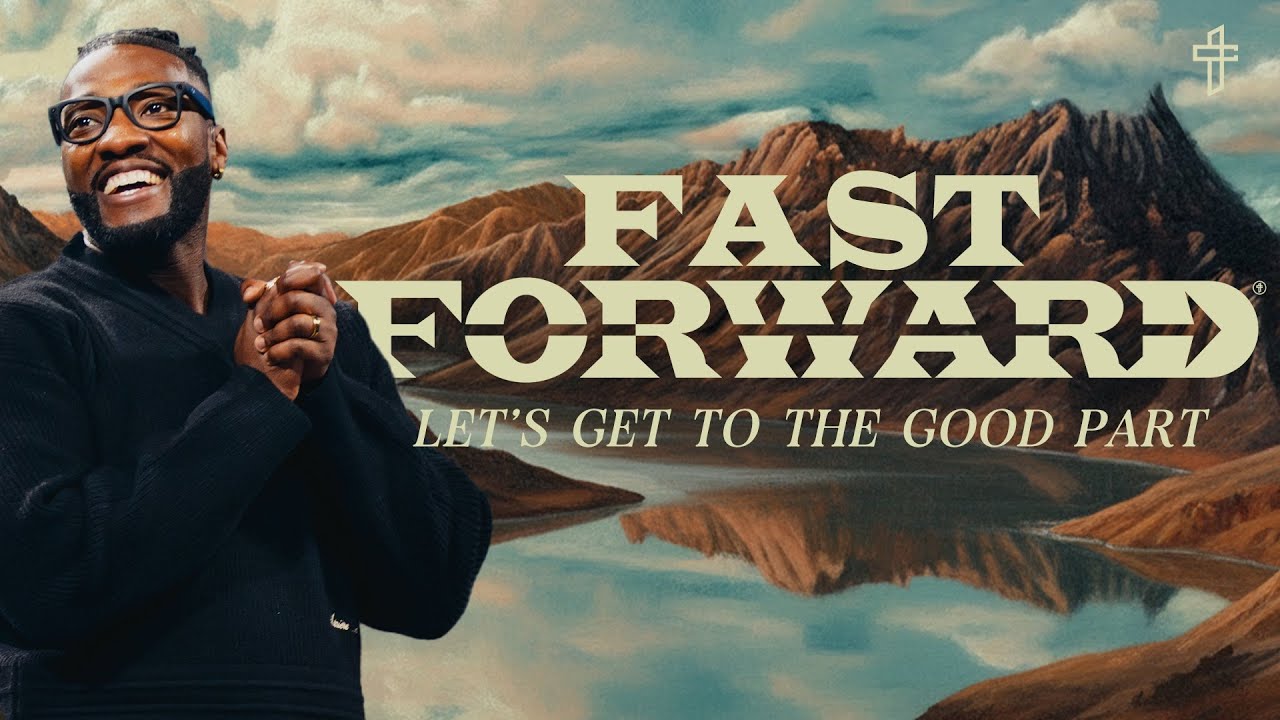
Fast Forward: Let’s Get To The Good Part // Forward (Part 1) // Michael Todd
In this kickoff message of the Forward series at Transformation Church, Pastor Michael Todd introduces the church’s word of the year and delivers a sermon that blends humor, nostalgia and hard spiritual truth. The message of Fast Forward Michael Todd preaches here is simple but demanding: there are seasons in the Christian life that cannot be skipped, but believers can move through them faster when they stop avoiding what God wants to heal and start leaning into the direction He is calling them.
Video Summary
Michael Todd opens by asking his congregation an uncomfortable question: what are you sick of that you are still connected to? He observes that many people complain about the very things they refuse to change, whether that is their health, frustrating relationships or unhealthy habits. From there he introduces the anchor scripture for the year, Philippians 3:13-14, where the Apostle Paul describes focusing on one thing, forgetting what lies behind and pressing toward what lies ahead.
Todd notes that the previous year’s word at his church was “focus,” and he sees it as confirmation that the very next idea in Paul’s sentence is about looking forward. He defines forward as moving onward in a way that makes progress toward a successful conclusion, and he shares what he senses the Holy Spirit told him: forward is the direction of destiny, and the greatest danger is falling in love with the comfort of today.
The heart of the message comes from a childhood memory. Todd describes sharing bunk beds with his brother, getting a TV with a built-in VCR, and renting movies from Blockbuster on Friday nights. When the family wanted to see their favorite scene, someone had to walk up to the set and press fast forward. The tape could not jump past anything; every frame still played, only faster. That, he says, is how God often works. Hardships, temptation and misunderstanding are part of the journey and cannot be skipped, but believers do not have to stay stuck in them.
He then explains that real forward movement always meets opposition, that forward goes through problems rather than around them, and that a quick bounce-back after offense is essential. He closes with a personal confession built on the promise that God has not given His people a spirit of fear.
Key Takeaways
- Many people complain about what they never intend to change; moving forward starts with honesty.
- Everything God has for a believer lies ahead, while the past mainly holds testimonies of His goodness.
- Some seasons cannot be skipped, but they can be walked through faster with faith and obedience.
- Opposition is a sign of real progress, not proof that something has gone wrong.
- Forward goes through difficulties, not around them; avoidance quietly builds a prison.
- A faster bounce-back after offense keeps believers from losing momentum.
- God’s Word is the light that reveals the next step in dark seasons.
Forward Is the Direction of Destiny
According to Michael Todd, one of the enemy’s main strategies is to keep people anchored in the past through regret, nostalgia or old wounds. Paul’s words in Philippians 3:13-14 push in the opposite direction. Todd imagines what would happen to a person’s emotions, faith and speech if every day began with expectation for what God has ahead. Even after a failure, that person could say there is still good ahead.
He illustrates the danger of loving the present season too much with a sobering example: couples who divorce after decades of marriage because everything revolved around raising the children. Once the kids leave, there is nothing to look forward to together. Todd’s point is that comfort can quietly cost people their future if they stop leaning toward what God is building next.
Using a playful reference to a famous dance move, he urges listeners to lean their faith forward. Circumstances may not look good yet, but faith can carry expectation for what God will say and do tomorrow. Too many believers, he jokes, are leaning back when God is calling them ahead.
The Word as a Lamp in the Dark
To show where direction comes from, Todd turns to Psalm 119:105, which describes God’s Word as a lamp to the feet and a light to the path. In a memorable moment, the stage lights go dark and he holds an open Bible, explaining that Scripture lights up the immediate space around a person and reveals the way to walk. Close it and walk away, and the pitfalls return.
He applies this to practical questions: confusion in relationships, uncertainty about parenting, and wounds that need forgiveness. Each time a believer opens the Word, the lights come back on. Todd also challenges his audience about what they consume, noting that social media is literally called a feed. What people feast on shapes what comes out of them, so he encourages the church to feed on Scripture because it will move them forward.
You Can’t Skip It, But You Can Fast Forward
The VCR story becomes the sermon’s defining image. Todd recalls being the one assigned to get up, press play, check where the tape was and then hold fast forward until the family reached the scene they loved. Nothing could be skipped, yet the journey to the good part went much faster.
He believes God is calling the church into a season of acceleration. Some will walk past the very things that others wandered in for decades, much like Israel’s forty years in the wilderness. The good part may come to marriages, families, finances and churches, but not by skipping the lessons. Jesus Himself, Todd notes, modeled a life that faced temptation and misunderstanding head-on. Followers of Christ will face the same, but they do not have to get stuck there.
This is where the sermon offers its main handle: believers cannot skip hard seasons, but they can move through them faster by listening to God’s Word and obeying it.
Forward Goes Through, Not Around
Todd is candid that forward movement always draws opposition. Sometimes it comes as generational mindsets, the voices that say nobody in the family has ever stayed married or broken free from addiction. Biblical heroes faced the same pattern: Moses had Pharaoh, David had Goliath, Daniel had jealous rivals and Jesus faced the religious establishment of His day. In Todd’s words, it is only practice when nobody is trying to stop you.
He then makes a sharp distinction between motion and progress. Many people are professional avoiders who circle around their problems for years. They appear busy and even post pictures that suggest growth, but they are only going in circles and end up exhausted. Todd argues that what people avoid becomes the stakes of a prison they eventually live in, especially in families where offenses have gone unspoken for decades.
He also connects avoidance with how the brain works. According to Todd, each time someone dodges a hard conversation, the brain experiences relief, which reinforces the fear and makes it louder next time. Avoidance does not make people stronger; it makes them weaker. Against that pattern he places 2 Timothy 1:7, which says God has given believers power, love and a sound mind instead of fear. He encourages listeners to adopt a simple confession: because they have power, because they are loved and because they have a sound mind, they can go through what they used to avoid.
Shorten Your Bounce-Back Time
The final practical point concerns resilience. Todd observes that many believers stay hurt for weeks after a small offense. Instead of going directly to the person and clearing the air, they talk about it with others, and the hurt goes around and around. He draws on Jesus’ instruction in Matthew 10:14, where the disciples were told to shake the dust off their feet if a town rejected their message and move on to the next place.
Todd explains that if the disciples had been slow to recover from rejection, people would have missed the gospel. Their velocity mattered. In the same way, believers today need to dust off emotional residue and unresolved resentment. He even encourages counseling and therapy for those carrying deep anger, rejecting the idea that people are too old to change. Anyone who is humble and teachable, he says, can grow.
Readers who appreciated this message may also enjoy Todd’s teaching in It’s Time To Shift and his practical wisdom on emotional health in Keep The Window Open: Increasing The Window Of Tolerance.
Frequently Asked Questions
What is the main message of Fast Forward by Michael Todd?
The main message is that believers cannot skip difficult seasons, but they can move through them faster by following God’s Word, facing problems directly and refusing to stay stuck in the past.
Which Bible verse anchors the Forward series?
The anchor scripture is Philippians 3:13-14, where Paul speaks of forgetting what is behind and pressing toward what lies ahead. Todd also draws on Psalm 119:105, Matthew 10:14 and 2 Timothy 1:7.
What does Michael Todd mean by “forward goes through, not around”?
He means that avoiding painful conversations or situations only creates circular motion that feels like progress but is not. Real growth happens when people face what they fear with the power, love and sound mind God provides.
Final Thoughts
This opening message of the Forward series is both encouraging and confronting. Michael Todd offers hope that God can accelerate breakthrough, yet he refuses to promise shortcuts. The VCR image sticks: every scene still plays, but it can play faster. For anyone tired of circling the same problems year after year, the sermon is an invitation to open Scripture, lean faith forward, walk through instead of around, and recover quickly from offense, trusting that the best part of the story still lies ahead.