Jonathan Cahn: The Secret Behind The Ayatollah’s Fall & This War! | Jonathan Cahn Prophetic
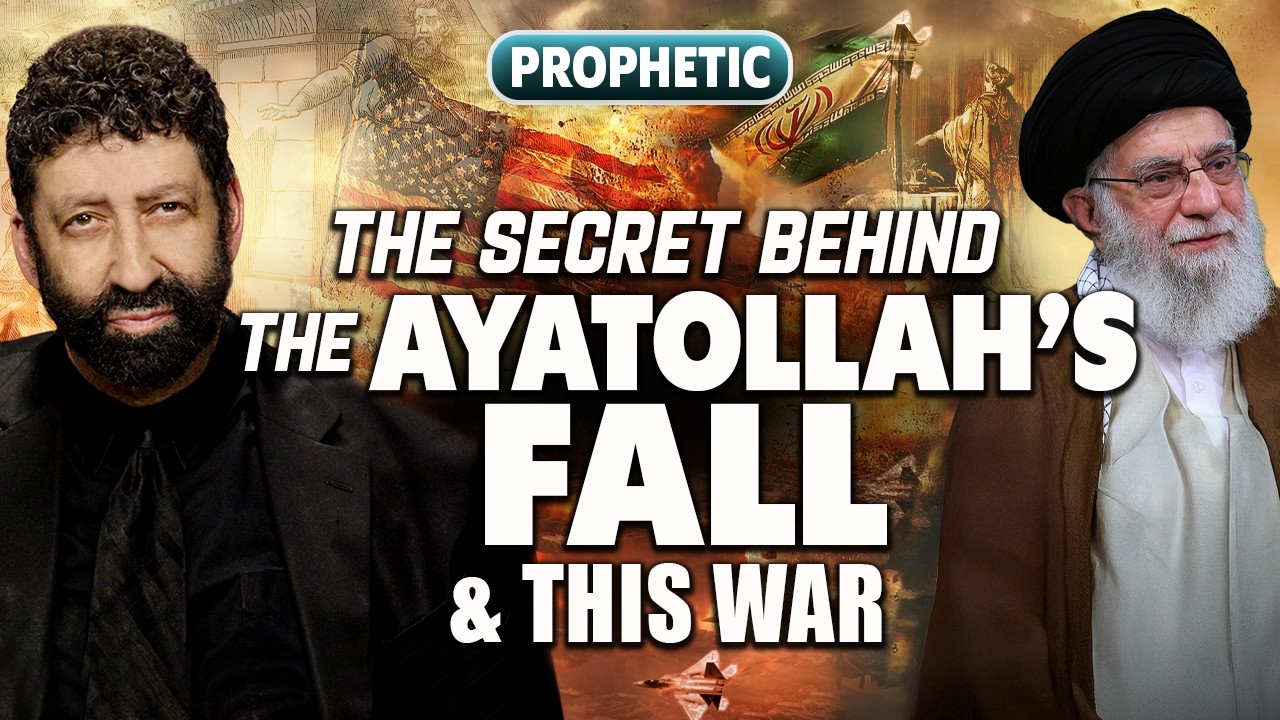
In The Secret Behind the Ayatollah’s Fall & This War, author and messianic rabbi Jonathan Cahn offers his prophetic interpretation of recent events involving Iran, Israel and the United States. According to Cahn, the timing and circumstances of the strike he describes on Iran’s leadership echo ancient biblical patterns found in the stories of Amalek, King Agag, Haman and the festival of Purim. This article summarizes his message as he presents it, without endorsing any political or military position.
Video Summary
Cahn opens by saying he wants to show viewers something mainstream news outlets will not report: an ancient biblical “mystery” that, in his view, lies behind current events in the Middle East. He states that on Saturday, February 28, 2026, the United States and Israel launched strikes on Iran’s leadership and that reports emerged that Iran’s Supreme Leader had been killed.
From there, Cahn connects these events to the weekend leading into Purim, the biblical holiday rooted in ancient Persia, which is modern-day Iran. He traces a thread from the battle with Amalek in Exodus, through King Saul and Agag in 1 Samuel, to Haman “the Agagite” in the book of Esther. He also points to the specific Scripture readings appointed in synagogues on that Sabbath, known as Shabbat Zachor, the Sabbath of Remembrance. Viewers will weigh his interpretations differently, and this summary reflects his views as he presented them.
Key Takeaways
- Cahn interprets current events in the Middle East through biblical patterns.
- He links the timing of the events he describes to the festival of Purim.
- He traces a biblical thread from Amalek to Agag to Haman.
- He notes that the Sabbath readings that day focused on remembering Amalek.
- Cahn frames the conflict as part of a larger spiritual struggle between good and evil.
- Readers are encouraged to study the biblical texts for themselves and pray for peace.
The Timing and Purim
Cahn emphasizes that the events he describes occurred on the weekend leading into Purim. Purim commemorates the deliverance of the Jewish people in ancient Persia from Haman, a powerful official who sought to annihilate them, as recorded in the book of Esther. Because Persia corresponds to modern-day Iran, Cahn sees significance in the timing.
He describes the late Iranian leader, according to his own characterization, as responsible for supporting groups hostile to Israel and for suppressing Iranians. He also references the words of Jesus in Matthew 26:52, “all who take the sword will perish by the sword.” These are Cahn’s assessments, presented within his prophetic framework.
The Ancient Battle With Amalek
To explain what he calls the root of the mystery, Cahn returns to Exodus 17. Soon after Israel left Egypt, the Amalekites attacked them in the wilderness. After Israel prevailed, God told Moses to write a memorial and declared that He would have war with Amalek “from generation to generation” (Exodus 17:14-16). Moses built an altar and called it “The Lord Is My Banner.”
Cahn interprets this generational conflict as a spiritual struggle that continues to manifest throughout history. In his view, Amalek represents opposition not only to Israel but to God’s purposes.
Saul, Agag and Haman the Agagite
Centuries later, King Saul defeated the Amalekites but spared their king, Agag, contrary to God’s command. The prophet Samuel then executed Agag, saying, “As your sword has made women childless, so shall your mother be childless” (1 Samuel 15:32-33).
In the book of Esther, the villain Haman is identified as “the Agagite,” which Cahn understands as a descendant of Agag. Haman persuaded the Persian king to issue a decree for the destruction of the Jewish people, but God raised up Mordecai and Queen Esther to overturn his plan. For Cahn, this shows the conflict with Amalek continuing in Persia. He sees the convergence of time and place in recent events as pointing to something ancient and cosmic, beyond politics or military strategy.
The Sabbath of Remembrance
Cahn highlights that the Saturday he describes was Shabbat Zachor, the Sabbath of Remembrance that traditionally precedes Purim. On that day, synagogues around the world read Deuteronomy 25:17-19, which calls Israel to remember what Amalek did. The traditional prophetic reading for that Sabbath is from 1 Samuel 15, the account of Saul and Agag.
Cahn finds it remarkable that these passages, appointed long in advance, were being read on the day he describes. He sees this as part of what he calls a divine convergence of timing, place and theme. He then goes on to compare further aspects of the Purim story, including Haman’s plan to destroy the Jewish people, with present-day threats against Israel, as he understands them.
How Should Believers Respond?
Cahn’s message invites believers to view world events through a spiritual lens. Christians hold a range of perspectives on prophecy, Israel and current conflicts, and many will approach interpretations like these with caution. Whatever one’s view, Scripture calls believers to pray for those in authority (1 Timothy 2:1-2), to pray for the peace of Jerusalem (Psalm 122:6) and to remember that God desires all people to be saved. For more of Cahn’s teaching on prophecy and history, see The Mystery of the Rapture & the Feast of Trumpets and The Israel Prophecy of Charles Spurgeon.
Frequently Asked Questions
What connection does Jonathan Cahn make to Purim?
According to Cahn, the events he describes took place on the weekend leading into Purim, a holiday commemorating deliverance from Haman, an official in ancient Persia, which is modern-day Iran.
Who were the Amalekites?
The Amalekites were an ancient people who attacked Israel after the Exodus. Cahn views the conflict with Amalek as a spiritual battle continuing across generations.
What is Shabbat Zachor?
It is the Sabbath before Purim, when synagogues read Deuteronomy 25:17-19 about remembering Amalek, along with a prophetic reading from 1 Samuel 15.
Final Thoughts
This message reflects Jonathan Cahn’s distinctive approach of connecting biblical patterns with contemporary events. Readers may find his observations thought-provoking, while others will interpret the same Scriptures differently. Regardless of perspective, the biblical stories he highlights point to a God who is sovereign over history, who delivers His people and who ultimately calls all nations to seek Him and to pursue justice and peace.
