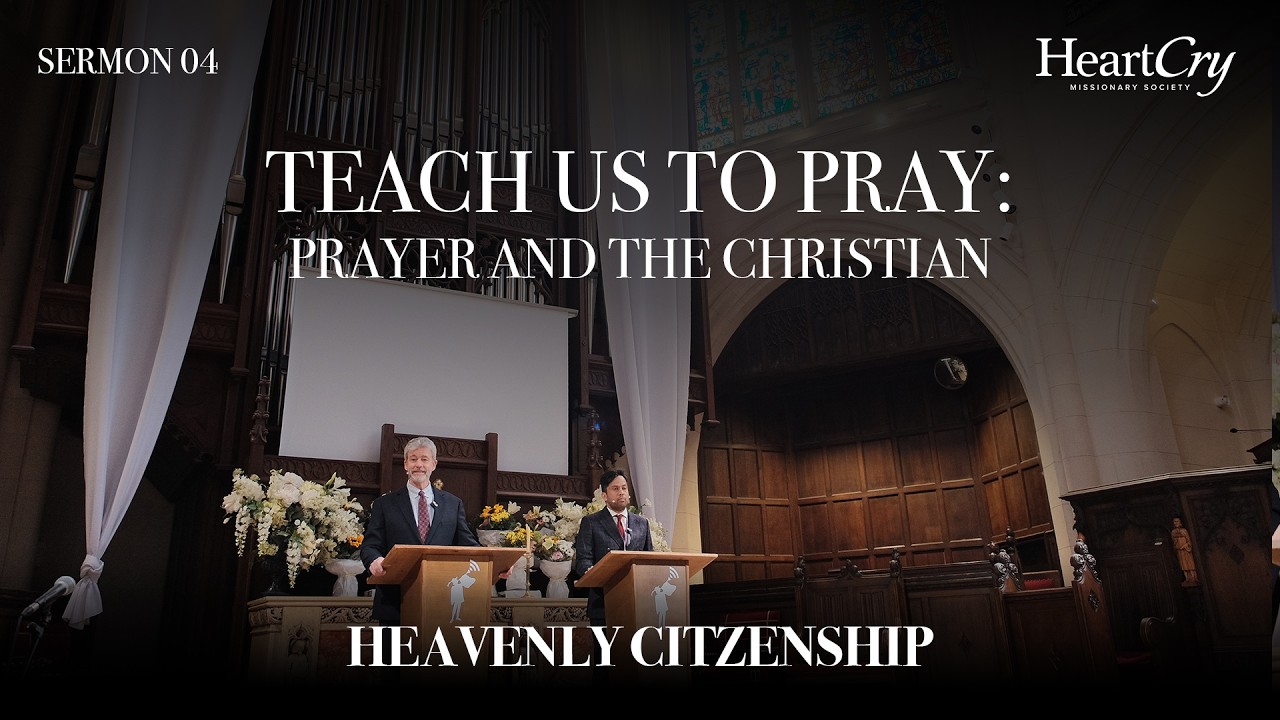
Teach Us to Pray: Prayer and the Christian | Paul Washer – Heavenly Citizenship
The disciples never asked Jesus to teach them how to preach, walk on water or raise the dead. They asked, “Lord, teach us to pray.” In this message, part of the “Heavenly Citizenship” series delivered in France, Paul Washer explores why prayer was so central to Christ’s life and teaching. Teach Us to Pray: Prayer and the Christian challenges believers to see prayer not as a last resort, but as the first resource and foundation of a fruitful Christian life.
Video Summary
Washer opens with warm and humorous remarks about France, expressing his love for its beauty, history and rich Christian heritage, including its many martyrs. He prays for revival in the nation and then turns to his subject. If the flesh dislikes Bible study, he says, it hates prayer even more, because prayer offers nothing to boast about; it is the ultimate recognition of our need.
He focuses on John 13-17, Jesus’ final hours with His disciples in the upper room. Like a parent with only a few hours left, Jesus spoke only of what mattered most, and Washer notes how often He emphasized prayer in His name. Every mention of fruitfulness, Washer argues, is connected to prayer to the Father.
Washer then turns to Mark 1, where Jesus’ ministry moves at a breathless pace, “immediately” after “immediately.” After an exhausting night of healing and deliverance, Jesus rose early, while it was still dark, to pray in a solitary place. Washer closes by walking through the Lord’s Prayer, explaining how each part focuses on God’s glory, His kingdom and our dependence on His grace.
Key Takeaways
- The disciples’ request “teach us to pray” reveals the heart of Jesus’ life.
- The flesh resists prayer because prayer exposes our need.
- In the upper room, Jesus tied fruitfulness directly to prayer in His name.
- Prayer is not the last resort but the first resource.
- Even Jesus, in His busiest seasons, prioritized time alone with the Father.
- The Lord’s Prayer centers on God’s name, kingdom and will, and on our need for grace.
Why the Flesh Hates Prayer
Washer observes that people can grow in Bible knowledge and still find a way to take pride in it. Prayer, however, gives the flesh nothing to boast in. It is an admission that we cannot do anything apart from God. That is why prayer is often neglected even by believers who love theology. “We will argue theology all day long,” Washer says, “but how much do we pray?”
Prayer in the Upper Room
Washer invites listeners to imagine having only three hours left with their children. What would they say? Only the most important things. In John 13-17, Jesus repeatedly emphasized asking the Father in His name. Washer points to John 16:23-27: “Whatever you ask the Father in My name He will give you… Ask, and you will receive, that your joy may be full.” For Washer, every advancement of God’s kingdom, every step of sanctification and every fruit of ministry is tied to prayer. It is not talent or spiritual gifting, but prayer, that forms the foundation of a fruitful disciple.
Jesus’ Example in Mark 1
Washer highlights the repeated word “immediately” in Mark 1, showing how busy Jesus’ ministry was. He describes the crowds pressing in with sick and suffering loved ones, drawing on his own experience bringing a doctor to a remote village in the Andes, where desperate people crowded the doors for days. After such an exhausting evening, Mark 1:35 says Jesus rose “a long while before daylight” and went to a solitary place to pray.
Washer clarifies that he is not advocating neglecting sleep, which is God’s gift. His point is that if Jesus, the perfect Man and God incarnate, considered prayer necessary, how much more do believers need it? He challenges listeners to protect their time with God even when other opportunities compete for it.
The Shape of Our Praying
Washer closes by walking through the Lord’s Prayer. It begins with God’s name being hallowed, His kingdom coming and His will being done. Requests for daily needs and forgiveness are given so believers can continue laboring for those purposes. “Lead us not into temptation” is a prayer for grace, admitting that we will fall unless God sustains us. The prayer ends by acknowledging that the kingdom, power and glory belong to God forever. Washer says he hopes to die with the words “Long live the King” on his lips. For more from Washer, see The Power of the Holy Spirit and Paul Washer Inspired Daily Prayer.
Frequently Asked Questions
Why does Paul Washer say prayer is so important?
He teaches that Jesus tied all fruitfulness and kingdom advancement to prayer in His name, making it the foundation of the Christian life.
What example of prayer does Washer highlight from Jesus’ life?
He highlights Mark 1:35, where Jesus rose early, after an exhausting day of ministry, to pray in a solitary place.
How does Washer describe the Lord’s Prayer?
He presents it as a model focused first on God’s glory, kingdom and will, followed by requests for provision, forgiveness and sustaining grace.
Final Thoughts
Teach Us to Pray is a searching call back to the priority of prayer. Paul Washer reminds believers that Jesus, even in His busiest seasons, sought the Father, and that all genuine fruit flows from communion with God. If prayer was essential for the Son of God, it is essential for every follower of Christ.