A Transformed People: The Holiness of the Christian | Paul Washer – Heavenly Citizenship, Part 2
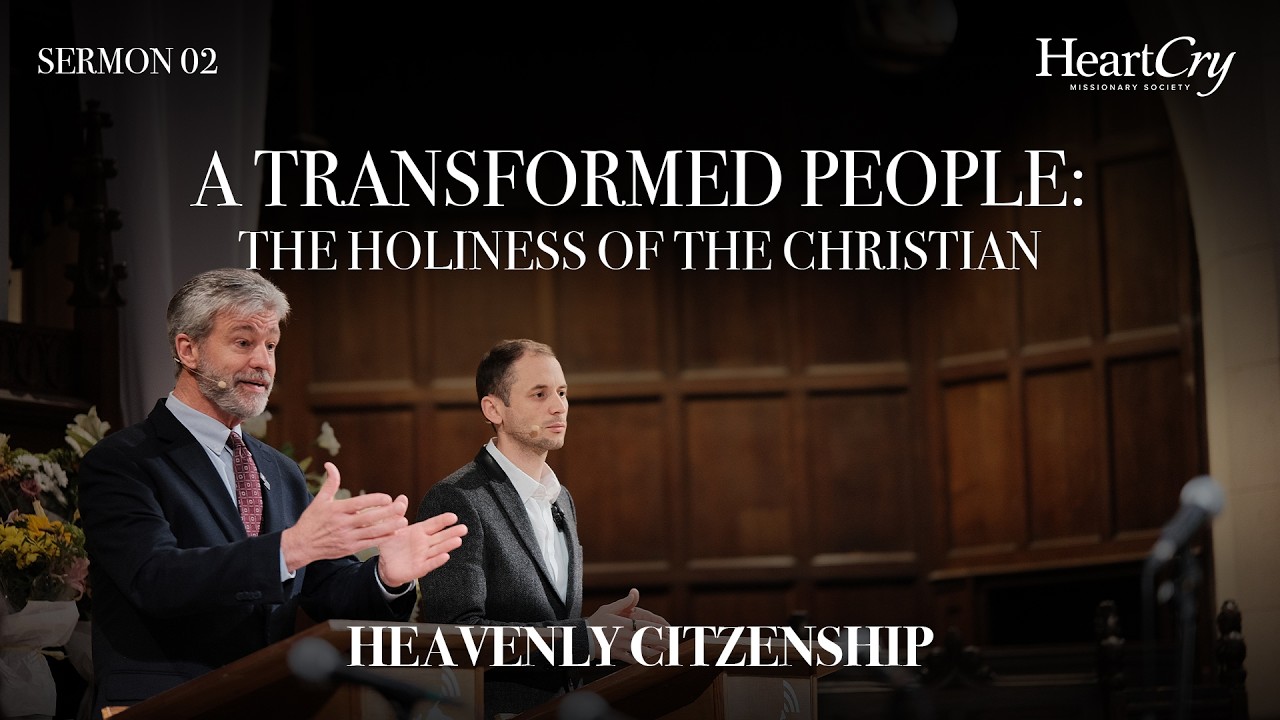
Picking up where the first message in his “Heavenly Citizenship” series left off, Paul Washer returns to Romans 12:1–2 to explain what kind of life flows from genuine faith. Speaking in Paris, he unpacks what it means to be a transformed people: a living, holy and acceptable sacrifice to God whose devotion is visible in how they use their bodies, whose holiness is rooted in relationship rather than mere rules, and whose minds are renewed through God’s Word.
Video Summary
Washer opens with a sobering question: could the reason many believers struggle to gain victory over sin be that they have almost no real connection with the Bible? He then rereads Romans 12:1–2 and reminds listeners of the previous message: the motivation to offer our whole lives to God comes from understanding His extraordinary mercies in Christ. The more we grasp those mercies, the more we will want to devote ourselves to Him.
From there he examines each phrase of verse 1, presenting our bodies as a sacrifice that is living, holy and acceptable, and points toward the indispensable role of Scripture in transformation.
Key Takeaways
- A weak connection to Scripture often explains weakness against sin.
- What we truly believe in our hearts will show up in how we use our bodies.
- Holiness means being set apart from sin and set apart to God.
- God is not merely first on our list; He is in a category of His own.
- Christianity is not first a moral code but a relationship with the God who saved us.
- Believers must choose whether to be pleasing to God or to the culture.
Your Body Reveals Your Heart
Washer notes that Paul specifically urges believers to present their bodies, something he finds striking. As a pastor, he says, he has often confronted people whose lives contradicted their profession of faith, only to hear, “Don’t judge me; you can’t see my heart.” Washer responds that if someone truly loves Christ, it will show in how they use their body: their feet, hands, ears, eyes and tongue. In Scripture, the heart is the control tower of the whole person.
He offers an illustration. If his listeners suddenly discovered that the building they were sitting in was on fire, everything about them would change. Their emotions would shift from calm to alarm, their heartbeat would quicken and they would get up and run. Genuine belief always affects behavior. So rather than only looking inward, he urges believers to examine how they live, speak and use their eyes and ears.
What Holiness Really Means
Some think holiness simply means keeping certain rules, Washer says, but it goes much deeper. At its root, holiness means being cut off and set apart. God is holy not only because He is without sin, but because He is entirely separate from His creation and its corruption. That is why Washer cautions against saying, “Keep Jesus first in your life,” as though God were simply the top item on a list. God is not on the list at all; He is in a category entirely His own.
For believers, holiness means separating from sin in order to be separated to God. We leave sin not merely to be moral but because we want to run to Him. One can be a moral person and still miss the heart of Christianity, he warns, because Christianity is first a relationship with the One who created us, saved us and desires us. The more believers learn about who God is and what He has done in redemption, the more their hearts will be drawn to Him.
A Living Sacrifice
Washer reflects on what it means to be a “living” sacrifice. Having been in dangerous situations for the sake of the gospel, he has concluded that if God calls someone to die for Christ, He will give the grace to do so in that moment. What he has found harder is living for Christ day after day, and that is where believers most need God’s grace and power.
He also explains that to offer ourselves as a living sacrifice, we must first be made alive. Pointing to Ephesians 2:1–5, he describes humanity’s condition in vivid terms: spiritually dead, like a decaying corpse in a pit of its own making. Such a person cannot offer anything to God. The Spirit must regenerate us first. “If anyone is in Christ, he is a new creation” (2 Corinthians 5:17). Christianity is not simply hearing good ideas and trying to live better; it requires being changed by the power of the gospel and the Holy Spirit.
Acceptable to God or to the Culture?
Finally, Paul says the sacrifice must be “acceptable to God.” Washer presses this point, especially on pastors: every believer must decide whether they will seek to please the culture or please God, because they cannot do both. In his view, the more the gospel is adjusted to fit the culture, the weaker it becomes. This leads into verse 2, “Do not be conformed to this world, but be transformed by the renewing of your mind,” which he connects to the central importance of God’s Word in the Christian life. For more on Washer’s series, read Paul Washer Inspired Daily Prayer and Paul Washer Daily Devotional.
Frequently Asked Questions
What does holiness mean according to Paul Washer?
Washer explains that holiness means being set apart, not only separated from sin but separated to God, out of love and devotion to Him.
Why does Romans 12:1 mention our bodies?
Washer teaches that genuine faith in the heart always shows up in how we use our bodies, so the way we live reveals what we truly believe.
What does it mean to be a living sacrifice?
According to Washer, it means both being made spiritually alive by God and then living daily for Christ, which he finds even more demanding than dying for Him.
Final Thoughts
“A Transformed People: The Holiness of the Christian” challenges believers to let their faith reach every part of life. Paul Washer reminds Christians that holiness is not cold rule-keeping but warm devotion to a holy God, and that transformation begins with a heart made alive by grace and a mind renewed by His Word.