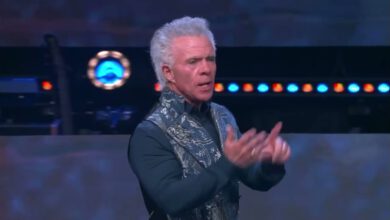
Pastor Kent Christmas | Stop Talking | October 21, 2026
Sometimes the most powerful thing a believer can do in a crisis is say nothing at all. In this KCMI TV podcast episode, Pastor Kent Christmas shares a lesson he says he learned through personal experience. His message, Stop Talking, teaches that words are seeds that create, that the enemy can only suggest but not create, and that there are seasons when the wisest response to bad news is to hold your peace until God builds faith in your heart.

Video Summary
Christmas begins with the truth that humans were made in God’s image. Just as God spoke creation into existence in Genesis 1, people also create with their words. Quoting Proverbs, he notes that life and death are in the power of the tongue, so words are not just sounds; they are seeds.
He then contrasts believers with the devil. Satan, he says, cannot create. He can only suggest thoughts, fears and “what if” scenarios. To bring those suggestions to pass, he needs a person’s mouth to agree with them. That is why Scripture calls believers to cast down imaginations and bring every thought captive to Christ.
Christmas walks through three biblical examples: Zacharias, who was made silent after doubting the angel’s message about John the Baptist; Exodus 14:14, where Israel is told the Lord will fight for them while they hold their peace; and Joshua 6, where Israel marched silently around Jericho until the day God told them to shout. He closes by admitting that for years his own worst enemy was himself, because he let circumstances shape his words.
Key Takeaways
- People are made in God’s image and create with their words.
- Words are seeds, carrying the power of life or death.
- The enemy can only suggest; he needs agreement from your mouth to bring things to pass.
- In overwhelming seasons, silence is better than speaking doubt and death.
- God often works His greatest miracles when His people are still.
- Faith takes time to build; wisdom waits quietly until faith is ready to declare.
Words Are Seeds
Christmas explains that because people share God’s likeness, their words carry creative weight. You do not have to be a spiritual giant for your words to affect your life. Whether speaking out of faith or discouragement, people are planting seeds that will grow. This is why careless statements like “If anything bad is going to happen, it’ll happen to me” are so dangerous.
He contrasts this with the enemy’s limitation. Satan cannot create anything; he can only whisper suggestions, fears and imaginations. Following 2 Corinthians 10:5, believers are called to cast down arguments and take every thought captive. The danger comes when people repeat the enemy’s suggestions aloud and come into agreement with them.
Zacharias: When God Silences Doubt
From Luke 1, Christmas recounts how the angel Gabriel appeared to Zacharias in the temple and announced that his elderly wife Elizabeth would bear a son. When Zacharias questioned the promise, he was made unable to speak until the child was born. Christmas suggests that God silenced Zacharias so his doubting words could not work against what God had declared.
He applies this to modern situations: a frightening letter from the IRS, a lawyer’s notice, a bad report from a doctor or employer. In such moments, he warns, people often begin speaking negative outcomes over their lives. The lesson is simple: if you cannot speak life, do not speak death.
Be Still and Hold Your Peace
Christmas highlights Exodus 14:14: “The LORD will fight for you, and you shall hold your peace.” He also cites Psalm 46:10, “Be still, and know that I am God,” noting that “be still” can carry the sense of being quiet. He describes praying with people at the altar who, right after hearing a message of faith, pour out only words of fear. His counsel is that if faith has not yet risen, silence is the better choice.
He also mentions prophetic words he has heard about revival in schools, healings in services and change in society, and notes that the enemy will try to argue that such things cannot happen. According to Christmas, believers can choose not to listen or repeat those doubts. “The devil never shuts up,” he says, “but you can.”
The Silent March Around Jericho
The final example comes from Joshua 6:10. Israel, newly out of the wilderness and inexperienced in war, faced the fortified city of Jericho. God instructed them to march around it once a day for six days and seven times on the seventh, without making a sound until Joshua gave the command to shout. Christmas sees wisdom in that instruction: people still breaking free from a slave mentality might easily have spoken doubt. Silence protected the miracle until the moment of victory.
He closes with personal honesty, admitting that for years he let circumstances frame his words and became his own worst enemy. He now teaches that not every mountain can be climbed immediately; sometimes faith needs time to grow. In those seasons, believers should refuse to agree with the enemy and stay quiet until God gives them faith to declare His promise. For more from Christmas, see What The Lord Is Doing For The Church and What’s In Your Hand?
Frequently Asked Questions
What is the main point of Kent Christmas’s “Stop Talking” message?
He teaches that words have creative power, and in seasons of bad news or weak faith, believers should stay silent rather than speak doubt or death over their lives.
Which Bible stories does Kent Christmas use?
He draws on Zacharias in Luke 1, Israel at the Red Sea in Exodus 14:14, Psalm 46:10, and the silent march around Jericho in Joshua 6.
Does this mean believers should never speak about problems?
Christmas’s point is not denial but wisdom. Until faith is strong enough to declare God’s promises, it is better to be quiet than to agree with fear.
Final Thoughts
Stop Talking is a practical and personal reminder that the tongue can either build or tear down. Kent Christmas encourages believers to recognize the enemy’s suggestions, refuse to give them a voice, and wait in quiet trust until God gives them faith to speak life. As he puts it, there is nothing in your life that God has not already made provision for.