How to Have Victory In Your Thought-Life | Jonathan Cahn Sermon
Do anxious, impure or negative thoughts seem to run your life? In this sermon, Jonathan Cahn shares biblical keys for how to have victory in your thought-life—from turning worry into prayer, to choosing what your mind dwells on, to putting on “the mind of Messiah.” Your thoughts shape your life, and the good news is that in God you are not a slave to them.
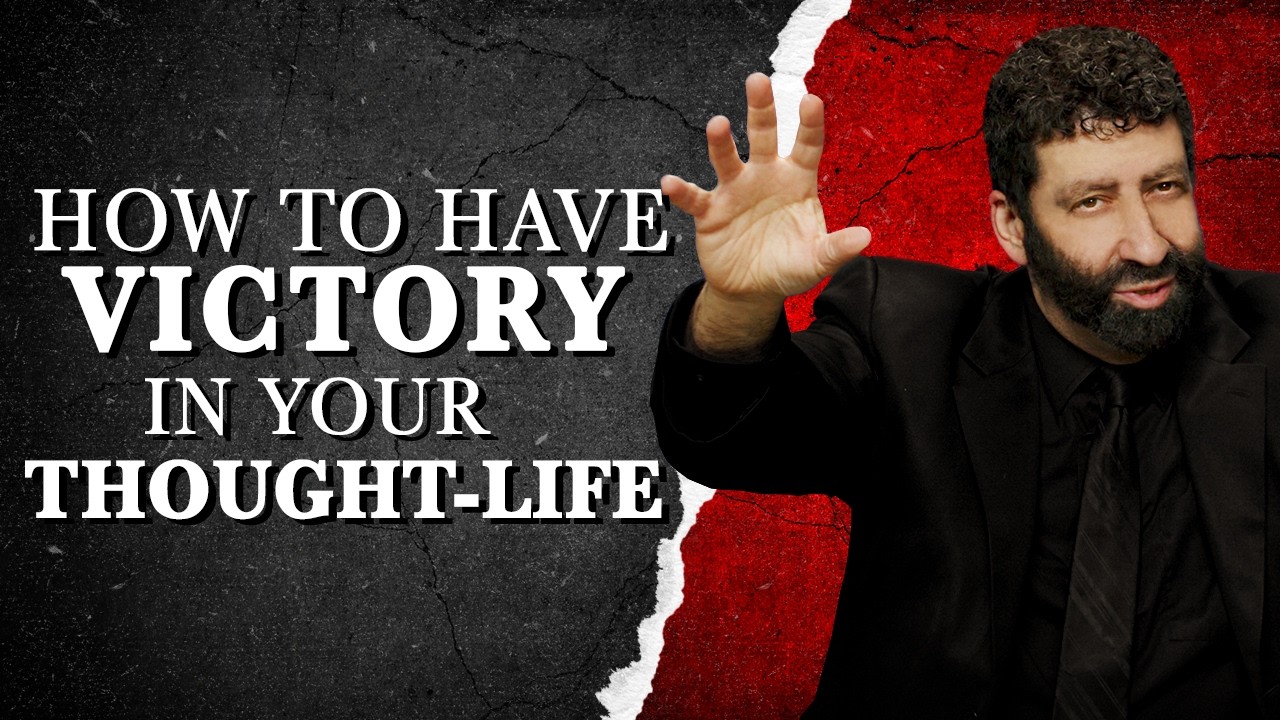
Video Summary: How to Have Victory in Your Thought-Life
Drawing on Philippians 4:6-8, Psalm 42, and 1 Corinthians 2:16, Cahn teaches that believers have a real choice over their thought-life. Anxiety can be rechanneled into prayer and thanksgiving, the mind can be directed toward what is true and pure, and the ultimate goal is to think the very thoughts of Messiah. He explains the Greek meaning of repentance—a “change of mind”—and closes with a beautiful picture of Jesus as the Shepherd of your mind.
Key Takeaways
- “Be anxious for nothing” is a choice—a command you can obey.
- Turn anxiety into prayer: problems are the raw material for a powerful prayer life.
- Thanksgiving reverses the current—you can’t worry while you’re thanking God.
- What you dwell on, you will dwell in.
- Speak to your own soul, as David did in Psalm 42.
- Repentance (metanoia) means a change of mind—in God you can truly change your mind.
- Ask not only “What would Jesus do?” but “What would Jesus think?”
- Jesus is the Shepherd of your mind, leading your wandering thoughts beside still waters.
Key #1: Turn Anxiety into Prayer and Thanksgiving
“Be anxious for nothing, but in everything by prayer and supplication, with thanksgiving, let your requests be made known to God; and the peace of God, which surpasses all understanding, will guard your hearts and minds through Christ Jesus” (Philippians 4:6-7).
Cahn notes that anxiety has become a massive industry, with prescription use at record levels. But Scripture presents freedom from anxiety as something we can choose. It doesn’t simply say “don’t worry”—it gives a key: take the very thing you’re anxious about and rechannel it into prayer. “You say you don’t have a great prayer life? Problems are the raw material for a great prayer life. If you have a lot of problems, you have a lot of material to become a prayer giant.”
But giving something to God means actually releasing it, not continuing to dwell on it. Add thanksgiving, and the whole spirit changes. You cannot be worried while thanking God that the problem is in His hands. Then the peace of God stands guard over your heart and mind.
Key #2: Choose What You Dwell On
“Whatever things are true, whatever things are noble, whatever things are just, whatever things are pure, whatever things are lovely, whatever things are of good report… meditate on these things… and the God of peace will be with you” (Philippians 4:8-9).
You have a choice about what your mind dwells on, and what you dwell on, you will dwell in. Dwell on problems and you’ll live in problems. Dwell on impurity and it will shape your life. Dwell on the things of God, and His peace will surround your thoughts.
Speak to Your Soul
David modeled this: “Why are you cast down, O my soul? And why are you disquieted within me? Hope in God” (Psalm 42:5). He was directing his own mind—telling it to look up, to remember what God had done, to remember the joy. You can minister to your mind the same way.
Key #3: Put On the Mind of Messiah
“But we have the mind of Christ” (1 Corinthians 2:16). This is the destination. Cahn tells of a man diagnosed with paranoid schizophrenia who came to faith but continued to struggle. Reading this verse, he asked what the mind of Messiah would dwell on—the Father, worship, thanksgiving. So every day he spent an hour simply blessing and thanking the Father, without even bringing his problems. By the end of the year, Cahn says, the man testified that his mind had been completely healed.
The high priest wore a gold plate on his forehead inscribed “Holy to the Lord.” Our thought-life, too, is meant to be crowned with holiness.
Repentance: Changing Your Mind
The New Testament word for repentance is metanoia—literally a change of mind. It’s not merely changing an opinion, but changing the way you see, understand and interpret everything. In God, you can actually change your mind, because He gives the power to do it.
Imagine choosing your mind from a catalog: critical, depressed or angry—or loving, sound and peaceful. Whatever your past, you can have a sound mind (2 Timothy 1:7). If you are tired of impure thoughts, worry or a carnal mind, you can be free—but it takes a choice. Old thought patterns run on habit, so you must turn away from what poisons your mind (such as pornography) and replace it with the things of God. Meditate on the Word. Follow the Spirit’s nudges. Your mind will become what you consistently choose.
What Would Jesus Think?
The popular bracelet asks, “What would Jesus do?” That’s good, Cahn says, but it’s not enough. First ask, “What would Jesus think?” If you think what He thinks, you will do what He did. The Greek word for mind, nous, includes understanding, will and even feelings. Messiah would not entertain impure or bitter thoughts. He would think thoughts of heaven, thanksgiving, love and purity. He wouldn’t be watching “that show” or visiting “that site”—whatever the Lord is bringing to your mind right now. Change your mind, and you will change your life.
Jesus, the Shepherd of Your Mind
1 Peter 2:25 calls Him “the Shepherd and Overseer of your souls,” and Cahn notes the word can also embrace the mind. Our thoughts are often like wandering sheep, but He leads them. Read Psalm 23 with that in mind: He makes my thoughts lie down in green pastures, He leads my mind beside still waters, He restores my soul.
For more on renewing your mind and living in God’s presence, read The Ephratah Equation, The Focus Key That Can Change Your Life, and The Arch Secret of Overcoming Sin.
Practical Steps for Victory in Your Thought-Life
- Turn every worry into a prayer the moment it arises.
- Add thanksgiving to every request.
- Use Philippians 4:8 as a filter for what you watch, read and think about.
- Speak to your soul with God’s promises.
- Set aside time daily simply to worship and thank the Father.
- Meditate on Scripture to replace old thought habits.
- Ask, “What would Jesus think?” in every situation.
Frequently Asked Questions
How do I stop anxious thoughts as a Christian?
Jonathan Cahn teaches from Philippians 4:6-7 to turn anxiety into prayer, release it to God, and give thanks—then the peace of God will guard your heart and mind. If anxiety is severe or persistent, it is also wise to seek help from a pastor, counselor or medical professional.
What does “the mind of Christ” mean?
It means thinking as Messiah thinks—dwelling on the Father, on purity, love and thanksgiving—so that your actions flow from His thoughts (1 Corinthians 2:16).
What does repentance mean in Greek?
The Greek word metanoia means a change of mind—a transformation in how you see, understand and interpret life.
Final Thoughts
God’s will is that you have victory in every area of life, and it begins in your mind. You are not a slave to your thoughts; in Messiah you have authority over them. Turn your worries into prayer, fill your mind with what is true and pure, and put on the mind of Messiah. A holy mind leads to a holy life—it’s as simple, and as powerful, as changing your mind.
