The Mystery of the Sorcerer & the Curse | Jonathan Cahn Full Message
Are principalities real, and can a curse over a city be broken? In this full message, Jonathan Cahn reveals the mystery of the sorcerer and the curse—an account from the Book of Acts that replayed itself almost 2,000 years later during a mission to Cuba. It is a powerful lesson in spiritual warfare, the power of prayer, and why one believer walking in God’s will is stronger than any power of darkness.
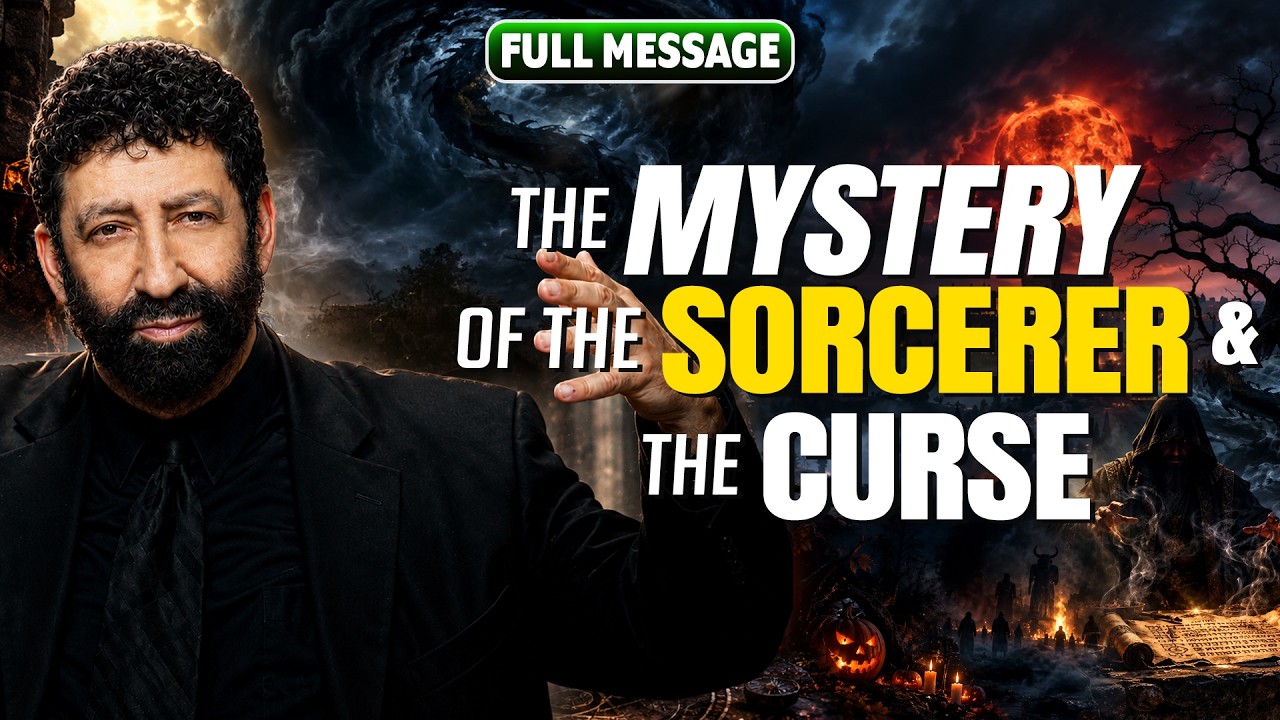
Video Summary: The Mystery of the Sorcerer & the Curse
Preached on Halloween, this message begins with the darkness spreading through modern culture—not a neutral secularism, Cahn says, but a supernatural darkness. “We do not wrestle against flesh and blood, but against principalities, against powers, against the rulers of the darkness of this age” (Ephesians 6:12). He then opens Acts 8, where Philip brings the gospel to Samaria and confronts Simon the sorcerer, and shares the remarkable story of how his team was supernaturally blocked—and then supernaturally led—into a Cuban city ruled by a powerful sorcerer, where a long-standing spiritual curse was broken.
Key Takeaways
- Spiritual warfare is real: behind cultural darkness are principalities and powers.
- Halloween keeps growing while Christmas is downplayed—a sign of America’s spiritual direction.
- Persecution spread the gospel: in Acts 8, scattered believers carried the light to Samaria.
- Simon the sorcerer was called “the great power of God”—yet the true power of God overcame him.
- The occult is growing as America falls away from faith.
- God uses hindrances to accomplish something greater than we planned.
- Live on the offense: the gates of hell are defensive—the church is meant to advance.
- One believer with God is more powerful than a thousand sorcerers.
The Growing Darkness and the Roots of Halloween
Halloween, or All Hallows’ Eve, appears to be linked to the ancient Celtic festival of Samhain on October 31, when people believed the souls of the dead returned to their homes. Over time it became associated with ghosts, witches and black magic. Cahn makes clear that this is not a message telling believers exactly what to do—each should follow the Lord’s leading without compromise—but he notes how strange it is to celebrate by wearing masks, demanding treats under threat, and committing “tricks.” More importantly, Halloween displays now rival Christmas displays, and he believes that reveals something about the spiritual condition of America.
Philip and Simon the Sorcerer in Acts 8
When persecution broke out in Jerusalem under Saul, the believers were scattered—but “those who were scattered went everywhere preaching the word” (Acts 8:4). Philip went to Samaria, a place Jewish believers had avoided, and proclaimed Messiah. Unclean spirits came out shouting, the paralyzed and lame were healed, “and there was great joy in that city.”
But Samaria already had a spiritual figure: Simon, who practiced sorcery and “astonished the people,” claiming to be someone great. The people called him “the great power of God” (Acts 8:9-10). Cahn stresses that this was not stage magic—it was occult power. The occult is real, and it substitutes counterfeit spirituality for the things of God. Today, he notes, there are more people in America identifying as witches than as Presbyterians.
When the light enters the darkness, conflict is inevitable. Philip didn’t even know about Simon—he simply went where God sent him. Yet the gospel invaded the sorcerer’s territory, and Simon himself was so amazed that he wanted that power.
A Modern Book of Acts: The Mission to Cuba
Cahn then shares an account from a mission to Cuba, during a rare month when the island was opened for gospel outreach. After completing the first part of the mission, his small team had a free day in eastern Cuba. He felt led to go to a nearby city known for witchcraft—simply to pray and sound the shofar.
Supernatural Resistance
Immediately, every door shut. No transportation. No bus. No taxis. His excellent translator seemed to fall into a daze, struggling even to speak Spanish. A cab driver promised to take them, then drove off without them. Nothing worked. Finally Cahn gave up and prayed, “Lord, if You want us there, You do it.”
A Meeting No One Planned
At 3:00 p.m., the phone rang. All the believers and ministers of that city had gathered and were waiting for Cahn to come and speak—and to bring his shofar. No one had arranged it. Someone had overheard him asking for a taxi and spread the word. For the first time, believers from different churches across the city came together.
In the van, Cahn asked God for a Scripture and opened to the account of Simon the sorcerer. When he arrived, the pastor explained that the city was a center of occult festivals and was dominated by a powerful sorcerer whom people traveled across the island to see. The sorcerer claimed the city section by section and sought to keep the gospel out—exactly the resistance the team had experienced. The believers had been living on the defensive, praying for years for the curse to be broken.
The Curse Is Broken
When Cahn shared the Acts 8 passage and declared that it was time for the darkness to end, a strong gust of wind blew through the church. His translator proclaimed, “This day the curse is broken.” Cahn exhorted the believers that they were on the victorious side, that “no weapon formed against you shall prosper” (Isaiah 54:17), and that the gates of hell cannot prevail against the church. Together they prayed in one accord, the leaders were anointed, and they prayed over the whole city from the rooftop.
The pastor told Cahn he had prayed for years for this day—and specifically for a Jewish believer to come, believing that blessing the Jewish people would turn the curse into a blessing (Genesis 12:3). Months later, a Cuban pastor visited Cahn’s congregation and reported that revival had broken out in the region, with people bringing their occult objects to be destroyed, just as in Acts 19.
Lessons for Your Spiritual Battles
- You are in a war—fight it. A boxer who doesn’t fight loses. But it is a good fight, and you are guaranteed to win if you fight in faith.
- Fight in the Spirit. “The weapons of our warfare are not carnal but mighty in God for pulling down strongholds” (2 Corinthians 10:4).
- Don’t judge by appearances. Resistance often means you are in God’s will—and God will use every setback for something greater if you keep going.
- You don’t need to know everything. God has prepared good works beforehand (Ephesians 2:10); just seek His will and you will walk into them.
- Keep advancing. The enemy wants you consumed by problems. Keep praying, ministering and spreading the gospel.
- Fear no evil. “If God is for us, who can be against us?” (Romans 8:31).
For more on spiritual authority and breaking curses, read The Power of Breaking Curses, The Power to Cast Out, and The Devil’s Strategies Against You.
Frequently Asked Questions
Who was Simon the sorcerer?
Simon was a man in Samaria who practiced sorcery and amazed the people, who called him “the great power of God.” When Philip preached the gospel with signs and wonders, Simon was confronted by the true power of God (Acts 8:9-24).
Can a curse over a city be broken?
Jonathan Cahn’s testimony from Cuba describes how united prayer, the preaching of God’s Word, and believers rising from defense to offense led to a spiritual breakthrough and revival in a city dominated by the occult.
How should Christians view Halloween?
Cahn says each believer should follow the Lord’s leading without compromising, but he sees the growth of Halloween as a sign of increasing spiritual darkness in the culture.
Final Thoughts
The darkness may seem to be growing, and you may feel embattled. But the Book of Acts never ended. The same Spirit, the same power, and the same Messiah are alive today—and you are His disciple. Don’t live on the defensive. Keep moving forward, and remember: “He who is in you is greater than he who is in the world” (1 John 4:4).
