The Return Of Baal.. To The Church | Jonathan Cahn Sermon
In this sermon, Jonathan Cahn revisits a theme he has explored for years: the ancient god Baal and what Cahn sees as its spiritual parallels in modern culture. This time he takes the argument a step further, warning that the same spirit can influence not only society but also the church. The return of Baal to the church, according to Cahn, happens whenever God’s people quietly absorb the values of the surrounding culture instead of shaping it.
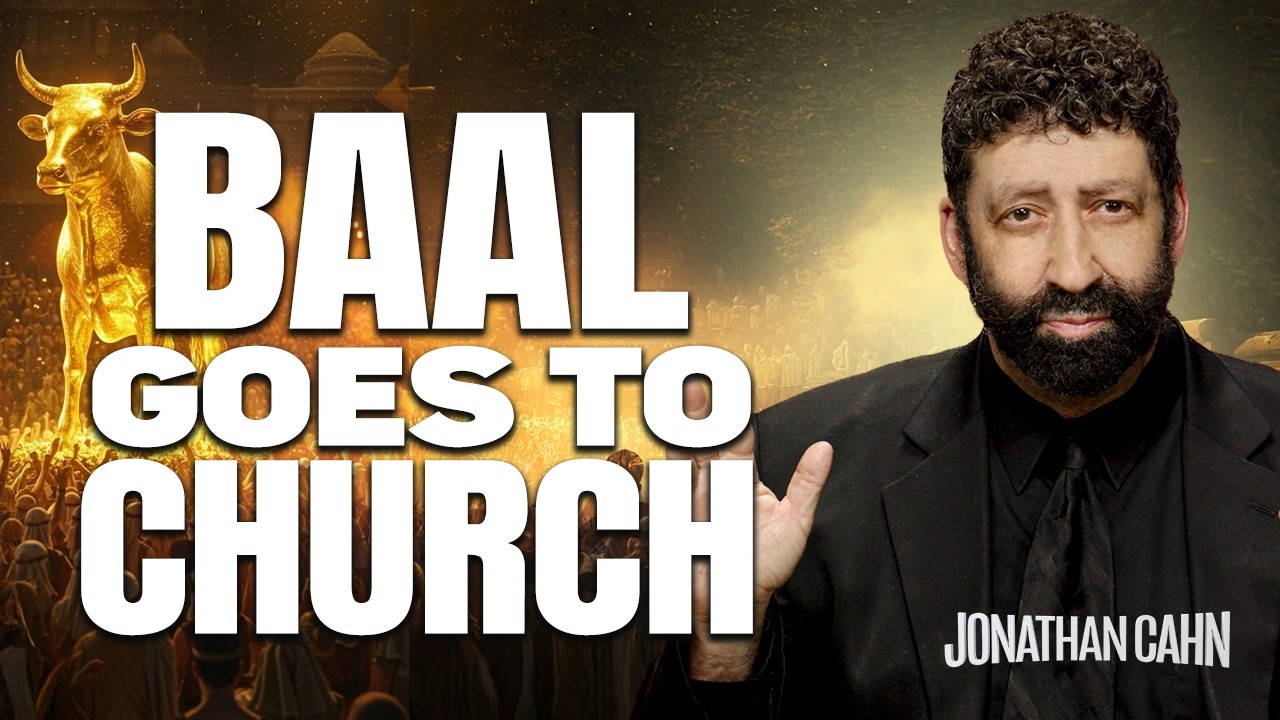
Video Summary
Cahn begins with Judges 2:11–13, which describes Israel forsaking the Lord who brought them out of Egypt and serving the Baals. He notes that the Hebrew word Elohim can mean either the true God or false gods, and draws a lesson: when people turn away from God, they inevitably turn to other gods. A spiritual vacuum does not stay empty.
He then lays out what he describes as signs of Baal in a culture, discusses idolatry and truth, connects ancient idolatry to modern dependence on technology, and finally asks whether this spirit has entered churches, including evangelical ones.
Key Takeaways
- When people turn from God, they do not stop worshiping; they worship something else.
- Cahn associates Baal with materialism, sensuality and the “god of this world.”
- Removing God leads to many “gods” and, Cahn argues, to the loss of objective truth.
- Idolatry inverts reality, making the creature central instead of the Creator.
- Cahn warns that modern people can become mastered by technology.
- The golden calf shows that false worship can be offered in God’s own name.
Signs of Baal in a Culture
According to Cahn, Baal was associated with the physical and the sensual, a god of this world. When Israel embraced Baal, the nation drifted toward materialism and paganism. Cahn sees a similar pattern in America and the West, arguing that as society has turned from God it has become increasingly materialistic and that many traditional values have shifted in directions he identifies with the pre-Christian pagan world. He includes contested moral and social issues in that list; these are his views as a pastor and author and reflect a longstanding emphasis of his ministry.
Many Gods, Many Masters
Cahn points out that Scripture often speaks of “the Baals” in the plural. There were many local versions of Baal. In the same way, he says, when God is removed, almost anything can become a god: self, pleasure, comfort, money, substances or ideologies. Because “Baal” means “lord” or “master,” Cahn argues that turning away from God does not make people freer but leaves them mastered by many things, including addictions and media.
He links this to truth. With one God, there is one truth that holds everything together. With many gods, there are many competing “truths,” leading to confusion. Cahn critiques the popular idea of “my truth,” insisting that truth by definition is not personal preference.
The Mystery of Idolatry and Technology
Idolatry, Cahn explains, is people fabricating their own god and therefore their own version of reality. It reverses the proper order: instead of creation worshiping the Creator, people end up honoring the works of their own hands. He notes that when Paul addressed idolatry in Athens, he spoke of objects shaped by human “art,” using a Greek word related to technē, the root of “technology” (Acts 17:29).
Cahn draws a contemporary application: many people are now dependent on their devices, and artificial intelligence increasingly shapes how people think. He recalls the biblical principle that those who make idols become like them (Psalm 115:4–8), warning that people can become less relational and less human when technology becomes their master.
When Baal Goes to Church
The heart of the message is Cahn’s warning that this spirit does not stay outside the church. He turns to Exodus 32, where Israel made a golden calf at the foot of Sinai and declared, “This is your god, O Israel, that brought you out of the land of Egypt.” The people did not think they had abandoned the God of Israel; they were worshiping a false image in His name. Cahn notes that while Moses was on the mountain with God’s Word, the people below were worshiping the calf. It is one or the other.
Cahn first applies this to denominations he believes have departed from Scripture and embraced the culture’s values. But he says that is the easy target. His deeper concern is for evangelical and Bible-believing churches, which he believes can also be influenced by the world. The church is meant to influence culture, he says, but too often culture has influenced the church more. For more from Cahn, see The Mystery Of Islam and The Ark Of The Covenant and God’s Presence in Your Life.
Frequently Asked Questions
Who was Baal in the Bible?
Baal was a Canaanite deity, often worshiped in many local forms, whom Israel repeatedly turned to when they abandoned the Lord, as described in Judges and other books.
What does Jonathan Cahn mean by Baal returning to the church?
He means that the worldly values he associates with Baal can influence churches, causing them to adopt the culture’s priorities instead of standing on God’s Word.
How does Cahn connect idolatry to technology?
He argues that just as ancient people worshiped the works of their hands, modern people can become mastered by technology, and that those who serve idols tend to become like them.
Final Thoughts
“The Return Of Baal.. To The Church” is a pointed call for the church to examine itself. Whether or not readers agree with every cultural application Jonathan Cahn makes, his central question remains relevant: are God’s people being shaped by His Word, or by the spirit of the age? Like Israel at the foot of Sinai, every generation must choose between the Word on the mountain and the idols below.
